3 Faceless Passive Income Ideas for 2026 (With AI)
Three faceless passive income ideas that actually print in 2026: AI avatar Instagram, paid Substack, and long-form YouTube. With AI, not slop.
Here are three faceless passive income ideas I’d actually pursue in 2026 if I were starting from scratch as a solo creator, small business owner, or one-person agency who doesn’t want to be on camera. None of them require showing your face, all three can use AI to compound your output, and all three can be handed off to a small team once they’re working.
Before I get to the ideas, one thing I want you to internalize: passive income does not start off passive. It typically takes years of trial and error, lots of failed formats, and a stubborn refusal to bounce between thirty ideas in thirty days. The good news is that the three models below are structured so that once they work, you really can outsource almost all the day-to-day, because the brand is not your face.
I teach AI for free to millions of people, and I also founded Blotato, so weigh anything I say about that tool against the rest.
How to Build Faceless Passive Income With AI (Video Guide)
If you’d rather watch the full walkthrough, this is the video version. The written guide below covers the same three ideas with extra detail on the real income examples, the AI tools at each stage, and the mistakes that kill most faceless builds in the first 90 days.
Why Faceless Passive Income Is Misunderstood in 2026
Most of the SERP for this topic falls into two buckets: 11-idea listicles that mention everything (Pinterest, POD, voiceover Shorts, AI newsletters) without picking a winner, or hype posts that claim AI now automates the whole pipeline. Both miss the same thing.
Faceless does not mean AI. Faceless just means the brand is not your personal face. A long-form documentary YouTube channel can be 100% human-shot, 100% human-edited, and still be faceless. An Instagram avatar account can be 100% AI-generated and still take a human in the creative seat to pick the script and the hook.
The other myth is that passive equals easy. It is not. I’ll keep saying it: the only way these models become passive is years of active work first, then a documented playbook a team can run for you.
My Faceless Stack for 2026
You don’t need a stack of twenty tools to make this work. Across all three ideas, I lean on the same core set:
- AI avatar video: HeyGen for AI avatars, or any modern avatar tool that lets you script and render a talking character from text.
- Idea + script + research help: any frontier LLM you trust, to brainstorm hooks, riff on variations, and pull competitor research from your niche.
- Social scheduling and repurposing: Blotato for repurposing one piece of long-form content into nine platforms and scheduling it without manual upload loops.
- Substack for the faceless newsletter model. Newsletter platform with built-in paywall, payments, and a recommendation network.
Blotato is mine, so here is the part the pitch leaves out: the trial covers publishing, but generating an API key ends it and starts the paid plan. The piece that ties all three of these models together is what happens after the content exists: getting it published across nine platforms without doing it manually every day. That’s the part most solo creators burn out on, and it’s what Blotato is built to handle. If you want to see how the publish-and-repurpose layer fits before picking an idea, start a free 7-day Blotato trial, connect your platforms, and run one cross-platform post end to end.
Faceless Income Models Compared
A quick way to think about where to start. None of these are “easy money,” but the trade-offs are real.
| Model | Time to first dollar | Income ceiling | AI fit | Best for |
|---|---|---|---|---|
| AI avatar Instagram | 3-9 months | $5-50K/mo via own product | High (avatar + script) | Visual niches: wellness, mindset, history |
| Faceless Substack | 6-18 months | $70-100K/mo at top end | Medium (research + outlines) | Writers, niche experts, deep topics |
| Long-form faceless YouTube | 1-3+ years | Six-figures+ via ads + offers | Medium (script + B-roll + research) | Documentary, education, evergreen niches |
If you’ve already built a single-platform automation like an Instagram Stories repurpose flow or a TikTok slideshow pipeline, the same pattern carries directly into idea one below. Same wiring, different surface.
Idea 1: A Faceless Instagram Account With an AI Avatar
Right now in 2026, faceless accounts are easier to grow and to monetize on Instagram than on TikTok or YouTube Shorts. If you’re going to pick one short-form platform, I’d pick a faceless Instagram account focused on Reels and carousels.
The example I keep pointing people to is the viral AI monk account @itsyangmuns. The account shares short health, wellness, and mindset clips through an AI-generated monk avatar, and it grew to over a million followers in a few months. The content has a clear point of view, consistent visual identity, and a clean handoff between hook, story, and message.
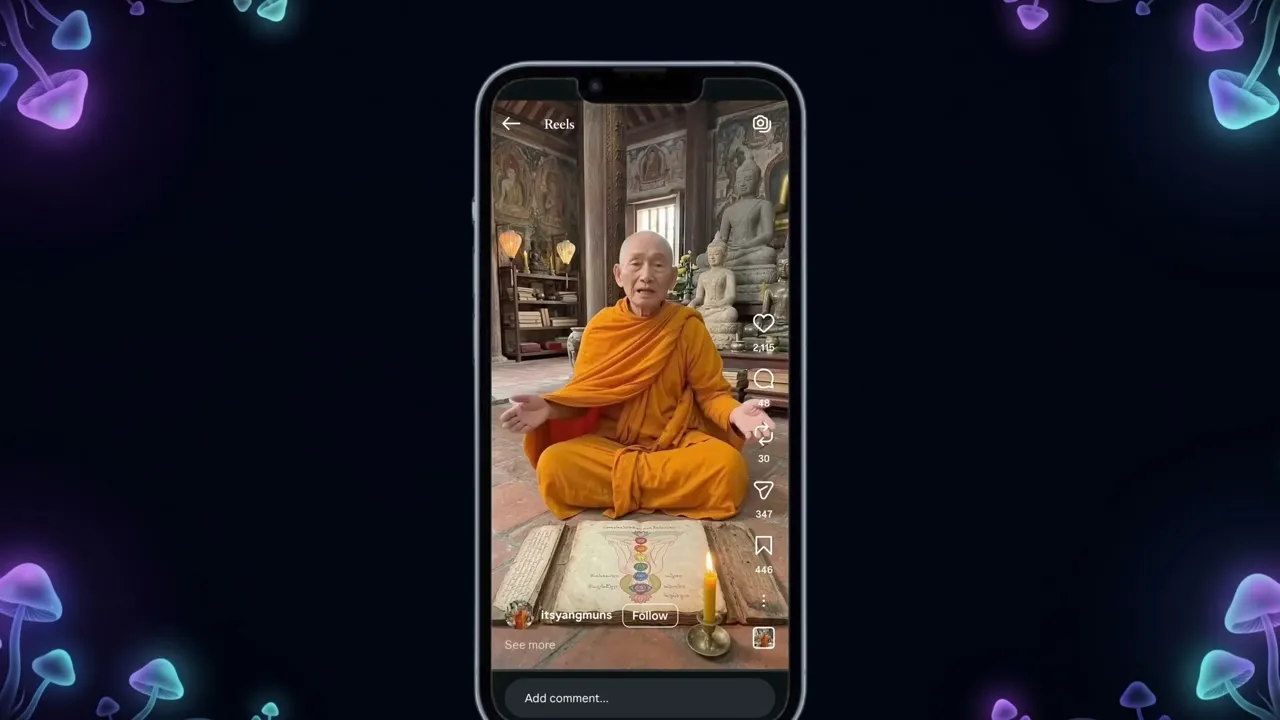
The monetization path is what most people miss. Click the link in the account’s bio and you’ll land on a 30-day healing journey product, normally listed at $99 and on sale around $49.99. People genuinely pay for the program. The faceless brand earned the trust on Instagram, and the offer converts that trust into recurring product revenue. That bio link works from the first follower, while most of Instagram’s built-in payouts wait on a follower bar between 500 and 10,000. The Reels themselves are short, visually distinct, and pair an AI avatar with a single tip per post.
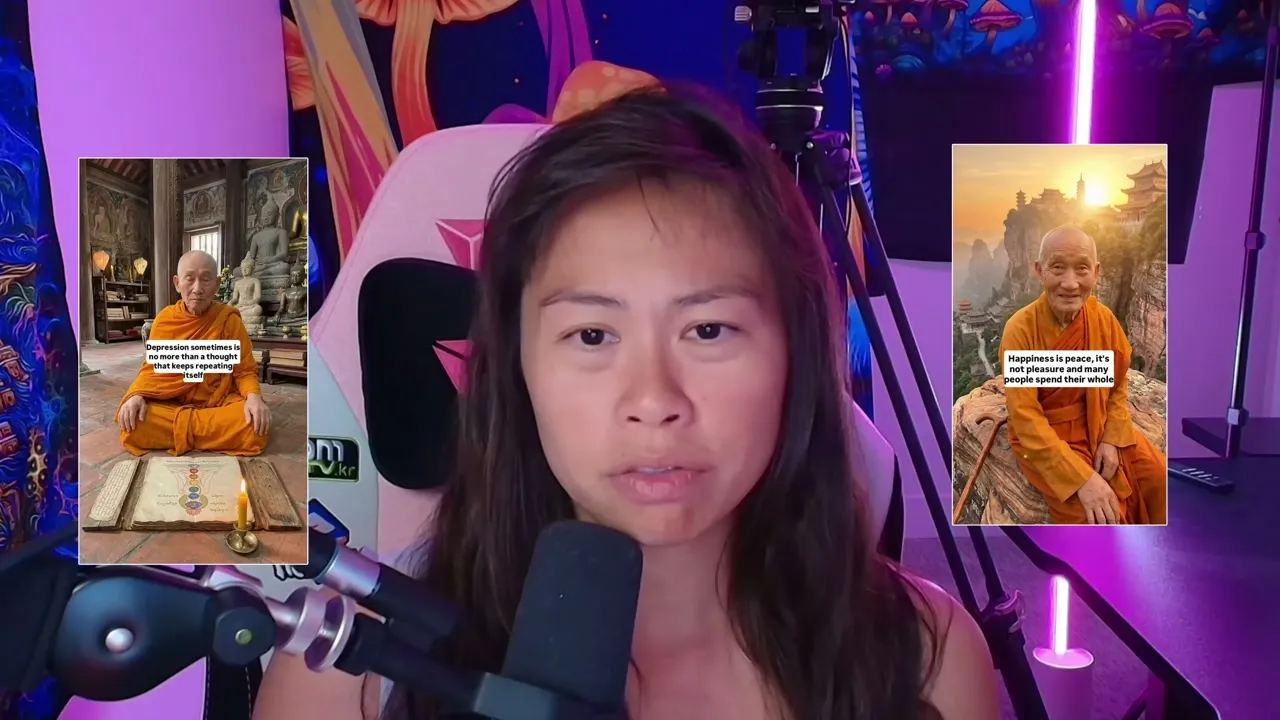
To build something like this, you use tools like HeyGen to create your avatar, an LLM to draft script variations, and Blotato to publish and repeat across platforms. For the full lineup, here are the best AI tools for faceless content at each stage. For a worked example of that exact stack, see how one builder turned it into a full faceless video factory that spins one topic into platform-native videos. The biggest mistake people make is trying to automate Instagram Reels from day one. Don’t. AI is not equal to automation. Use AI to brainstorm hooks, generate avatar clips, and repurpose, but keep a human in the loop on which idea ships. You only automate a format after you’ve proven it works.
Idea 2: A Faceless Substack Newsletter
The faceless Substack model is the one I think is most underrated in 2026. The platform is growing, the recommendation network helps cold start in a way no other newsletter tool does, and the paid-subscription unit economics compound monthly.
The example I’d point you to is a breakdown of how a creator named Levi Chambers (alongside Amie of Lazy Millionaire) shared a public playbook on building a $100K+ income from a faceless-style Substack without showing your face.
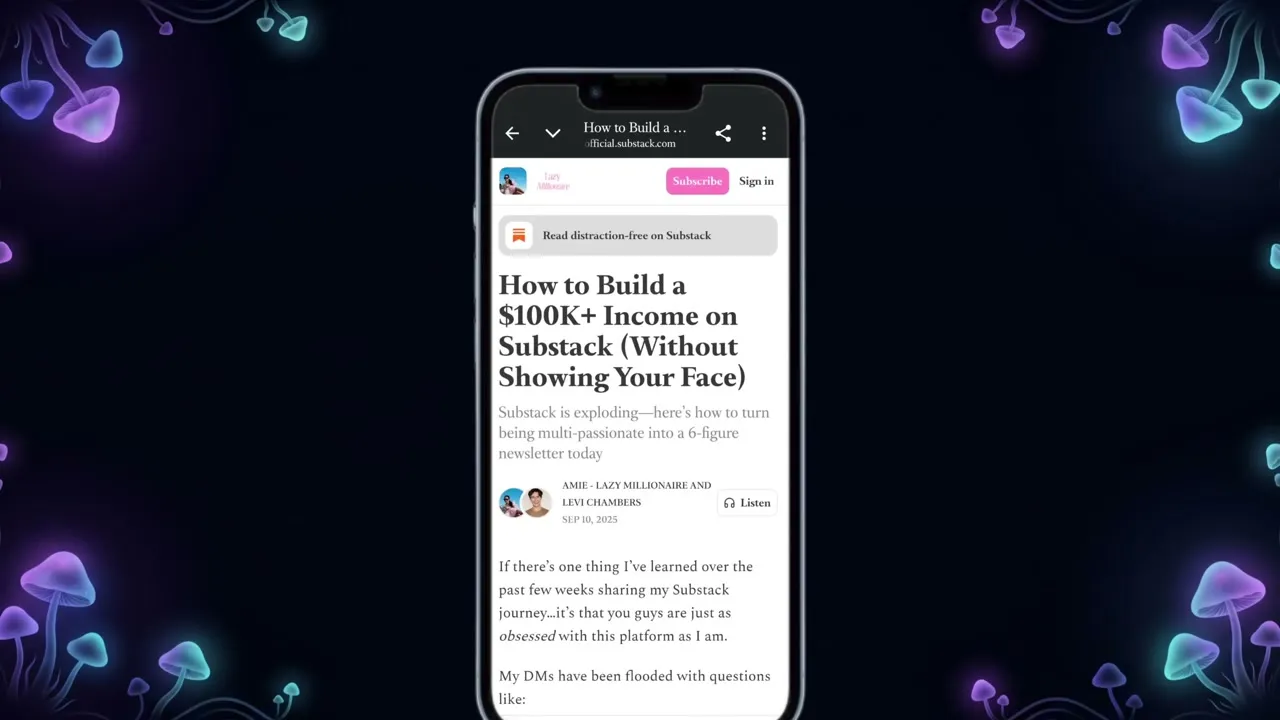
Substack still counts as faceless in my book because the brand lives in the written word, not in your face on camera. Even if you put a name and a profile photo on the publication, what readers pay for is the research, the angle, and the cadence. That part is documentable, which is exactly what makes it handoff-ready years down the road.
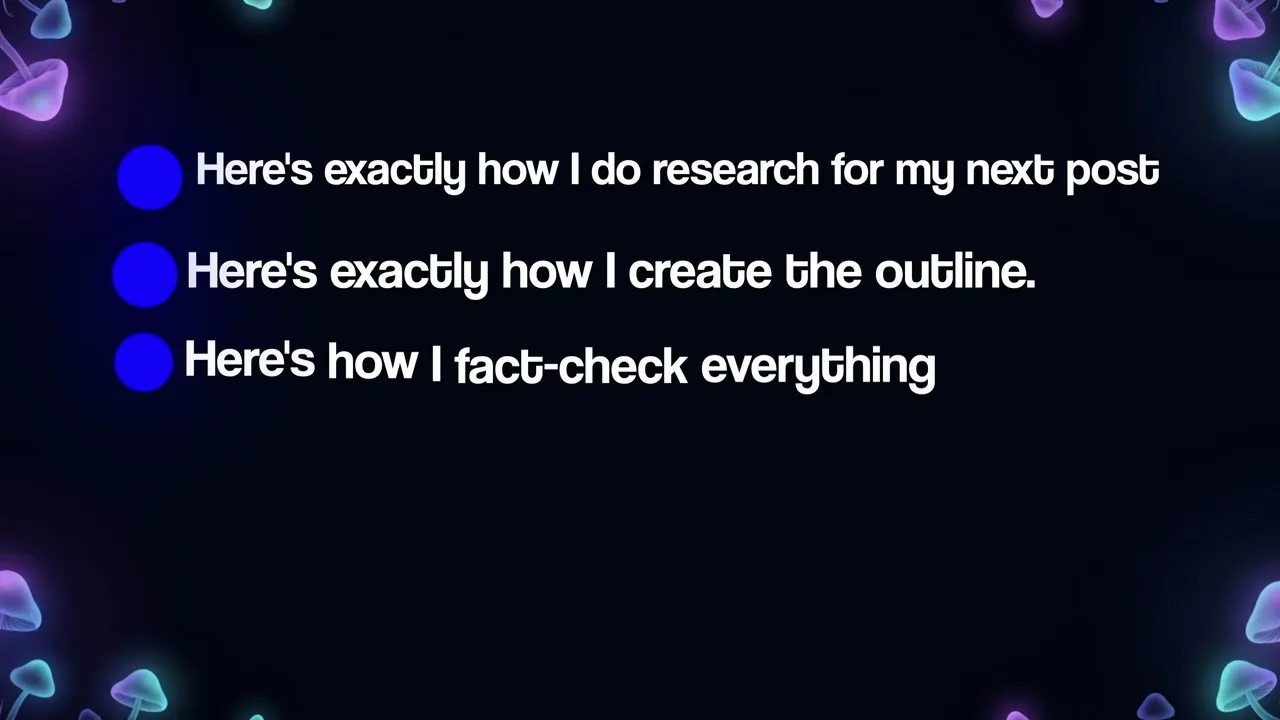
The four moves that matter most:
- Pick a profitable niche. AI is hot. Hot also means saturated, so go narrower than “AI.” Think “AI for solo lawyers” or “AI for high school teachers.” Demand is still huge.
- Set up the front page like a sales page. Make it brutally clear who the newsletter helps, the point A they’re at today, and the point B you’ll take them to.
- Build the email list like a real business. Every social bio, every profile, every piece of content points back to the Substack subscribe page. Mine does. Treat it as the asset, not the afterthought.
- Use a two-tier content strategy. Free content earns trust and authority. Paywalled or gated posts give your most engaged readers something they can’t get for free. The conversion happens because the free tier was already excellent.
Once your Substack is producing consistent revenue, you can repurpose every post into nine pieces of content on other platforms (this is what tools like Blotato are built for) and feed even more subscribers back to the list. That’s where the income compounds.
Idea 3: A Faceless Long-Form YouTube Channel
YouTube Shorts is rough to monetize for faceless brands right now, especially through ad revenue alone. (If you want to test the Shorts format anyway, here’s the faceless YouTube Shorts workflow, though treat it as top-of-funnel for the long-form channel, not the income engine.) The faceless channels making meaningful income on YouTube are mostly long-form: documentary explainers, history breakdowns, mystery and crime, niche education, and similar evergreen formats.
A common misconception: people think faceless YouTube means low-effort AI slop with a stock voiceover. The strongest faceless channels are the opposite. They use AI to research, outline, and source B-roll, then a human edits the actual narrative. One example I like in this category is a long-form documentary channel that grew to over 13 million subscribers, but started posting 14 years ago and built that audience the slow way.
The good news is that you do not need 13 million subscribers to make a long-form faceless channel work. There are two monetization paths:
- Direct platform revenue (ads, memberships). Pays off only at scale. Decent passive income once it’s there, but slow to start.
- Driving traffic to your own offer or affiliate. Way faster to monetize per view. A faceless tutorial channel can link to a guide, a course, an affiliate, or a product right from the video description and bio. Per-viewer revenue is much higher than the ad model.
AI helps at almost every step of a long-form faceless build: brainstorming evergreen video ideas, researching competitors, scripting variations, generating B-roll images and short clips, and assembling thumbnails. What AI does not do well yet is replace the editorial judgment, the pacing, and the human storytelling that makes a viewer hit “subscribe.” That is still the creator’s job, even when the creator is faceless.
What These Faceless Models Can’t Do (Yet)
Honest limits, because none of this is magic.
- Pure AI automation doesn’t replace taste. AI can draft fifteen hooks. It can’t tell which one will land in your niche. That’s still you in the seat.
- Faceless does not skip the trust-building phase. It just moves the trust from your face to a brand. Brand trust takes longer to build than personal trust, especially on Instagram and YouTube.
- AI-only content gets flagged. Platforms are actively downranking low-effort AI-only output. The accounts that win pair AI generation with real editorial direction.
- Substack’s recommendation engine isn’t a guarantee. It accelerates good newsletters, but it can’t save one that doesn’t have a clear point of view.
- “Passive” arrives years later. Plan for two to three years of active operation before any of these are truly hands-off, even with a team.
Results You Can Expect
The three creators I referenced are not outliers, but they are not the median either. The AI monk account hit over a million followers in months and converts into a real product offer. Levi’s faceless Substack reached $70-80K per month after a long ramp. The 13 million sub documentary channel took 14 years. Your timeline lands somewhere on that spectrum depending on niche, cadence, and how soon you commit to one idea instead of cycling through five. The compounding part, one piece of content turning into nine across platforms, is what lets a solo creator or small team run any of these without a full-time scheduler, and it’s the workflow our Blotato plans are designed for.
My Final Take
Faceless passive income is real, but it is not easy and it is not fast. Pick one of these three ideas, commit to it for at least a year, and use AI to supplement your manual creative process instead of trying to replace it. If on-camera faceless content isn’t your angle, the same commit-to-one logic applies to these broader AI business ideas for solopreneurs, each pressure-tested against the distribution wall. The reason these models work as passive eventually is that everything you do can be documented and handed to a team. The reason most people never get there is they swap ideas every 30 days and never get past the trial-and-error phase.
Faceless Passive Income FAQs
How long does it take to make passive income from a faceless brand?
Plan on 12-36 months of active building before any of these go meaningfully passive. The Instagram avatar route can hit revenue fastest, often inside 6-9 months if a product offer is wired up early. Substack typically takes 12-18 months to compound paid subs. Long-form YouTube is usually two-plus years to reach steady monetization. Passive arrives only after you can hand the daily ops to a team you’ve trained.
Is AI Faceless Passive Income still possible in 2026, or has the market saturated?
Saturation is real on the AI-slop end (auto-narrated stock-footage videos), but the opposite end has more demand than ever. AI Faceless Passive Income works when you use AI to amplify a clear point of view, not to mass-produce identical content. The faceless brands that grew fastest in the past 12 months all paired AI tools with a human editor making real taste calls.
Do I need to show my face at all to monetize on Instagram or YouTube?
No. Both platforms allow and actively reward faceless brands, as long as the content respects platform guidelines and isn’t pure AI noise. The monetization options (ads, partnerships, your own offers) work the same way they do for face-on creators.
Which faceless idea has the highest income ceiling?
Long-form YouTube has the highest absolute ceiling because it stacks ad revenue, sponsorships, and offer-driven funnels. But Substack at the top end (mid five figures per month) is more passive once paid subscribers stabilize, because the income recurs without daily uploads. Pick based on the work you actually enjoy doing, not on the headline ceiling.
Can one person run all three faceless models at once?
Not at the start. You will spread too thin, ship mediocre work in all three, and quit. Pick one, run it long enough to know whether it works, then start a second only after the first is generating consistent revenue and is partly delegated. The people running multiple faceless brands today started with one and grew sideways years later.