Buffer vs Hootsuite: An Honest 2026 Comparison
Buffer vs Hootsuite: where each wins on pricing, AI, and ease of use, the per-channel vs per-user math, and which fits your workflow in 2026.
If you’re comparing Buffer vs Hootsuite, you’ve probably noticed they get lumped together as “the two big social media schedulers” and left at that. After years of running content through both, I can tell you they’re not built for the same person. One is the simplest scheduler you’ll ever use. The other is built to run an entire marketing department.
Here’s the short version. Buffer is cheap, clean, and made for creators and small teams who want to queue posts and move on. Hootsuite is heavier, far more expensive, and made for teams that need social listening, deep analytics, an inbox, and approval workflows in one place. They even charge in opposite ways: Buffer bills per channel, Hootsuite bills per user.
This post breaks down who each tool is for, where each one genuinely wins, and the pricing math at different team sizes (the part most comparisons skip). I’ll also be upfront later about where a third option fits, and I’ll tell you when it doesn’t.
Buffer vs Hootsuite: At a Glance
Buffer is the better pick if: you’re a solo creator, freelancer, or small team that mostly needs to schedule and publish, you want a free plan or a low monthly bill, and you don’t want to learn a complicated dashboard.
Hootsuite is the better pick if: you’re a marketing team or larger business that needs social listening, paid and organic analytics in one report, a unified inbox, and approval workflows, and you have the budget for enterprise software.
Are Buffer and Hootsuite Even Solving the Same Problem?
Not really, and that’s the most useful thing to understand before you pick one.
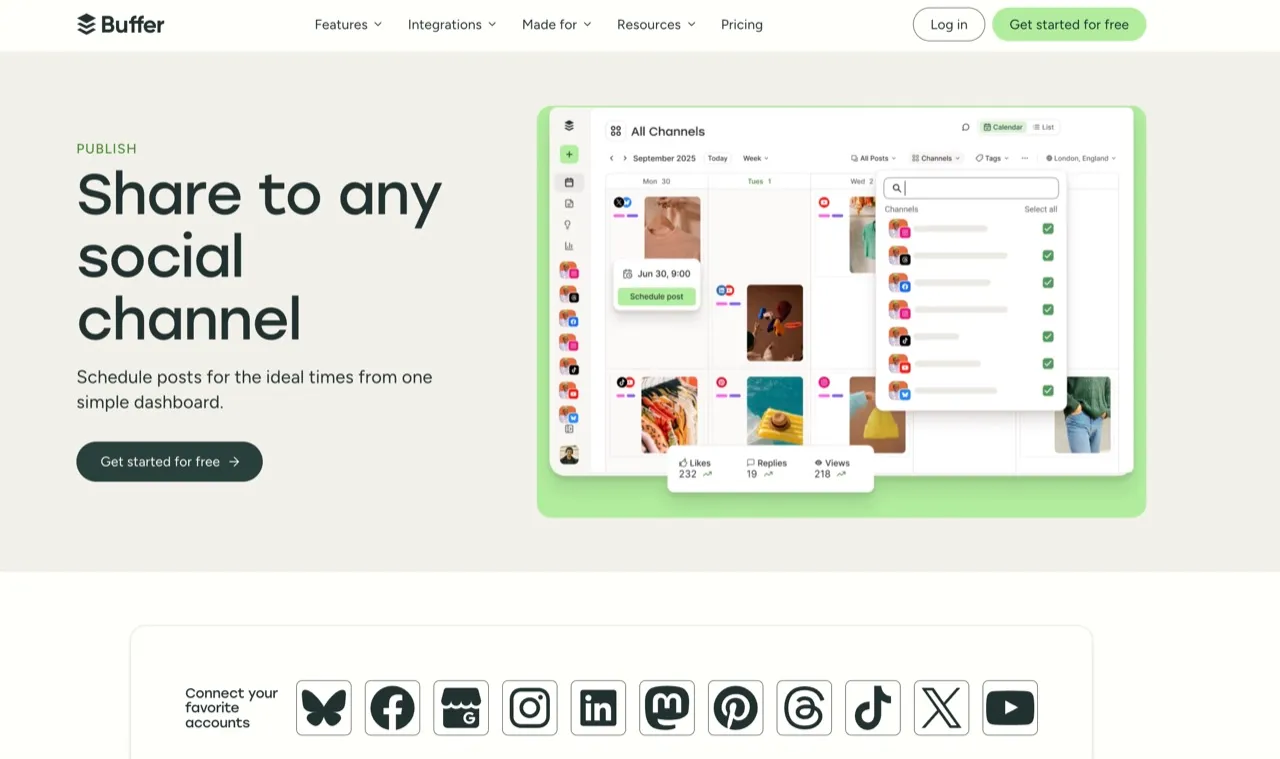
Buffer is a publishing tool. It does scheduling, a basic content calendar, a link-in-bio page, light analytics, and a simple comment inbox. It’s focused on getting posts out the door without friction. That focus is the whole point, and it’s why people love it.
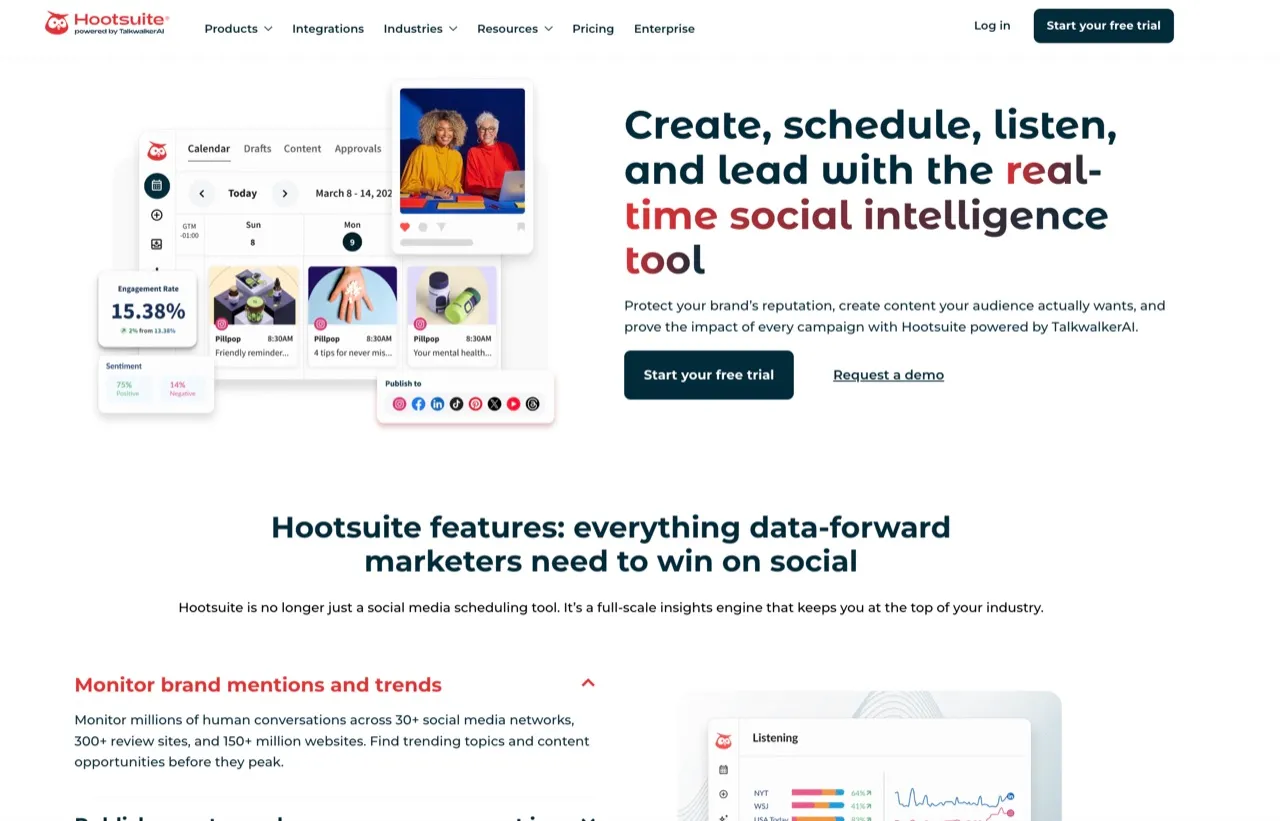
Hootsuite is a full social media management suite. Scheduling is only one piece. The rest is social listening (tracking brand mentions and competitors), advanced analytics with ROI reporting, paid ad management, a team inbox, and structured approval flows. It’s built for the work that happens around publishing, not just publishing itself.
So a lot of the “which is better” debate is really a budget and team-size question. If you only need to publish, paying for Hootsuite’s suite is paying for seats you won’t sit in. If you need the suite, Buffer will feel thin fast.
Who Buffer Is Built For
Buffer is built for creators, freelancers, and small businesses who want to stay consistent without adding process. You can see why it’s the default recommendation for solo users: it holds a 4.3 out of 5 rating on G2, and the praise is almost always about how fast it is to learn.
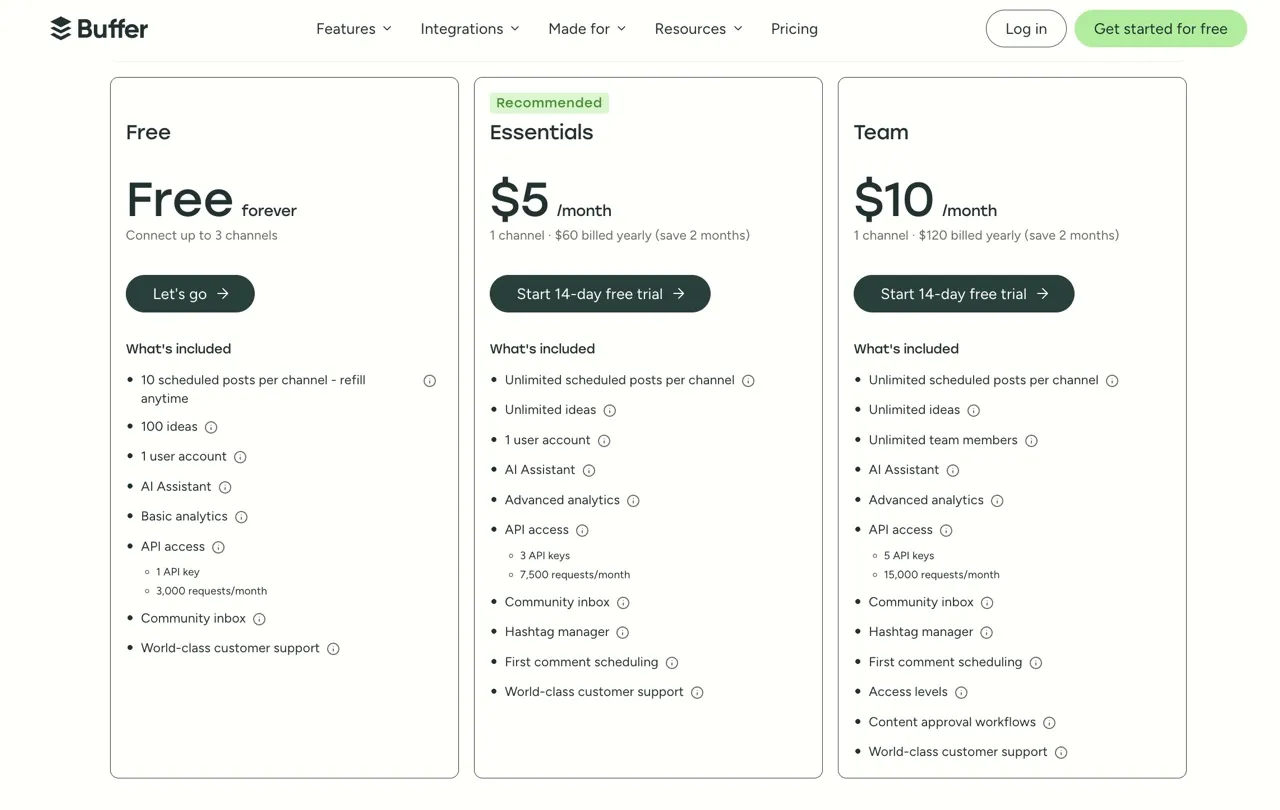
Buffer has a free plan that covers up to 3 channels, with 10 scheduled posts per channel and a built-in AI assistant. Paid plans are priced per channel: Essentials runs about $5 per channel per month on annual billing, and Team runs about $10 per channel per month on annual billing with unlimited team members included. That per-channel rate drops once you pass 10 channels, so the bill bends rather than doubling, and our breakdown of Buffer’s real cost at 5, 10, and 20 channels runs the full ladder. Buffer supports 11 platforms, including Instagram, Facebook, X, LinkedIn, TikTok, YouTube Shorts, Pinterest, Threads, Bluesky, Mastodon, and Google Business Profile.
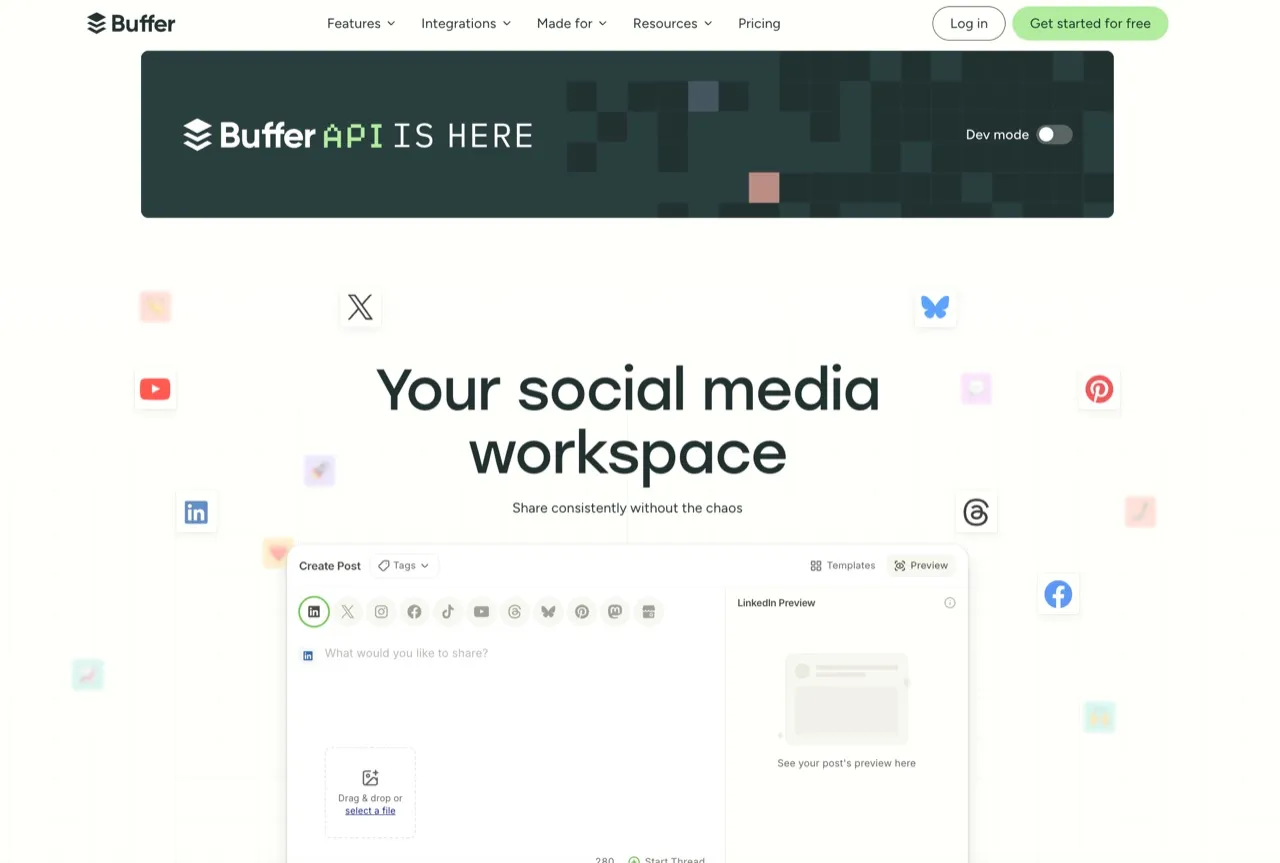
The AI assistant is text only. It generates post ideas, rewrites and repurposes copy, adjusts tone and length, and tailors a post for each platform. It does not generate images or video on its own. Buffer also includes a link-in-bio page (Start Page) on every plan and a public API available on all plans, including free.
Where Buffer frustrates people is depth. Reviews consistently flag bare-bones analytics, no real social listening, and occasional publishing hiccups where posts need a manual check. Buffer is great at what it does. The gaps show up once you need more than publishing.
Who Hootsuite Is Built For
Hootsuite is built for marketing teams and larger organizations. It also holds a 4.3 out of 5 rating on G2 and was named G2’s number one marketing product for 2026, which tells you where its fans are: inside teams that need the full suite and trust the brand.

Hootsuite removed its free plan in 2023. Today there’s a 14-day free trial on its paid plans, no card required, and pricing is per user. The Standard plan starts around $99 per user per month on annual billing and covers one user and up to 10 social accounts. Professional runs about $199 per user per month and adds unlimited accounts, inbox automation, and custom reports. Advanced runs about $399 and adds approval workflows and message routing. Those are all annual-billing rates, and the month-to-month price is unpublished. Enterprise is custom-priced and built for large organizations.
What you’re paying for is the suite. OwlyWriter AI drafts captions, ideas, and repurposed content on paid plans, and a separate assistant called OwlyGPT can generate AI images in-app. Social listening, competitor benchmarking, paid ad reporting, and a team inbox all live in one dashboard. That breadth is real, and for a team it can replace several tools.
The recurring complaint is money. Review sites and Reddit threads are full of users describing price shock at renewal and auto-renewing annual contracts, with support that’s hard to reach when a bill surprises them. The product is powerful. The pricing is the most common source of complaints.
Buffer vs Hootsuite: Side by Side
| Category | Buffer | Hootsuite |
|---|---|---|
| Pricing model | Per channel | Per user |
| Free plan | Yes (3 channels) | No (14-day trial only) |
| Cheapest paid tier | ~$5 per channel/mo (annual) | ~$99 per user/mo (annual) |
| Platforms | 11 | 9 to 10 |
| AI text writing | Yes (all plans, including free) | Yes (OwlyWriter, paid plans) |
| AI image generation | No (native) | Yes (OwlyGPT) |
| AI video generation | No | No |
| Social listening | No | Yes (deeper on higher tiers) |
| Advanced analytics + ROI | Basic | Yes (Advanced and up) |
| Team inbox | Basic comment inbox | Yes (full team inbox) |
| Approval workflows | Team plan | Advanced plan |
| Public API | Yes (all plans) | Yes (paid plans) |
| Best for | Solo creators, small teams | Marketing teams, enterprise |
The table makes the split obvious. Buffer covers more platforms and is far cheaper to start. Hootsuite covers the management layer Buffer doesn’t touch. Almost every other difference flows from that.
The Real Pricing Math: Per-Channel vs Per-User
This is the part that actually decides it for most people, and it’s the part most comparisons gloss over. Buffer charges by the number of channels. Hootsuite charges by the number of users. That means the cheaper tool flips depending on your setup.
| Your setup | Buffer | Hootsuite |
|---|---|---|
| Solo, 3 channels, 1 user | Free, or ~$15/mo on Essentials | ~$99/mo (Standard) |
| Small team, 10 channels, 3 users | ~$100/mo (Team, users included) | ~$297/mo (three per-user seats) |
| 1 person, 25+ channels | ~$250+/mo (Team, per channel) | ~$199/mo (Professional, unlimited accounts) |
A solo creator with a few channels pays nothing or close to it on Buffer, and faces a $99 floor on Hootsuite. A small team sharing a handful of channels still wins big with Buffer, because Buffer’s Team plan includes unlimited users while Hootsuite charges for every seat. Exact seat pricing varies, but the direction holds: per-user billing climbs fast once you add people.
Hootsuite’s per-user model only pulls ahead in one specific case: one person running a very large number of channels. At 25 or more accounts on a single seat, Hootsuite’s Advanced plan with unlimited accounts can undercut Buffer’s per-channel bill. If that’s not you, Buffer is almost always the cheaper of the two.
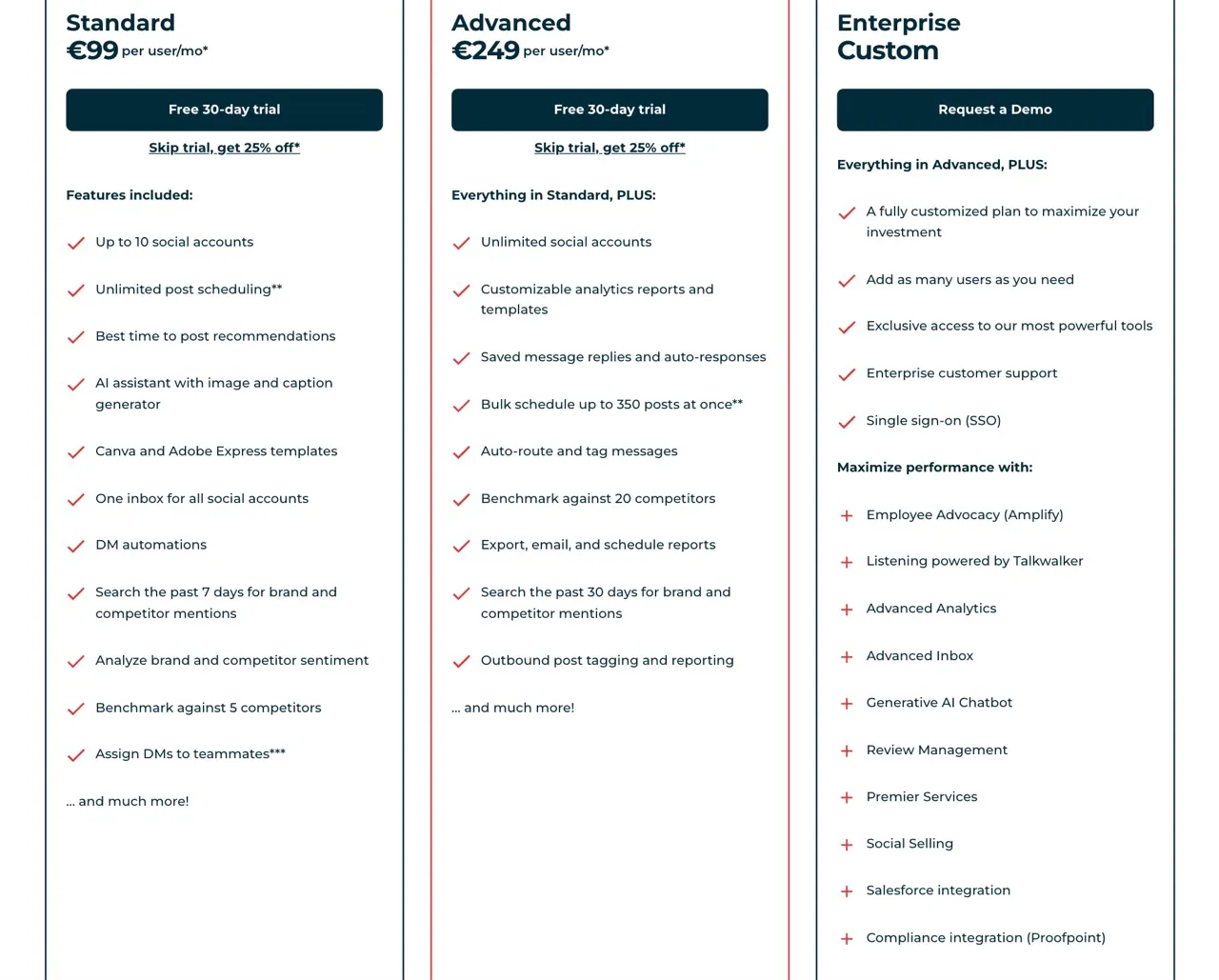
You can confirm both on the live Buffer pricing and Hootsuite plans pages, since both change their numbers fairly often.
Where Buffer Wins
Ease of use. This is Buffer’s defining strength. Most users are scheduling within minutes, and it’s the most common reason people recommend it for solo and small-team use.
Price for small accounts. Free for 3 channels, then a few dollars per channel. For anyone managing under 5 or 6 accounts, nothing about Hootsuite’s pricing competes.
Unlimited users on the Team plan. A small team can share a workspace without paying per seat. That alone can make Buffer a fraction of Hootsuite’s cost for collaborative work.
Platform coverage. Buffer publishes to 11 platforms, including newer ones like Bluesky, Threads, and Mastodon, which matters if you’re spreading across emerging networks.
AI on the free plan. Buffer’s AI assistant is available even on the free tier, while Hootsuite keeps OwlyWriter on paid plans only.
Where Hootsuite Wins
Social listening. Hootsuite tracks brand mentions, sentiment, and competitors. Buffer has nothing comparable. If listening is part of your job, this is decisive.
Analytics and ROI reporting. Hootsuite’s higher tiers pull organic and paid performance into one report with competitor benchmarking. Buffer’s reporting stays shallow next to that.
Unified team inbox. Hootsuite consolidates messages and comments across networks into one queue built for teams. Buffer’s inbox is lighter and aimed at individual creators.
Approval workflows. Structured create-review-publish flows make Hootsuite a better fit for agencies and larger teams that need sign-off before anything goes live.
Breadth in one place. For a team that genuinely needs listening, analytics, ads, and publishing together, Hootsuite can replace several separate tools, which is part of how it justifies the price.
The Gap Neither Buffer nor Hootsuite Fills
Neither tool was built for one category of work, and it’s where a lot of people quietly get stuck.
Neither Buffer nor Hootsuite creates visual content for you. Buffer’s AI is text only. Hootsuite can generate images but not video. So if your bottleneck is producing the actual posts, the writing, the images, and especially short video, you end up bolting on Canva, a video tool, and a voiceover tool around your scheduler.
The other gap is deep automation. Both have an API, but neither is built around heavy programmatic publishing or native automation nodes. If you’re running high-volume, cross-platform repurposing or wiring your content into tools like n8n or Make, you hit a wall fairly quickly. This is usually the moment people start looking past both.
A Third Option: Blotato
Quick disclosure first: I founded Blotato, so I’m not a neutral party here. I’ve kept the Buffer and Hootsuite sections straight, and you can weigh this one with that in mind.
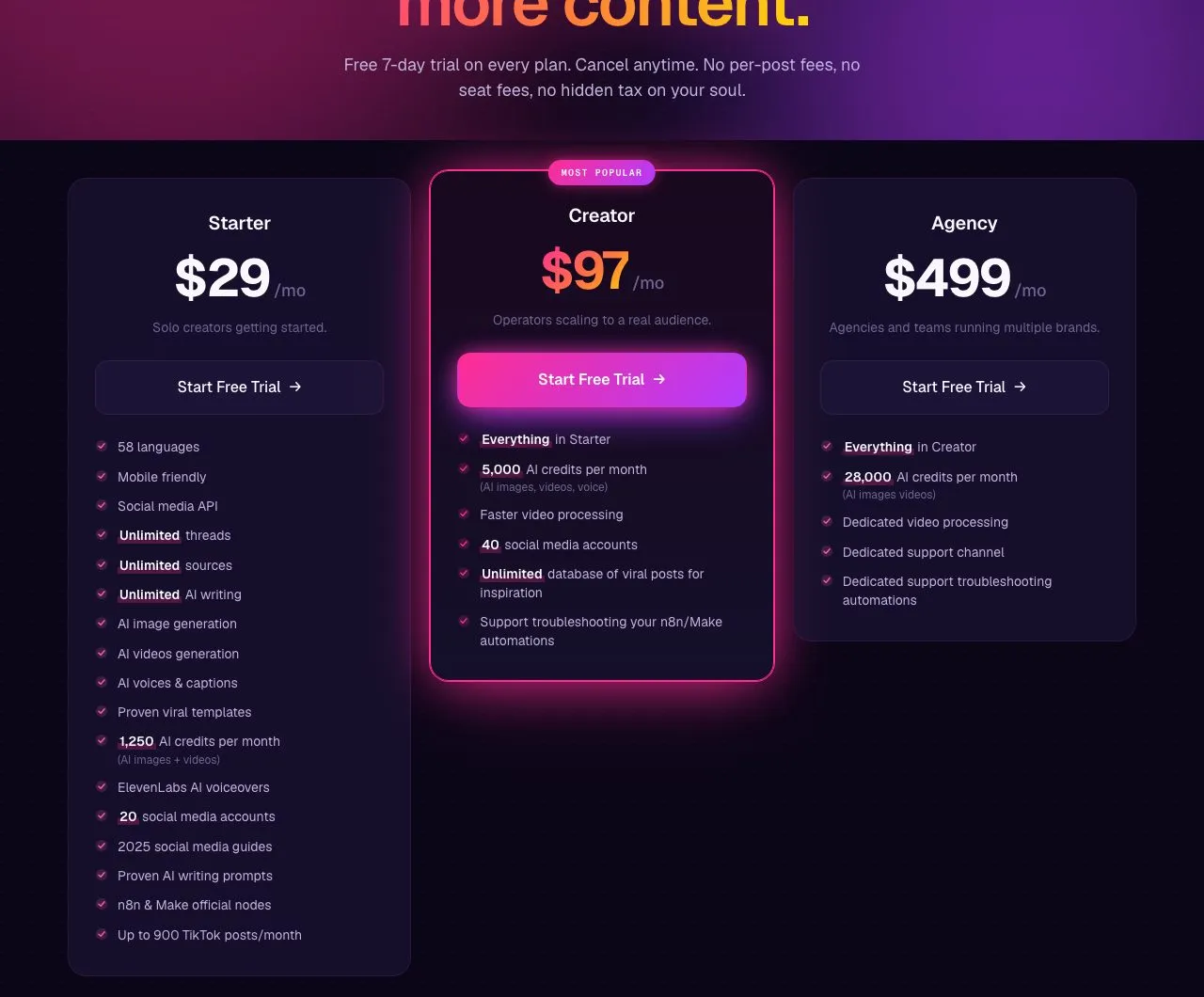
Blotato sits in the gap above. It’s an AI content creation tool that also schedules, built for the person whose problem is making the content, not just queuing it. The AI writing is unlimited on paid plans. It generates images and faceless video, with ElevenLabs voiceovers built in. It publishes to 9 platforms: X, Instagram, LinkedIn, TikTok, YouTube, Threads, Facebook, Pinterest, and Bluesky.
On price, Blotato is flat rate, not per channel or per user. Starter is $29 a month for 20 social accounts, and Creator is $97 a month for 40 accounts. For anyone running many channels, that flat structure works out differently than paying per channel or per seat. There’s also a full REST API on paid plans, native n8n and Make.com nodes, and MCP support for Claude, which covers the automation gap.
Where Blotato is not the answer: it has no social listening, no unified team inbox, and no link-in-bio page. If you need the management suite, Hootsuite is the real tool. If you just need a dead-simple scheduler for a few accounts, Buffer is hard to beat and cheaper. Blotato is for the creation and automation side. You can see the plans on the Blotato pricing page.
Use Buffer If
- You’re a solo creator, freelancer, or small team.
- You mostly need to schedule and publish, not analyze.
- You want a free plan or the lowest possible monthly bill.
- You manage a small number of channels.
- You want a tool you can learn in an afternoon.
Use Hootsuite If
- You run a marketing team or larger business.
- You need social listening and competitor tracking.
- You need advanced analytics and ROI reporting in one place.
- You need a team inbox and approval workflows.
- You have the budget for enterprise pricing.
Consider a Third Option If
- Your real bottleneck is creating content, not scheduling it.
- You want AI image and video generation in the same tool.
- You’re running many channels and per-channel or per-user pricing is adding up.
- You want native automation through an API, n8n, or Make.
Sabrina’s Final Take
Buffer and Hootsuite aren’t really rivals. They’re answers to two different questions. If your question is “how do I stay consistent without overthinking it,” Buffer wins, and the free plan means you can start today for nothing. If your question is “how does my team listen, report, and publish in one place,” Hootsuite wins, as long as you go in clear-eyed about the renewal pricing.
My honest advice: if you have 1 to 5 channels and you mostly publish, start with Buffer’s free plan. If you’re a team that needs the full suite, trial Hootsuite and read the contract terms before the card gets charged. And if you realize your actual problem is making the content, not scheduling it, that’s when a creation-first tool like Blotato is worth a look, and there’s a 7-day trial. For more options on either side, see our roundups of Buffer alternatives and Hootsuite alternatives. We also break down the whole field in one comparison table if you want to see everything at once.
FAQs
Is Buffer cheaper than Hootsuite?
For almost everyone, yes. Buffer has a free plan and charges a few dollars per channel, while Hootsuite starts around $99 per user per month with no free tier. Hootsuite only gets cheaper in one case: a single user managing 25 or more channels, where its unlimited-accounts plan can beat Buffer’s per-channel bill.
Does Hootsuite have a free plan?
No. Hootsuite removed its free plan in 2023. There’s a 14-day free trial on its paid plans, but no permanent free tier. Buffer is the one with a genuinely free plan for up to 3 channels.
Which has better AI, Buffer or Hootsuite?
They’re close on text. Buffer’s AI assistant writes and repurposes copy and is free on every plan. Hootsuite’s OwlyWriter does similar work but only on paid plans, and Hootsuite adds AI image generation. Neither one generates video, so if video matters you’ll need another tool.
Which supports more social platforms?
Buffer supports 11 platforms, including Bluesky, Threads, and Mastodon. Hootsuite supports roughly 9 to 10 core platforms. Buffer has the wider list, especially for newer networks, while Hootsuite focuses on the major ones plus deeper listening across the web.
Is Buffer or Hootsuite better for agencies and teams?
Hootsuite, in most cases. Approval workflows, a team inbox, analytics, and social listening are built for collaborative work. Buffer’s Team plan works for a small team sharing a few channels, but it lacks the management layer agencies usually need to report to clients.
Do Buffer or Hootsuite generate video?
No. Buffer’s AI is text only, and Hootsuite generates images but not video. If creating short-form video is part of your workflow, you’ll either pair them with a separate video tool or use a creation-first platform that includes video generation.