How to Start an AI Social Media Agency in 2026
The repeatable model to start an AI social media agency: one client call a month turned into 30 posts, then scaled with reusable Claude skills.

Most guides on how to start an AI social media agency stop at “let AI write the posts.” That is the easy part, and it is not where the money is.
The money is in a repeatable machine: one meeting with a client, and a full month of content out the other end. I broke this down in a recent video on the 12 ways I’d make money with AI in 2026, and the social media agency was the path I’d pick if I wanted cash coming in fast without babysitting a huge team.
This guide is written for the people I actually think should run this: solo creators, one-person agencies, and small shops who already know their way around AI tools. If you can get Claude to make a Canva carousel, you are already past the step where most people quit.
How to Start an AI Social Media Agency (Video Guide)
If you’d rather watch, this is the full video where I rank all 12 ways to make money with AI. The written guide below zooms in on the social media agency path, with extra detail on the monthly delivery loop and how I’d scale it.
Why “AI Writes the Posts” Is the Wrong Frame
Here is the thing most agency guides get wrong. They obsess over the tools. Which model, which scheduler, which prompt pack. If you do want that breakdown, I ranked the social media tools for agencies by margin per client separately.
Business owners do not care about any of that. I say this as a business owner myself. I recently hired an agency to help with SEO for one of my companies, and honestly, I just wanted the outcome. I did not care which tools they used to get there.
That is the whole game. As I put it in the video, business owners “just want the outcome and do not care whether you use AI or an alien or a camel.” Your job is not to sell Claude. Your job is to sell a busy owner their marketing back.
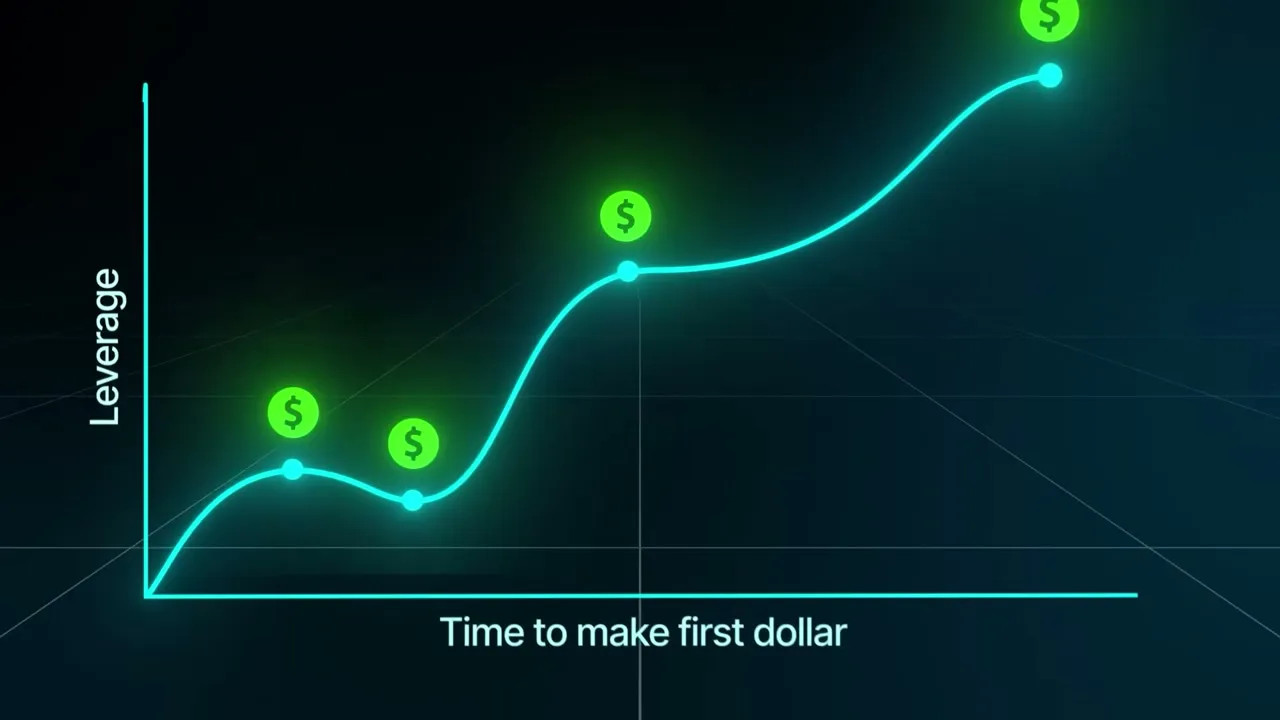
And every business needs marketing. Even a deeply technical founder eventually has to take the thing they built and go tell the world about it. That is why this path has such a fast time to first dollar. The demand is everywhere.
The Offer That Sells Itself
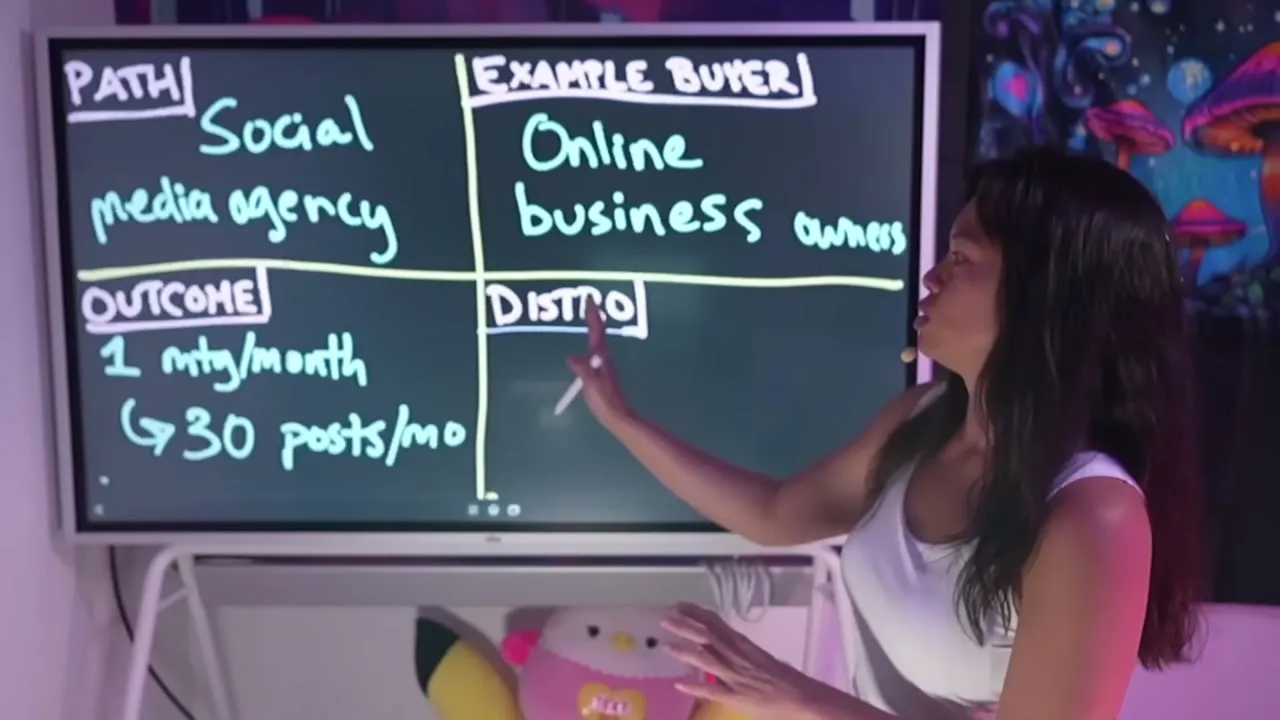
Your buyer is an online business owner. A coach, a course seller, a local service business, a founder running a small software company. They are busy building and shipping and supporting customers, and they barely have time to post.
The offer is simple to say and easy to buy: one meeting per month, thirty posts out the other side.
Here is how I would frame it. You sit down with the owner once a month. You talk for two hours. You have AI record the call, turn it into meeting notes, and then repurpose those notes into 30 unique social media posts for the next 30 days.
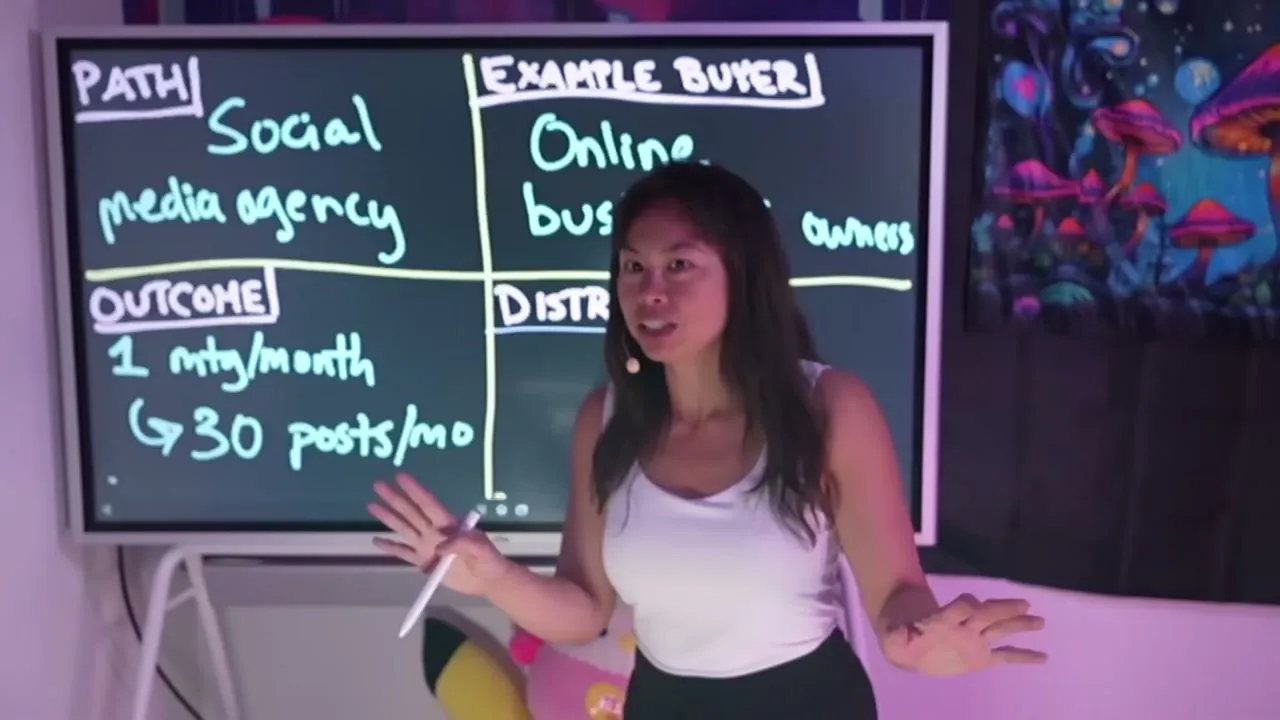
That single conversation is a goldmine. When an owner talks for two hours about their business, their customers, and what they believe, that is easily a month of content. You are not inventing anything. You are mining what they already know and packaging it. The offer is concrete, the outcome is obvious, and every owner already wishes their social media looked better.
If you want to run this loop on your own accounts before you sell it, that is the smart move. Start a free 7-day Blotato trial, connect your platforms, and take one long recording of yourself talking about your niche. Turn it into a month of posts and publish them. New to the app? How to use Blotato from first post to autopilot covers that setup end to end. Once you have felt how fast the meeting-to-calendar loop is, selling it to a client becomes a lot easier, because you can show the receipts.
How to Start an AI Social Media Agency (Step-by-Step)
Here is the repeatable process. The reason this scales at all is that it is the same every time. You can walk into almost any business and run this exact loop.
Step 1: Book One 2-Hour Client Meeting a Month
You are not on retainer for daily calls. You are not in their Slack all day. You get one long meeting a month, and that is the deal.
Set the expectation up front: this meeting is the raw material. The better they talk, the better their month of content. Come with questions about their customers, their offers, their wins, and their opinions.
Step 2: Record the Call and Turn It Into Notes
Have AI record and transcribe the meeting, then generate clean notes out of it. You want the key stories, the specific numbers, the hot takes, and the customer objections, all pulled into a structured summary.
This notes document is the source of truth for the whole month. Everything downstream comes from here, so it is worth getting it clean.
Step 3: Repurpose the Notes Into 30 Posts
Now you take that one call and repurpose it into 30 unique posts. This is where Claude earns its keep. Feed it the meeting notes and have it draft a month of posts in the owner’s voice, spread across the platforms they care about. This is the same AI batching workflow I use for my own content, just pointed at a client’s call instead of your own ideas.
I like Claude for this because you can give it real context about the client and get posts that sound like them, not like a generic brand account. Do not care whether you or your client prefer Claude or ChatGPT here. Pick the tool that gets the outcome and move on.
Step 4: Turn the Best Posts Into Carousels
For the posts that deserve more real estate, make carousels. You can hook up Claude with Canva and have it build a carousel for each one, so a text idea becomes a designed, swipeable post without you opening a design tool.
For an AI-native person, this is a low bar. As I said in the video, non-technical people already got lost two steps ago, but if you are comfortable having Claude drive Canva, this part is genuinely easy. That gap is your edge.
Step 5: Schedule and Publish Across Platforms
Now the content exists. The last mile is getting 30 posts onto the client’s accounts across every platform, on the right days, without you manually posting each one.
This is the step DIY builds break on, because every platform has its own API, its own rules, and its own quirks. It is also where a publishing layer earns its place. I use Blotato here so one approved batch of posts goes out to all 9 platforms on a schedule, and the client sees a full, consistent calendar instead of a dead account.
The reason it fits this workflow so well is that Blotato exposes an MCP endpoint at mcp.blotato.com/mcp. So if you already built the earlier steps in Claude, you do not switch tools to publish. Claude drafts the 30 posts, then schedules and posts them through Blotato inside the same conversation. For an agency, that is the whole loop, from client call to live calendar, without leaving your AI workspace or paying per-post fees to post natively.
How to Get Your First Clients
A great offer with no clients is a hobby. Here is where I would find them.
Instagram DMs work shockingly well for this. You are looking for business owners who have an Instagram account that is just not doing well. Posting inconsistently, low views, a page that clearly is not a priority. You DM them in a genuine way: “Hey, I noticed you are posting inconsistently and your posts are not getting many views.” You are engaging with them right on the platform they are failing at. That is a warm, honest opening.
Cold email works better than people expect, especially once you have a couple of case studies. It is harder at the very start when you have nothing to show, so in the beginning lead with a small offer, like doing something special for your first few clients. I get cold emails every day, and the ones I actually read are the ones that lead with results.
Local businesses are wide open. A lot of local businesses struggle badly on social media. For them, search matters even more than social, but a clean, active Instagram page still helps them show up and look legitimate.
How to Scale It (This Is Where Claude Skills Come In)
Here is the honest limit. This model sits in the middle: faster to first dollar than a product, but harder to scale than one. It is not as easy to grow to $100,000 a month as a product is, because you have clients, and clients need to be babysat. Somebody’s week goes poorly, results dip, and you get the “what’s going on?” message. That is the job.
The thing that pushes past pure hourly work is building reusable assets instead of starting from scratch for every client. This is exactly what I do now with Claude skills.
When you work with multiple clients, you build a repeatable set of Claude skills, then create a fine-tuned version of each skill for each client. A skill for turning meeting notes into posts, or one tuned to a client’s brand voice, is the kind of asset you build once and reuse. Now onboarding client number six is not a blank page, it is loading a template and adjusting it.
Client number six is also where your tooling bill jumps. Most multi-brand schedulers charge by how many brands you connect, so the tier you picked at three clients quietly stops fitting at six, and several of them park API access on a higher plan than the one you are on. How the per-brand tools actually price that growth is the comparison I would run before signing another client.
You do not have to write that base set yourself. My free Claude skills are the pack I fork per client, and the brand-brief skill is the one that holds each client’s voice, so a new account starts as a copy rather than a rebuild.
If you want the delivery engine itself rather than the business model, I build the Claude marketing agent that writes, designs, and publishes the content behind this offer, then break down how to price it as a retainer.
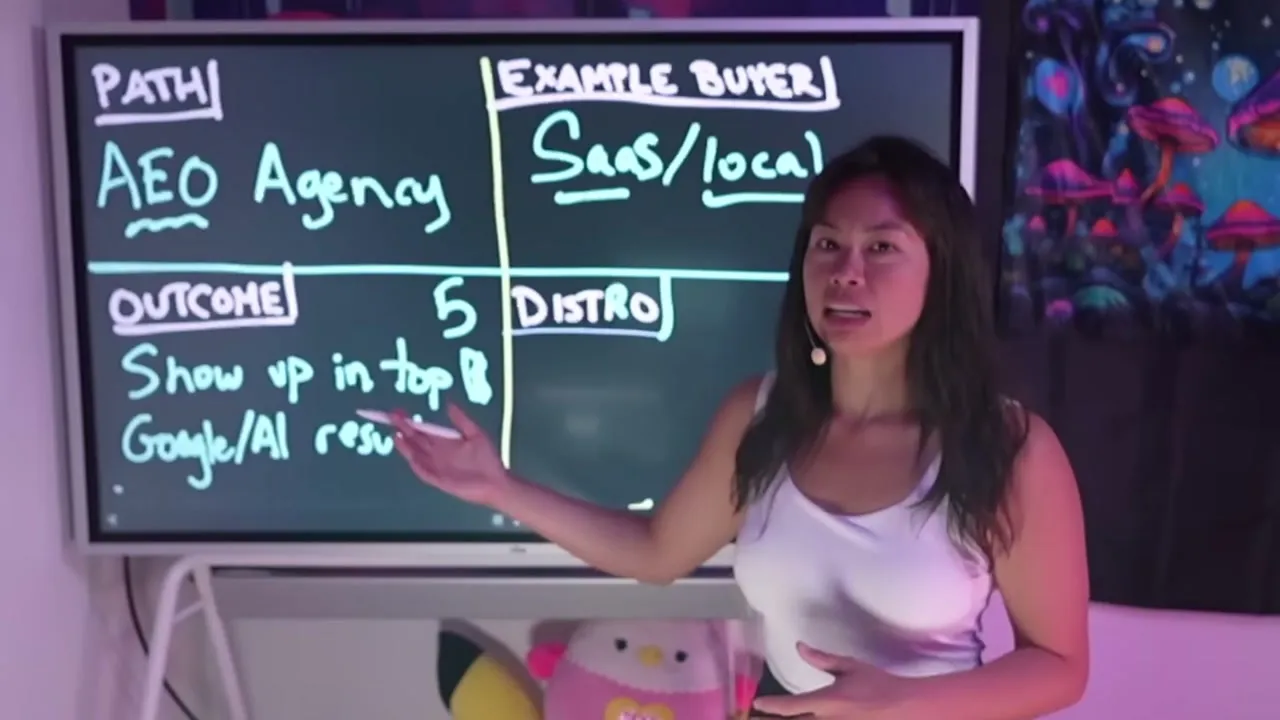
The other unlock is MCP. Instead of copy-pasting Claude’s output into every tool by hand, you use MCP to let those reusable skills act directly inside a client’s real systems, WordPress, Webflow, their scheduler, wherever the content needs to land. That is what turns a manual, hourly workflow into something that scales without you dropping your price. In the video I extend this same engine into a second service later, helping clients rank in Google and AI search, but the point for a social agency is simple: reusable skills plus MCP is how you serve more clients without more hours.
If you want to go deeper, I broke down the exact skills I use in 5 Claude Skills That Run My Social Media, and the MCP publishing side in the best social media MCP servers for posting with Claude.
What This Model Can’t Do (Yet)
I want to be honest here, because most agency guides oversell this.
AI does not remove the client relationship. You still owe them a real strategy, real communication, and hand-holding when a week goes sideways. The 30-posts-from-one-call loop saves you production time, not account-management time.
It also does not run fully on autopilot. Someone has to review the month of posts before they publish. AI will happily draft something off-brand or repeat an idea three times, and it is your name on the account if that ships. The publishing can be automated. The judgment cannot.
And it is genuinely hard to scale to six figures a month with this alone. Clients cap out at some number per person. Reusable skills raise that cap, but they do not remove it, so treat this as a fast-cash entry point rather than pretending one person can serve fifty clients solo.
Results You Can Expect
The strongest thing this model has going for it is speed to first dollar. Because every business needs marketing, you can close a client and start delivering quickly, faster than almost any other AI path except one-to-one coaching.
Realistically, expect to land your first one or two clients through DMs or a warm offer, use them to build case studies, then let those results pull in the next few. The 30-posts-a-month deliverable is easy for an owner to say yes to because they can picture exactly what they get. Every Blotato plan is built to run that publishing loop across all 9 platforms, so as you add clients, the “getting it posted” part does not become your bottleneck.
Sabrina’s Final Take
If I were starting over with AI today and wanted money coming in this month, the social media agency is where I’d begin, because the offer is concrete and the demand is everywhere. Just go in clear-eyed: this is a client business, not a passive one, so keep it lean, build reusable Claude skills so client number six is faster than client number one, and let a publishing layer handle the last mile so you are selling outcomes instead of babysitting APIs. For full transparency, I’m involved with Blotato as a creator and tester, so take that with whatever grain of salt feels right. Start with one client, prove the loop, then decide how big you actually want this to get.
AI Social Media Agency FAQs
How much can you charge for an AI social media agency?
It depends on the outcome, not your costs. Owners happily pay for a full, consistent content calendar they no longer have to think about. Price on the value of that outcome, and remember AI lowers your delivery time, not the value the client receives, so you do not have to race to the bottom on price.
Do I need to be technical to start one?
No, but you need to be AI-comfortable. If you can have Claude draft posts and build a Canva carousel, you can run the core loop. The people who struggle are the ones who have never touched these tools, and that gap is exactly why clients will pay you to do it for them.
How many clients can one person handle?
Fewer than the “scale to 50 clients” hype suggests, because clients need real communication and account management. The realistic move is to build reusable Claude skills so each new client is faster to onboard, and to add a higher-value service like search, rather than stacking endless social clients on one person.
Why is Blotato a good fit for running an agency?
For one account, a basic scheduler is fine. Agencies are different: you juggle many client accounts across 9 platforms, each with its own API quirks, and you are already working in Claude. Blotato fits because it pairs native cross-posting to all 9 platforms with an API and MCP built for AI agents, so the same Claude workflow that writes the posts also publishes them. You get one publishing layer for every client instead of wiring up each platform yourself, which is the part DIY builds break on.
Is this different from the AI business ideas for solopreneurs?
It overlaps. The social media agency is one specific path, and I cover it alongside others in my AI business ideas for solopreneurs. The difference here is the operational detail: the exact one-call-to-30-posts loop and how to scale it with reusable skills.