3 AI Business Ideas for Solopreneurs ($0 to $1M)
3 AI business ideas for solopreneurs in 2026, from $0 to $1M. Bootstrapped, realistic models from a founder who's done it.

I know people making $50,000 a month from AI. None of them built a traditional tech startup. They found gaps nobody else is filling yet, and I’m going to share three AI business ideas for solopreneurs with you today.
Most “$0 to $1M” lists ignore the one constraint that kills solo businesses: distribution you can’t sustain alone. I pressure-test each idea against that specific wall, drawing on the audience I had to build to make my own bootstrapped business work.
These three ideas target what I call the “deployment gap”: technology improves faster than humans know how to use it, and the people who bridge this gap get paid. I sold my AI company for millions at age 30, and now I teach millions of people AI for free. Here’s what’s actually working.
3 AI Business Ideas for Solopreneurs (Video Guide)
If you’d rather watch the full breakdown, this is the video version. The written guide below covers the same three business models with extra detail on how to actually get started.
Why the Deployment Gap Is Your Opportunity
Companies are adopting AI tools at record speed, but they don’t know how to use them. This gap is the opportunity.
When technology improves faster than humans know how to use it, the people who bridge this gap get paid. And right now, that gap is massive. We have 20 million plus people paying for Microsoft Copilot, but only 7 million people actually using it productively, and they’re probably using just 10% of the functionality.
The same pattern repeats across every AI tool. Anthropic grew their annualized revenue by 80x in Q1 2026. That means 80x the user base looking for help. Supply versus demand is wildly out of balance, and that’s where solo operators can win.

The 3 AI Business Ideas for Solopreneurs
1. Microsoft Copilot Training
I am sure many of you thought I was going to say Claude, and it’s true, Claude is super hot right now. But number one is very underserved.
Microsoft has over 20 million paid Copilot seats. Nearly 70% of Fortune 500 companies are stuck using Copilot whether they want to or not. However, the amount of people who are actually productive with Copilot, according to a recent study, was around 7 million out of 20.
This gap is the opportunity.
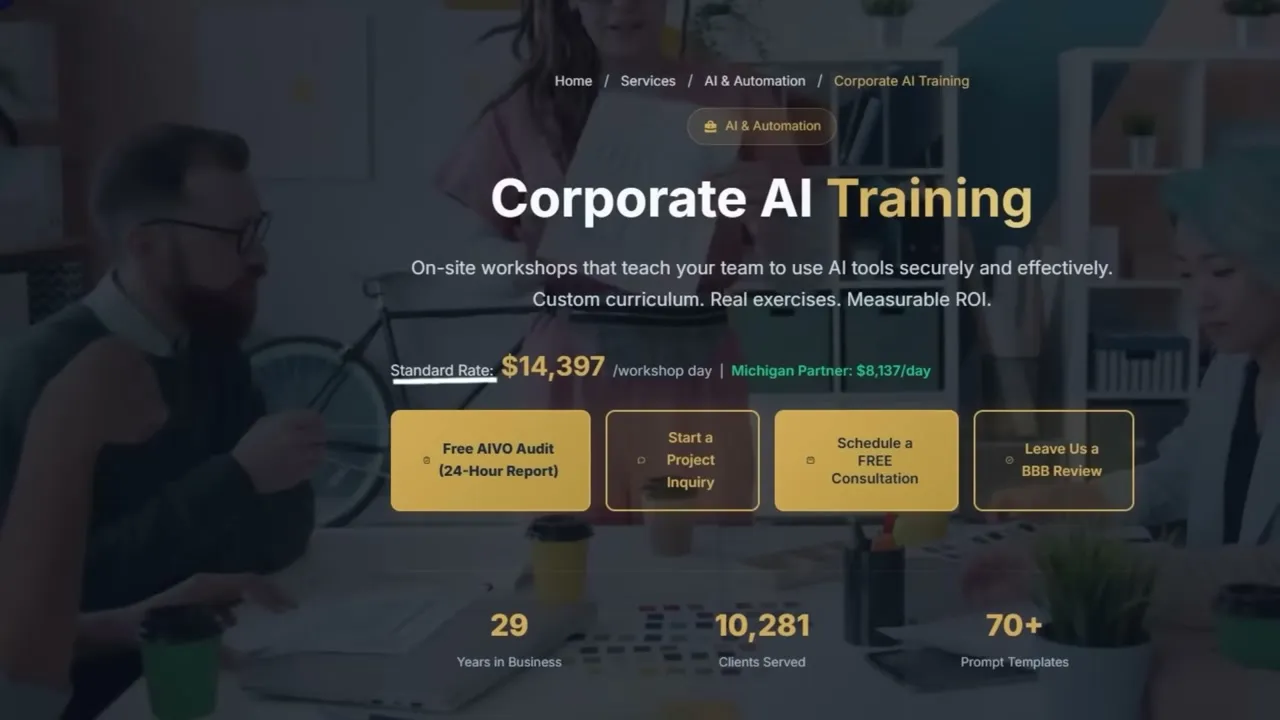
Here’s what companies are actually paying for Copilot training:
- Standard enterprise workshops: $15,000 for a single day
- Microsoft marketplace workshops: $5,000 for an 8-hour session
I get people DMing me all the time asking how to do things in Copilot. “I’m stuck using Copilot at work, how do I do 5% of what you just showed for Claude?” This is a huge opportunity.
Just because everybody wants to learn Claude doesn’t mean they have access to Claude in a company environment. Many companies are stuck using Copilot, and they’re not going to adopt shinier options anytime soon.
Action plan: I dropped a 2-hour Copilot course with Sharee Brockington on my YouTube channel. She has trained over 60,000 people how to use Copilot. Start there if you want to explore this opportunity.
If you’re building any kind of AI training or coaching business, you’ll eventually need a way to distribute your expertise at scale. That’s where content repurposing comes in. I use Blotato to turn one piece of content into posts across every platform, which is how I built the audience that makes this kind of business model work. Blotato is my own company, so read that recommendation as the house’s.
2. Paid AI Community
This business model is proven. We’re taking the existing model of a community, which typically offers courses, weekly meetings, Q&A, and awesome people, and adding AI to it.
The best part of a community is you get paid recurring per month. You don’t have to fight for every dollar every single month.
You can go two directions:
- A community that teaches AI specifically
- A community about a non-AI topic that uses AI to help you run it (content creation, moderation, lead generation, copywriting)

How to Segment Your Community
Think about segments, not just topics:
- Demographic: I have a free School community just for women in AI
- Technical ability: Non-tech beginners versus developers, pick your spot on the spectrum
- Skill-based: Content creation, video generation with Claude, a specific tool
- Industry-specific: Real estate, compliance, HR, CFOs, middle managers
There’s already massive demand for Claude content that doesn’t exist yet. How to use Claude for real estate, how to use Claude for CFOs, how to use Claude for compliance, how to use Claude for my team of 300 people. The niches I just mentioned don’t get much attention at all.
I wouldn’t be surprised if there are 50 Claude-focused communities by the end of the year just on School because it’s so hot right now. But there’s still a big gap around vibe coding communities, demographic-based communities, specific income goals, and industry-specific communities.
Right now prompt: Ask ChatGPT or Claude: “What AI education niche fits my skill? Ask me clarifying questions.”
3. Vibe Coding Agency
This is pretty much the same as a software development agency of the past, but you’re heavily using vibe coding tools and you’re transparent about it. Clients know you’re using vibe coding tools to deliver faster and higher quality.

Old Way vs New Way
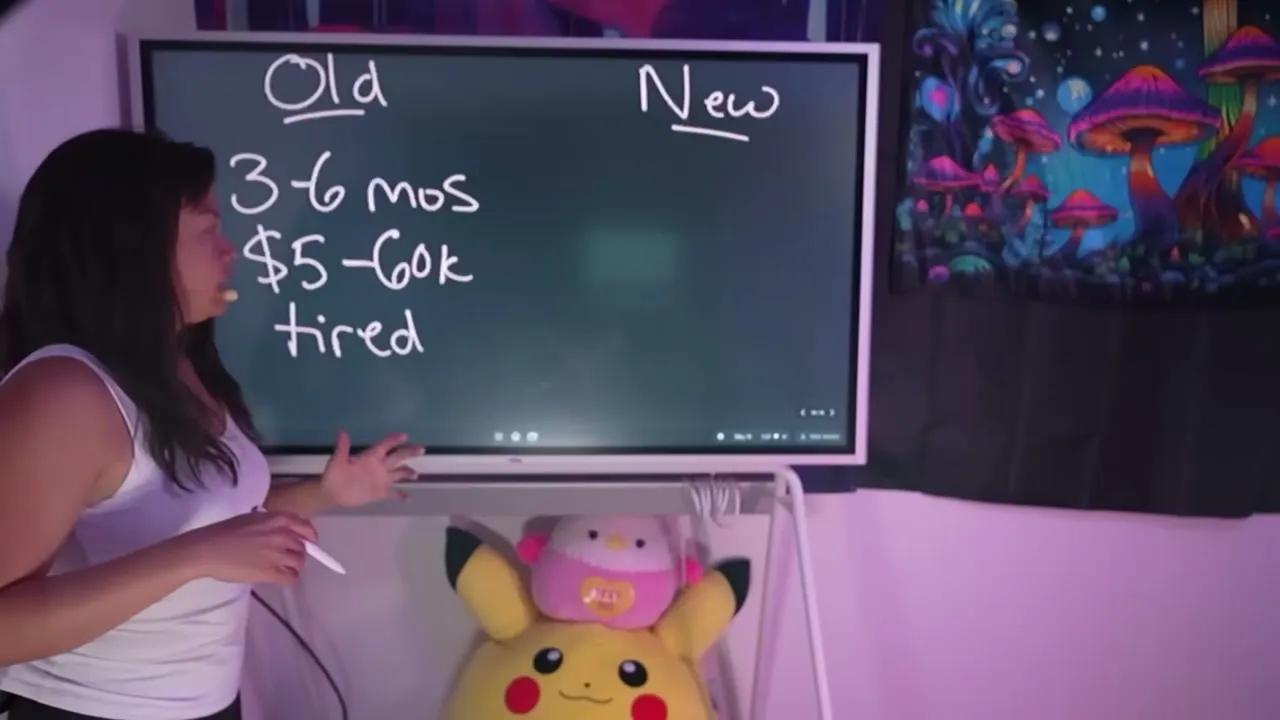
Old way:
- Building an MVP could take 3-6 months
- Cost anywhere from $5,000 to $60,000
- You’re tired by the end, priorities change
- You launch to 10 people, they don’t like it, and you’ve lost energy to iterate
New way with vibe coding:
- Compress the cycle from 3-6 months to 1-3 weeks
- Cost drops to around $1,000 for tools and credits
- You still have energy left to bring it to market and iterate
Why Clients Still Pay Agencies
You might wonder why clients would pay an agency if they can just vibe code themselves. Here’s what clients actually pay for:
Speed: Non-technical founders with money can make a $5,000 purchase decision in 15 seconds if you can deliver faster than they could figure it out themselves.
Clarity: They want to know if their idea is a yes or a no as fast as possible. The worst thing is wasting three months on something that won’t work.
Reliability and safety: They need to know the vibe coded app won’t accidentally leak customer data. Most freelancers won’t be doing proper security checks.
Your pitch: “We’ll deliver it quickly, you’ll get clarity on whether this idea is a yes or no as fast as possible, and we’ll make sure your app doesn’t accidentally leak customer data.”
You can take on more clients because of the efficiency of vibe coding without significantly reducing your prices. These things are premium.
What These Ideas Can’t Do (Yet)
All three ideas require distribution. You need to be able to reach the people who need what you’re offering.
- Copilot training requires access to enterprise buyers or HR/L&D decision makers
- Paid communities require an audience to recruit members from
- Vibe coding agencies require trust signals and a portfolio
None of these are “post it and they’ll come” businesses. The deployment gap is real, but you still have to bridge it by showing up where your buyers are, which usually means content. If you’re exploring the content angle, I cover the best AI marketing tools and AI content repurposing tools that make solo distribution possible, plus the full AI tools I run my one-person business on.
Results You Can Expect
These are not overnight wins. They require building distribution first, which is why I emphasize content so heavily. For a deeper look at how I think about faceless passive income ideas, that post covers the content angle in more detail.
But the numbers are real:
- Copilot trainers charging $5,000-$15,000 per workshop day
- Community operators making recurring revenue per month from engaged members
- Vibe coding agencies compressing months of work into weeks
For a full breakdown of what this looks like in practice, Sandy Lee stacked five income streams to $48,000 in a single month with no tech background and a full-time job.
The deployment gap isn’t closing anytime soon. AI tools keep shipping faster than people learn to use them, and the AI skills that actually pay in 2026 are the foundational ones most people skip. That gap is your window.
Sabrina’s Final Take
All three of these ideas are highly underserved relative to how big the opportunity is. There are paid AI communities, but not that many relative to the demand. There are Copilot trainers, but nowhere near enough for 20 million paid seats. There are vibe coding freelancers, but few agencies positioning themselves around speed, clarity, and reliability. If you want to test content distribution as part of any of these models, Blotato’s 7-day trial covers everything I use to repurpose one video into a week of posts.
AI Business Ideas for Solopreneurs FAQs
Which AI business idea has the lowest startup cost?
A paid AI community has the lowest startup cost. Platforms like School are free to start, and you only need to invest time in creating initial content and building an audience. Vibe coding agencies require tool subscriptions ($100-300/month), and Copilot training requires access to enterprise clients.
Do I need technical skills to start a vibe coding agency?
Yes, but the bar is lower than traditional development. You should understand how to use tools like Cursor, Bolt, or Replit, and you need enough technical sense to spot security issues. You don’t need to be a senior developer, but you can’t be completely non-technical.
How do I find enterprise clients for Copilot training?
Start with LinkedIn. Companies stuck using Copilot are actively searching for help. Target HR, L&D, and IT decision makers at Fortune 500 companies. You can also list your workshop on the Microsoft Partner marketplace once you have credentials.
What’s the best AI community topic to start with?
Pick a niche where you have genuine expertise or experience. Industry-specific communities (real estate, compliance, HR) are underserved. Demographic communities (women in AI, non-technical founders) also have less competition than general “learn Claude” communities.
How long does it take to build enough audience to monetize?
Expect 6-12 months of consistent content before you have enough distribution to support a paid community or attract agency clients. If the agency route is the one that appeals to you, here is how to start an AI social media agency with a repeatable one-call-to-30-posts model. Copilot training can move faster if you already have enterprise connections or can get listed on the Microsoft marketplace.