Blotato vs Planable: Best Tool for Workflows in 2026?
Blotato vs Planable: do you need client-approval workflows, or are you the only approver? The 2026 breakdown for solo creators vs teams.

Blotato vs Planable comes down to one question almost nobody asks before they pay: who approves your posts? If the honest answer is “me, and only me,” you are looking at two tools that solve different problems.
Planable is built so a team and its clients can review, comment on, and sign off on content before it goes live. Blotato is built so one person can create that content with AI and publish it everywhere without a sign-off step. Both are good at their job. The mistake is buying the approval tool when there is no one on the other end of the approval.
This is the 2026 breakdown for figuring out which job you are actually trying to do.
Blotato vs Planable: At a Glance
Planable is the better pick if: you run a team or an agency where posts need internal or client sign-off before they publish, and your real bottleneck is feedback, not creation.
Blotato is the better pick if: you are a solo creator or small operator who writes, designs, and ships your own content, and you want AI to do the heavy lifting on creation and posting.
They Share a Search Result, Not a Job
They show up in the same searches, so people assume they compete head to head. They do not, really.
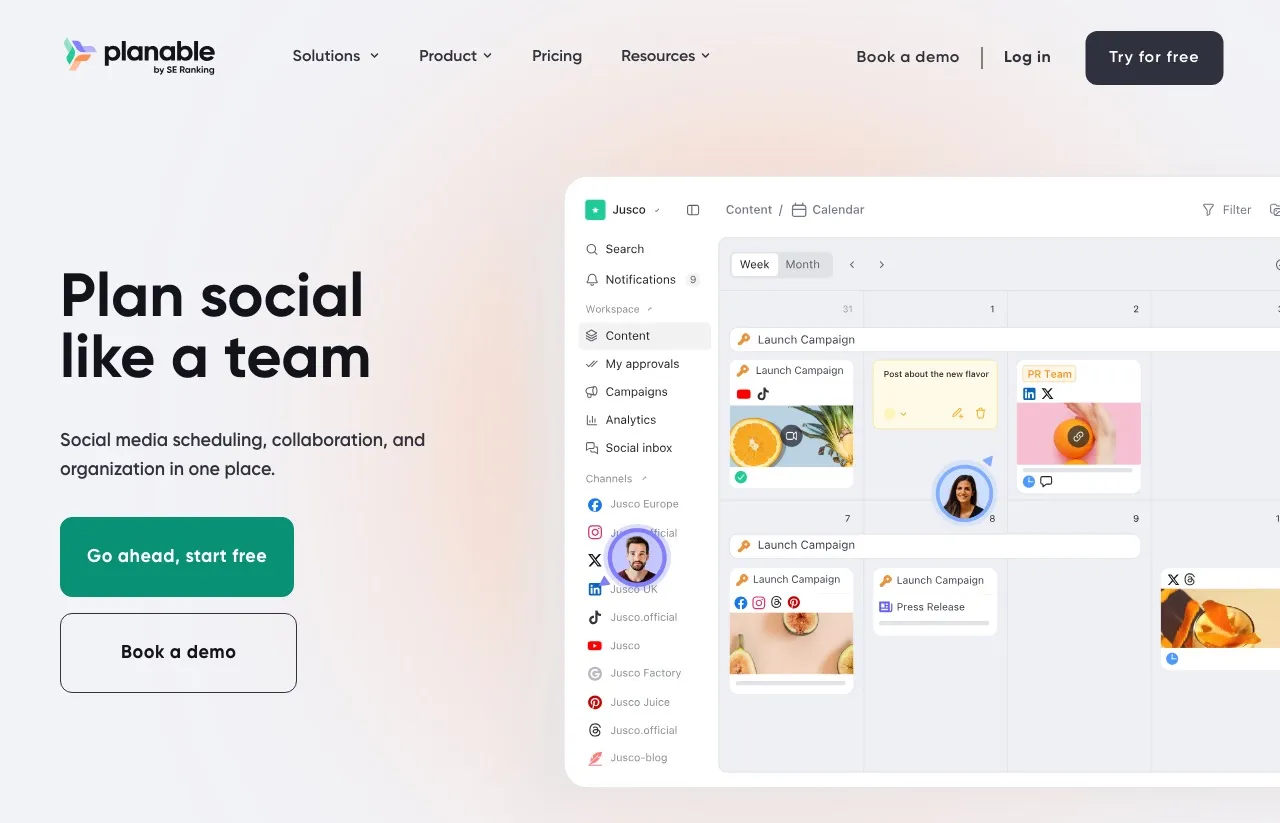
Planable is a collaboration and approval layer that sits on top of social publishing. Its whole identity is the review loop: a post gets drafted, a teammate or client looks at it in a live preview, leaves a comment, and approves it. Then it schedules. That loop is the product.
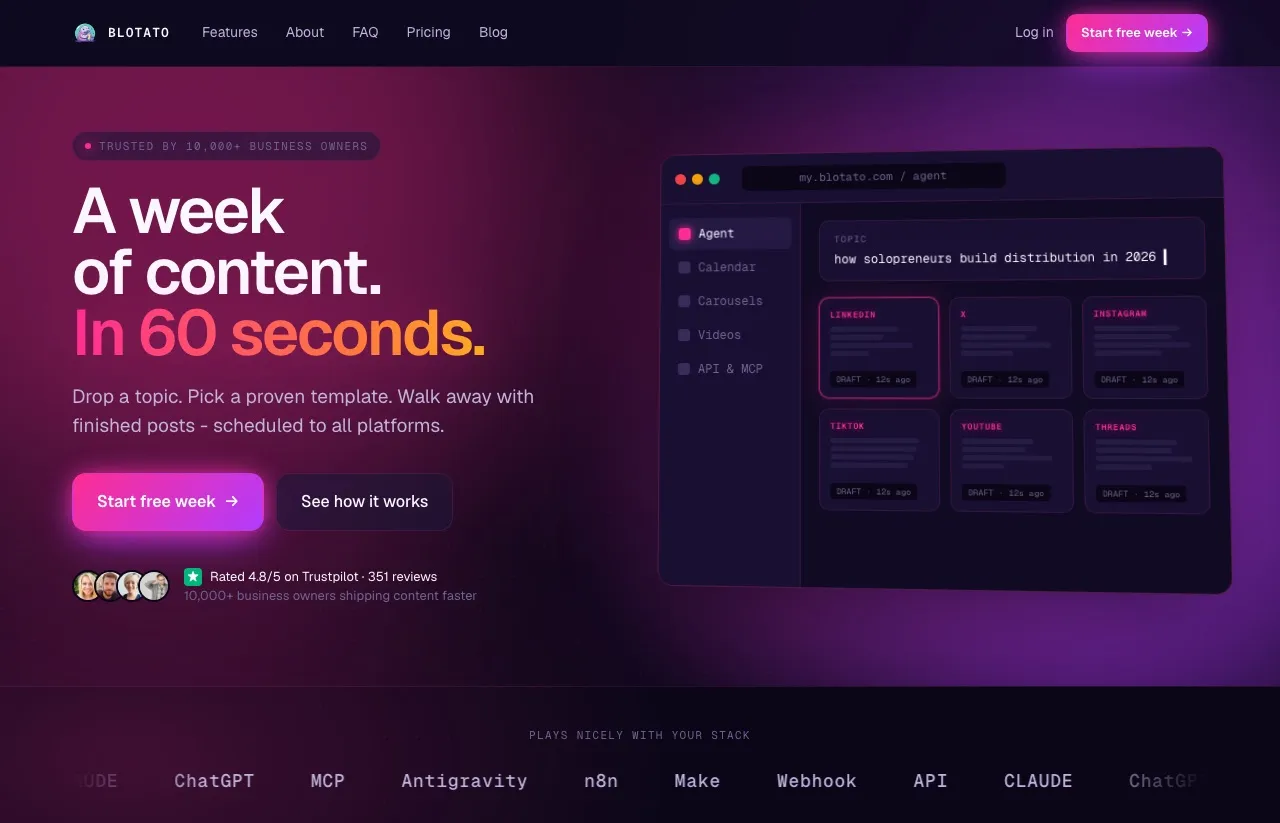
Blotato is a creation and automation engine. You drop in a topic, the AI writes the posts, generates images and faceless video, and pushes everything out to your accounts. There is no approval loop because there is usually no one to approve to.
So this is less “which tool wins” and more “which half of the workflow is your actual problem.” If your content is slow because three people have to bless it, Planable. If your content is slow because you are making all of it yourself, Blotato.
Teams Where Every Post Needs Sign-Off
Planable is built for marketing teams and agencies that manage content for other people. You can read their full pitch on the Planable homepage, and the framing is consistent everywhere: collaboration first.
Founded in 2016, Planable now serves thousands of marketing teams, including brands like KFC and Hyundai. In August 2025 it was acquired by SE Ranking, the SEO software company, so it is now part of a larger marketing-tools suite. Reviews lean positive, with users on G2 and Trustpilot specifically praising the visual content calendar and the clean client-approval flow.
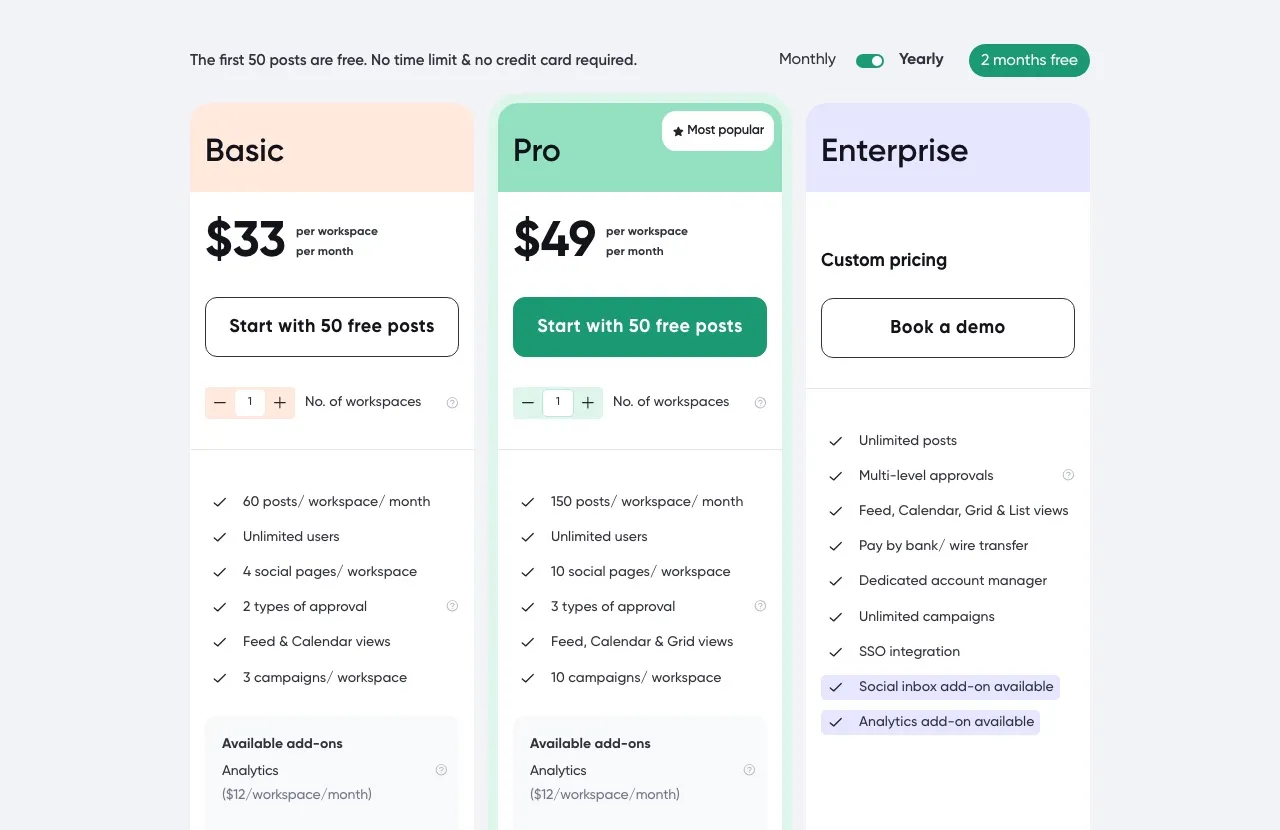
Here is what every plan includes. Planable prices per workspace, not per seat, and a workspace can have unlimited users. A workspace roughly maps to one brand or one client. Each plan caps how many posts you can create per workspace per month and how many social pages you can connect:
- Basic is $33 per workspace per month, with 60 posts and 4 social pages per workspace.
- Pro is $49 per workspace per month, with 150 posts and 10 social pages.
- Enterprise is custom pricing, with unlimited posts, 50 pages, and multi-level approvals.
The approval workflow is genuinely the best part. You can set it to no approval, optional, required, or multi-level, where a post needs sign-off from several parties before it can publish. Clients can leave feedback through a simple link without even creating an account. For an agency juggling stakeholders, that is the feature that earns the bill.
Creators Who Approve Their Own Work
I am involved with Blotato as a creator and tester, so take this with whatever grain of salt feels right. I have tested just about every social media tool that exists, and I use Blotato as my own daily driver for content.
Blotato is built for the person who is the whole content team. You write the posts, you make the graphics, you hit publish. There is no client, no approval chain, no review meeting. The slow part of your week is the making, not the approving.
That is exactly where the AI does its work. You give Blotato a topic, and it drafts native posts for each platform, generates images and carousels, and can even produce faceless video with ElevenLabs voiceovers. Then it publishes to all 9 platforms it supports: X, Instagram, LinkedIn, TikTok, YouTube, Threads, Facebook, Pinterest, and Bluesky.
Planable vs Blotato: Side by Side
| Category | Planable | Blotato |
|---|---|---|
| Pricing model | Per workspace (unlimited users) | Flat rate |
| Free plan | No (50-post free trial, no card) | No (7-day free trial) |
| Cheapest paid tier | $33/workspace/mo (Basic, 4 pages) | $29/mo flat (Starter, 20 accounts) |
| Platforms | 9 | 9 |
| AI text writing | Yes (AI generate and rewrite) | Yes (unlimited generation, trained on viral posts) |
| AI image generation | No | Yes (built in, uses AI credits) |
| AI video generation | No | Yes (faceless video plus ElevenLabs voiceovers) |
| Public REST API | Pro ($49) and Enterprise only, not on Basic | Yes (full API on paid plans) |
| n8n / Make.com nodes | No (Zapier only) | Native nodes for both |
| MCP / Claude integration | Yes (MCP Connector, all three paid plans) | Yes |
| Approval workflows | Yes (up to multi-level) | No |
| Client collaboration | Yes (core feature) | No |
| Analytics | Add-on ($14/workspace/mo) | Built in |
| Trial | 50 free posts, no time limit | 7 days |
The table makes the split obvious. The two tools barely overlap outside of scheduling. Planable owns the columns about collaboration. Blotato owns the columns about creation and automation. Almost nothing is contested.
A Best-in-Class Approval Workflow
Planable is a focused tool that does its core job extremely well. Here is where it genuinely beats Blotato.
1. The approval workflow is best in class. This is the reason Planable exists, and it shows. You can require sign-off from one person or stack a multi-level chain across team, client, and legal. Nothing publishes until it is approved. If your content currently dies in a Slack thread or an email chain, this fixes it. Blotato has nothing like this because it is not built for it.
2. Client collaboration without the friction. Clients can review and approve posts through a shareable link, no account needed. Reviewers leave comments and annotations right on the post, in context. Agencies repeatedly call this out as the thing that replaced their messy feedback process.
3. The visual calendar is the cleanest in the category. Planable shows your posts in a feed, calendar, grid, or list view, with a live preview of how each post will look on each platform before it goes out. For a content manager planning a month across several brands, that visual layer is real value.
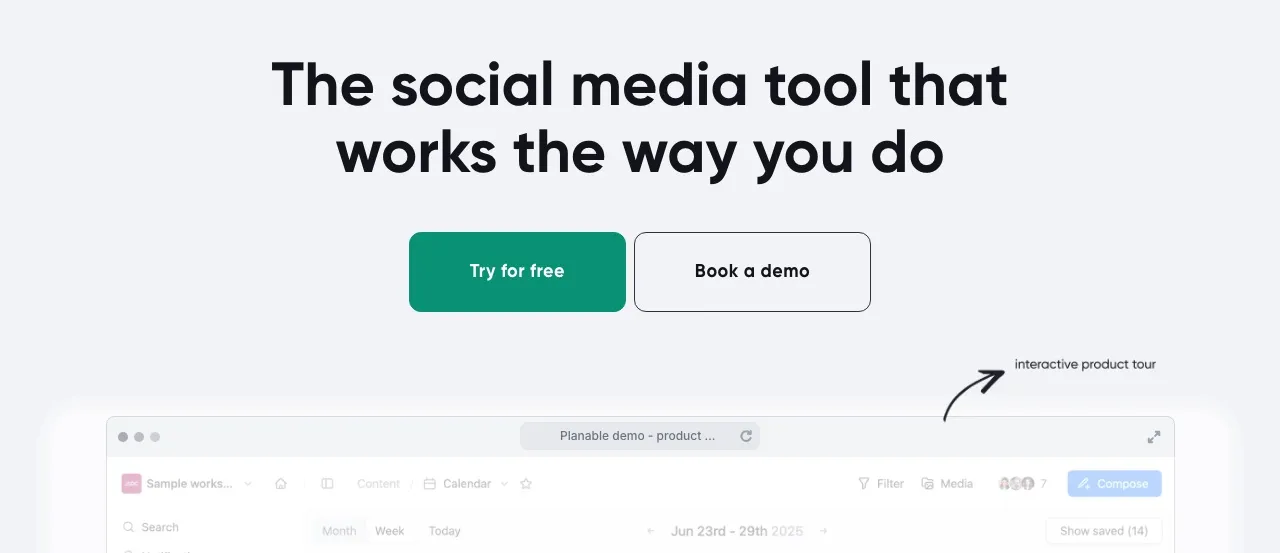
4. Unlimited users per workspace. Because Planable charges per workspace, not per seat, you can add your whole team and your client’s whole team to a workspace without the cost climbing. For a collaboration tool, that is the right pricing shape. A 10-person agency team does not pay more than a 2-person one for the same workspace.
5. It is built for multi-brand structure. The workspace model maps cleanly onto “one client, one workspace.” Agencies that manage many brands get clean separation, per-workspace permissions, and tidy client-facing approvals out of the box.
Everything Upstream of the Approval Step
Blotato wins on everything upstream of approval: making the content and getting it out the door without you touching every step.
1. AI that actually creates, not just edits. Planable’s AI can generate and rewrite text. Blotato generates unlimited text trained on over a million viral posts, plus images, carousels, and faceless video with voiceovers. One tool drafts a caption. The other produces the whole post, art included. If creation is your bottleneck, that gap is the entire decision.
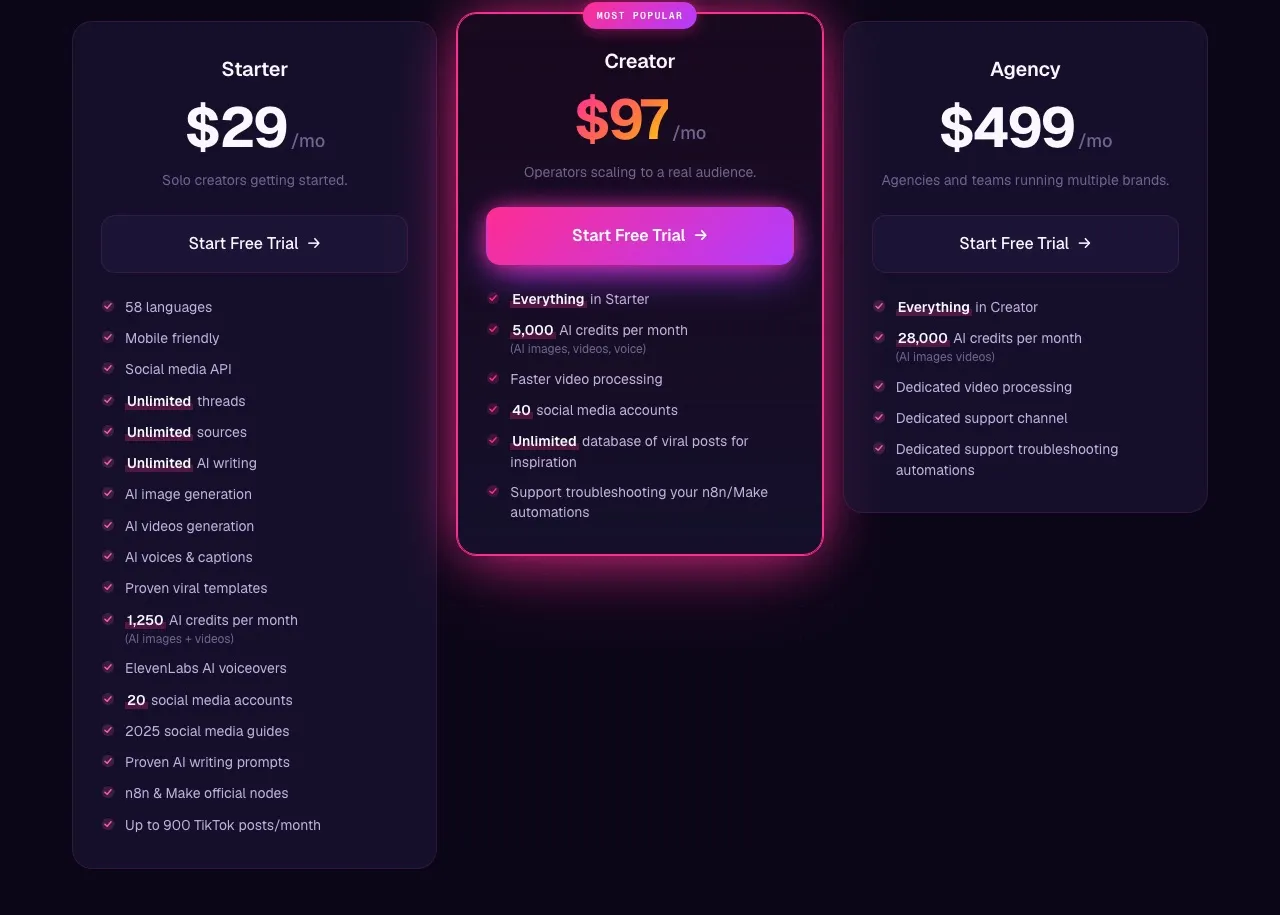
2. Flat pricing that does not cap your output. Blotato Starter is $29 a month flat for 20 accounts, with no per-post limit. Planable Basic is $33 per workspace and caps you at 60 posts a month. If you post daily across platforms, 60 posts disappears fast, and you are either upgrading to Pro at $49 or paying for a second workspace.
3. Automation depth, not just an endpoint. Planable now ships an MCP Connector on all three paid plans, so the older “no API at all” framing you will still find in some comparisons, including an earlier version of this one, is out of date. Its public REST API is a separate product and starts on Pro at $49, not on Basic. What Blotato adds on top is native n8n and Make.com nodes rather than Zapier as the bridge, plus creation and publishing behind the same key, so an agent can write the post, make the image, and publish it without a second vendor in the chain.
4. Analytics and creation are included, not add-ons. With Planable, analytics and the social inbox are both paid add-ons on top of the base plan, at $14 and $9 per workspace a month. The plan cards quote the same two add-ons at $12 and $7.50, which is what they cost spread over an annual commitment, so check which billing period your checkout is on before you budget. With Blotato, the creation and publishing surface is all in the flat price.
Per-Workspace Pricing and the Part That Actually Matters
Here is the plan-by-plan view, then the part that actually matters.
| Tier | Planable | Blotato |
|---|---|---|
| Entry | $33/workspace/mo (Basic) | $29/mo (Starter) |
| Mid | $49/workspace/mo (Pro) | $97/mo (Creator) |
| Top | Custom (Enterprise) | $499/mo (Agency) |
| Trial | 50 free posts, no time limit | 7-day free trial |
Now the entry-tier comparison, capability by capability. You can confirm Blotato’s tiers on the Blotato pricing page:
| Capability at the entry tier | Planable Basic ($33/wksp/mo) | Blotato Starter ($29/mo) |
|---|---|---|
| Social accounts | 4 pages per workspace | 20 total |
| Posts per month | 60 | No per-post cap |
| AI text writing | Yes | Unlimited |
| AI image generation | No | Included (uses credits) |
| AI faceless video | No | Included (uses credits) |
| MCP connector | Included (all three paid plans) | Included |
| Public REST API | No (Pro $49 and up) | Included |
| Native n8n / Make nodes | No (Zapier) | Included |
| Approval workflow | Included | Not offered |
Blotato’s Starter costs less and includes two full categories of features Planable does not sell at any tier: AI image generation and AI video. Planable’s Basic includes one category Blotato does not sell at all: a real approval workflow. That single row is the whole comparison in miniature.
A few honest caveats, because the answer is not “Blotato always.”
- If you genuinely need client sign-off before posts publish, Planable’s approval workflow is worth more than every AI feature Blotato has. Blotato cannot do this, full stop.
- If you only need a caption assist and never touch image or video generation, you are paying Blotato for a creation surface you will not use, and Planable’s lighter AI is a fine fit.
- If you are one person with no clients and you post a few times a week, Planable’s 60-post Basic cap may never bind, and its calendar might be all you want.
Planable Wins Wherever Sign-Off Is Mandatory
- Posts need approval from a teammate, a client, or both before they go live.
- You run an agency or in-house team managing content for multiple brands.
- Your slow step is feedback and sign-off, not making the content.
- You want a clean visual calendar with per-platform previews for client review.
- You value unlimited team seats inside a shared workspace.
No Approval Chain? You’re Paying for an Empty Feature.
- You are the only person who approves your own content.
- Your bottleneck is creating the posts, not reviewing them.
- You want AI to generate text, images, and faceless video, not just edit captions.
- You want to automate publishing through an API, n8n, Make, or Claude.
- You post often and do not want a monthly post cap.
A Workflow Question, Not a Feature Scoreboard
Blotato vs Planable is really a question about your workflow, not a feature scoreboard. If you have people who must approve your posts, Planable is built for exactly that, and it does it better than anything I have used in that lane. If you are the approver, the creator, and the publisher all at once, an approval tool is solving a problem you do not have, while leaving the creation work entirely on you.
I lean toward Blotato because most creators I talk to are a team of one, and the thing eating their week is making the content, not signing off on it. But if you are an agency with clients who need to bless every post, do not let the AI features pull you off Planable, because Blotato will not replace that approval loop.
If you are still unsure, my honest advice is to start with Planable’s free trial if you have clients or teammates who approve your content, and try the Blotato 7-day trial if you are flying solo and want AI to take more of the creation off your plate. For more on this whole category, the best social media automation tools roundup and the Blotato vs Sprout Social breakdown both go deeper on the creator-versus-team split.
Blotato vs Planable FAQs
Is Blotato cheaper than Planable?
At the entry tier, yes. Blotato Starter is $29 a month flat for 20 accounts with no post cap. Planable Basic is $33 per workspace for 4 pages and 60 posts a month. The gap widens if you post a lot or need more than one workspace, since each Planable workspace is billed separately while Blotato’s 20 accounts sit under one flat price.
Does Planable have AI video generation?
No. Planable’s AI can generate and rewrite post text, but it does not create images or video. If you want AI-generated graphics, carousels, or faceless video with voiceovers, that is Blotato’s lane, not Planable’s. Planable focuses its energy on collaboration and approvals instead.
Can I use Planable with n8n or Make.com?
Not natively. Planable ships an MCP connector on all three of its paid plans and a public REST API from Pro at $49, but its own integration route into n8n or Make is Zapier rather than a native node. Blotato ships native n8n and Make nodes alongside its API and MCP server, so the pipeline is one step shorter if you are building in either tool.
Does Blotato have a free plan?
No permanent free tier. Blotato offers a 7-day free trial on every plan, which includes all features except the API. Planable takes a different approach: a free trial capped at 50 created posts with no time limit, though X publishing is held back until you are on a paid plan.
Which tool supports more social platforms?
They tie at 9 platforms, but the lists differ. Both cover Instagram, Facebook, X, LinkedIn, TikTok, YouTube, Threads, and Pinterest. Blotato adds Bluesky; Planable adds Google Business Profile. So the right answer depends on whether you need Bluesky or Google Business Profile.
Is Planable or Blotato better for agencies?
Planable, if the agency’s value is client approval and multi-brand collaboration, since the workspace model and approval chains are built for that. Blotato fits an agency that is more of a content factory, producing high volumes of AI-made posts across accounts. Many agencies could even run both: Planable for client sign-off, Blotato for creation.