Blotato vs Postqued: What Does the Same Social Media Plan Buy?
Blotato vs Postqued: two social media APIs, one price at 20 accounts. Postqued adds team approvals, Blotato adds DMs, automation and wider analytics.
Blotato vs Postqued starts from an unusual place: at 20 accounts, the two plans cost exactly the same. Postqued’s Creator plan and Blotato’s Starter plan are both $29 a month on monthly billing, and both connect 20 social accounts. Both ship a REST API and a hosted MCP server, so your agent can publish through either one. The difference is what that $29 pays for: Postqued adds approvals and wider comment coverage, and Blotato adds Instagram and Facebook DMs, DM automation and wider analytics.
Blotato is an app I built, and Postqued’s founder has written his own page comparing his product to mine, so we’re even. Every Postqued fact below links to Postqued’s own pages so you can check me. I read both sides on October 12, 2026.
Blotato vs Postqued: Before the Post and After It
Here is the whole comparison in four cells. Find the column you care about: the work that happens before a post goes out, or the work that happens after.
| Before the post goes out | After the post goes out | |
|---|---|---|
| Postqued | Approvals tied to the exact revision, client reviewers, a dry run by default on its MCP server, unlimited seats from the $49 Pro plan | Comments and replies on up to 7 networks, analytics on 5 |
| Blotato | Publishing and scheduling to 9 networks, with no approval step and no dry run | Comments, DMs and reply-only DM automation on Instagram and Facebook, analytics on 8 networks |
If someone besides the writer signs off on posts, Postqued’s left column is the reason to buy it, because Blotato has no approval step to offer. If your posts exist to start conversations that end in a DM, the right column decides it, as long as those DMs live on Instagram or Facebook, the only two networks where Blotato reaches them. At 20 accounts the bill is identical, and our $29 Starter tier is the Blotato plan in every table below.
Two Categories Sold at One Price
In category terms, Blotato is agent infrastructure for social media marketing, while Postqued is a shared social media workspace where a team and its AI agents plan, approve and publish together. Blotato gives your agent one key for publishing to 9 networks. The same key reads and answers Instagram and Facebook comments and DMs, builds DM automations, and reads analytics on 8 networks. The AI writing, images and video are one part of that surface, not the category.
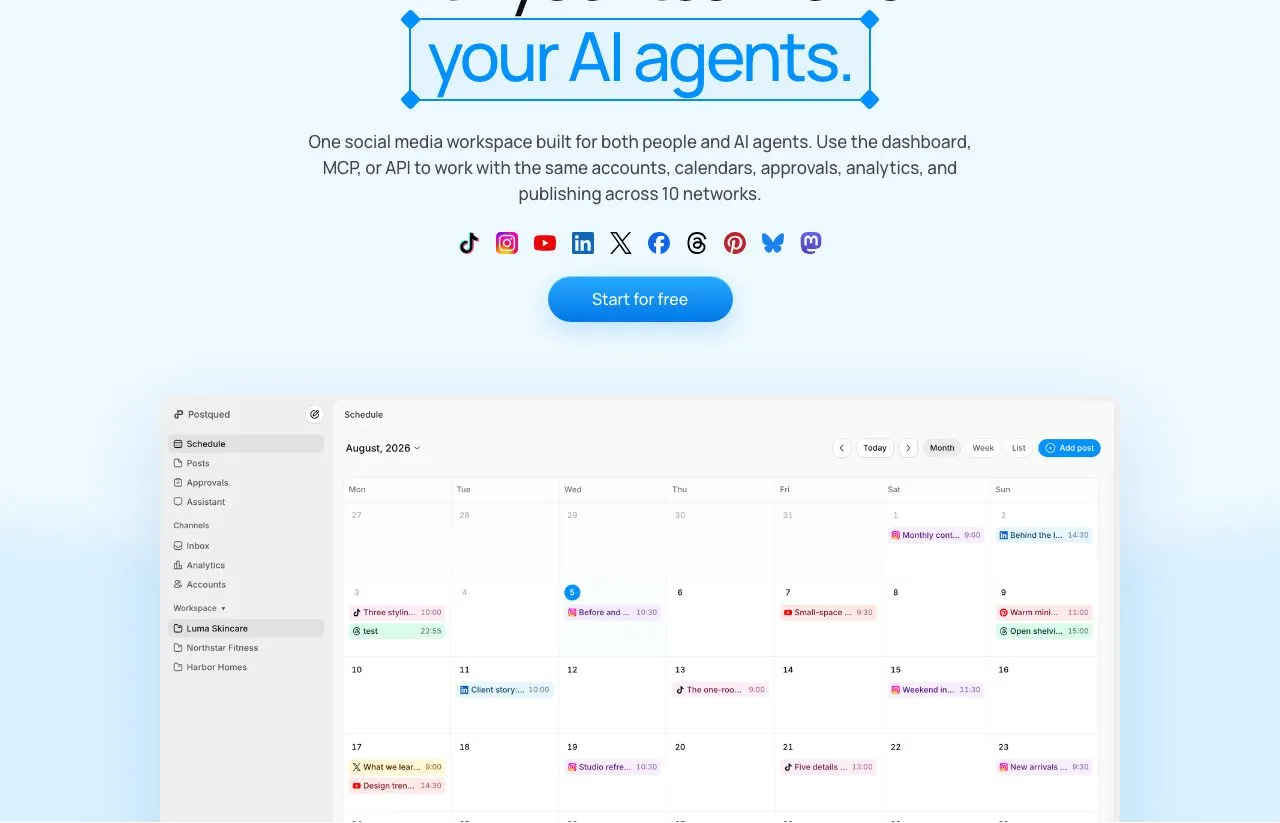
Postqued describes itself, in the summary it publishes for AI tools, as a workspace “where teams and AI agents plan content, work through approvals, and publish across 10 social networks.” Its calendar, approval queue and client review screens are built for several people touching one post. Its agent works inside those same screens, with the same permissions a teammate would have.
| Blotato | Postqued | |
|---|---|---|
| What it is | Agent infrastructure for social media marketing | A shared social media workspace for teams and AI agents |
| Built for | One person, or one agent, running their own brand’s social | Teams and agencies with writers, approvers and client reviewers |
| Programmatic surface | REST API plus a hosted MCP server at mcp.blotato.com/mcp, 35 tools in the server’s list on October 12 | REST API v2 plus a hosted MCP server at mcp.postqued.com/mcp with 62 documented actions |
| What the agent does after a post | Reads and replies to comments and DMs, runs reply-only DM automations, reads analytics | Reads and replies to comments, hides, likes and deletes them where a network allows, reads analytics |
| Engagement reach | Instagram and Facebook, comments and DMs | Comments on up to 7 networks, no DMs |
| Content creation | AI writing, plus AI images and video on credits | A built-in AI assistant, no image or video generation |
| What the bill tracks | Connected accounts | Connected accounts, with unlimited seats from Pro |
What Postqued’s Pages Say About Blotato
Postqued publishes a Postqued vs Blotato page and a Blotato alternatives post, and Google’s AI Overview for “postqued vs blotato” cites both. Some of what they say is right, and I concede those rows below. Here is each claim next to what our own docs say.
| Postqued’s claim | What Blotato’s docs say | Check it |
|---|---|---|
| Blotato’s “MCP server has nine tools” (its agent API roundup) | The connected server listed 35 tools on October 12, 2026, including 8 for creating and managing DM automations | MCP tool reference |
| Postqued Creator “adds approvals and an inbox” over Blotato Starter | Approvals: correct, Blotato has no approval step. Inbox: Blotato has one inbox for Instagram and Facebook comments and DMs on every paid plan | Inbox docs |
| Scheduled posts: “Unlimited” | No per-post fees, but Starter holds 200 queued scheduled posts at a time (1,000 on Creator, 3,000 on Agency) | Plan limits |
| Generating an API key ends the free trial | Correct. The key ends the trial and starts paid Starter | Authentication docs |
| Unlimited workspaces and seats: “Not listed on pricing” | Correct. Blotato supports one user per account | Team access docs |
| Pick Blotato for “AI image, video, voice, and content-remixing tools” | Those tools exist, but the table never lists what the agent does after posting: DMs, DM automation, and analytics on 8 networks | Analytics reference |
What Postqued Does That We Don’t
Postqued is newer than most tools I compare, and review sites have little on it so far. So I judged it on its docs, and a trial run of your own will tell you more than ratings would. Here is what Postqued offers that Blotato does not.
Approvals the server enforces. Per its AI agent page, an agent creates a post with create_approval_post and hands it off with submit_for_approval. When a reviewer is assigned, schedule_approved_post works only after that reviewer approves the exact revision, and a changed caption needs approval again. Postqued is also upfront that team admins and organization API keys skip client approval, so a hard gate means an editor-role login.
A dry run by default on its MCP server. On its MCP server, publish_content runs as a dry run unless the agent sets dryRun to false, and a real publish also needs a unique idempotency key. Its REST endpoint works the other way and publishes for real unless you send dryRun: true. Blotato’s publish call has neither a dry run nor an idempotency key.
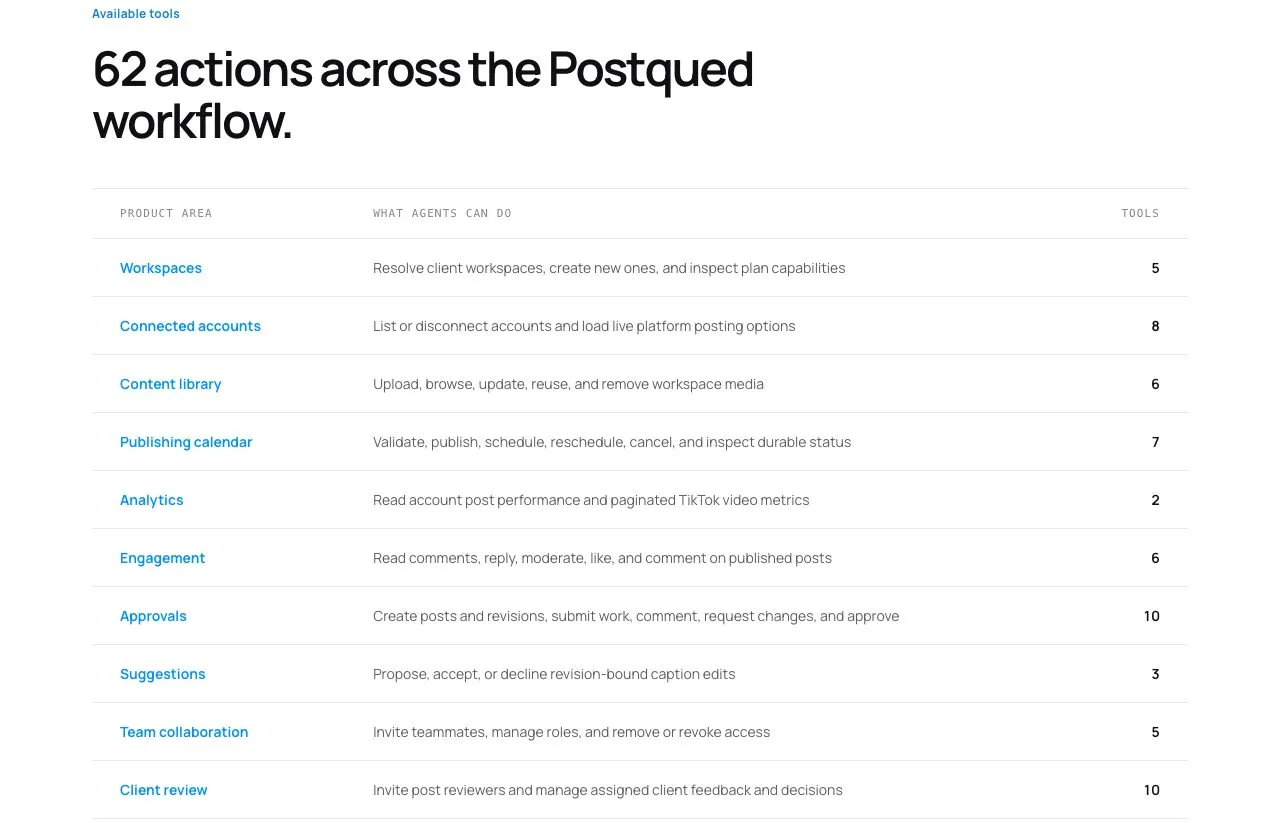
More tools, and most of the extra ones are for people. Postqued documents 62 MCP actions, and 20 of them are for approvals and client review. Blotato’s server listed 35 tools on October 12. Most of that difference is review work, a job Blotato has no tools for at all.
A wider comment inbox. Postqued’s pricing file lists comments and replies from Facebook, Instagram, Threads, YouTube, X, LinkedIn and Mastodon. Its own blog posts list six of those and leave out YouTube, so test YouTube in a trial if you depend on it. Its features page adds hide, like and delete actions where a network supports them, while Blotato’s comment tools stop at Instagram and Facebook.
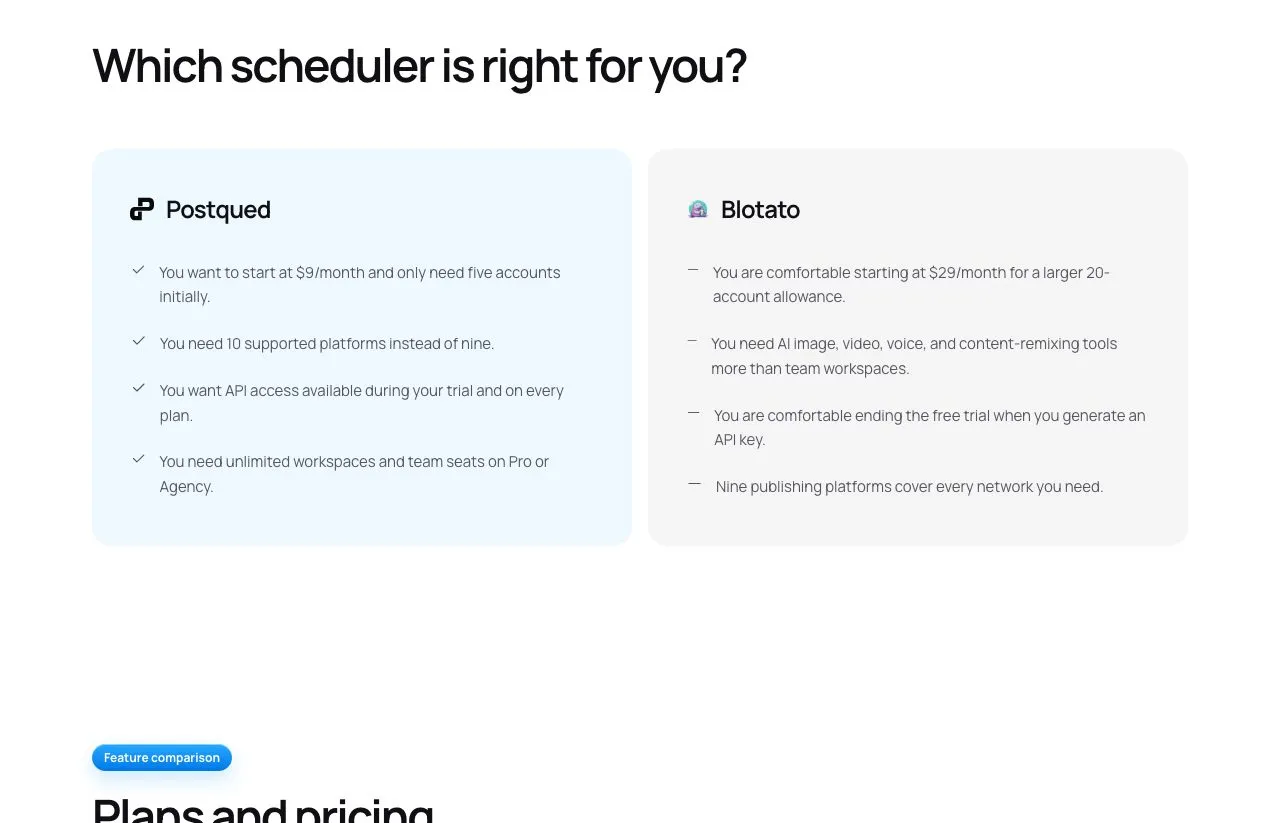
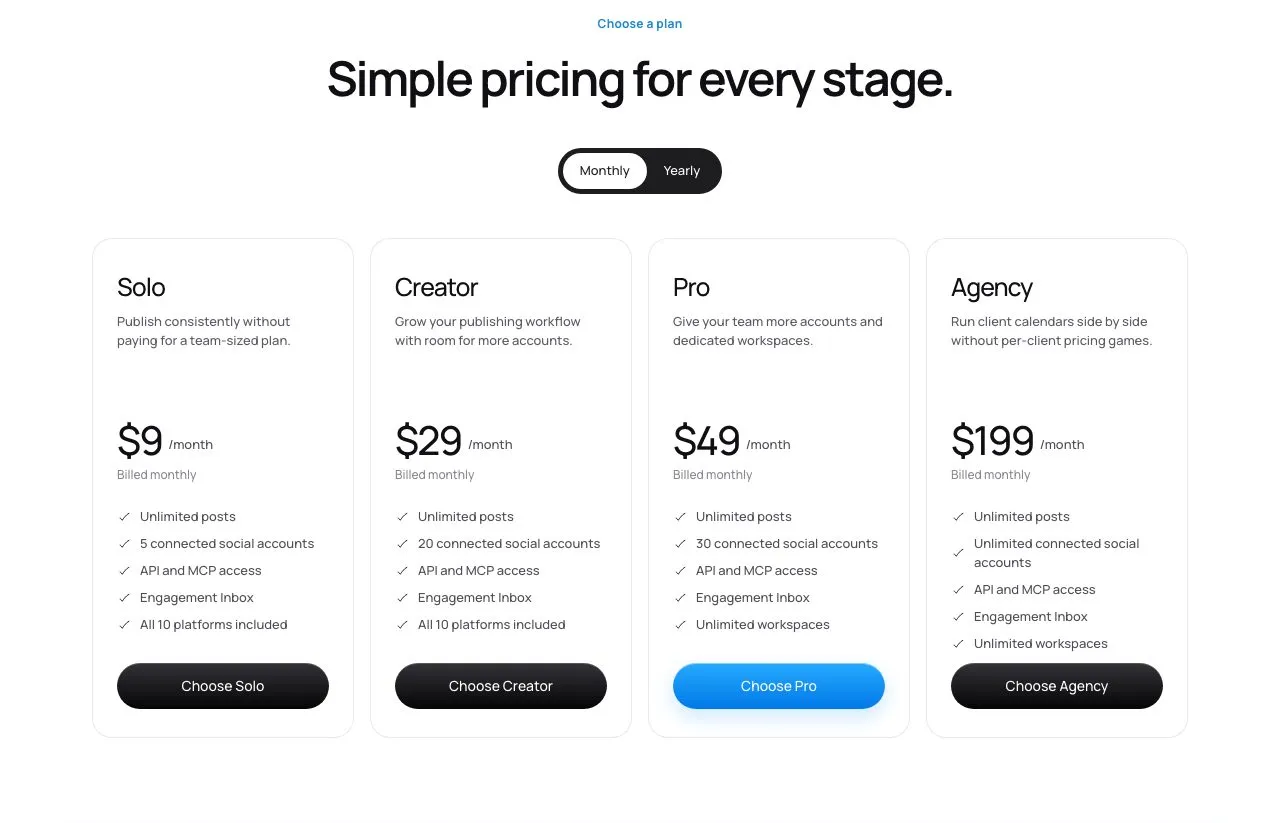
Ten networks and a cheaper floor. Postqued publishes to all 9 networks Blotato reaches, plus Mastodon. Its Solo plan is $9 a month for 5 accounts with API and MCP access. Its comparison page also says the API works during its 7-day trial, which ours does not.
What Blotato Does After the Post Goes Out
Blotato’s case starts once a post is live. On these four, the after-the-post column runs deeper on our side.
DMs your agent can read and answer. Blotato’s agent reads Instagram and Facebook conversations and sends replies through the API or the MCP server. Postqued’s pricing file says its inbox “does not include direct messages.” I also found no DM endpoint among the 96 operations in its OpenAPI spec.
DM automation your agent can build. A keyword in a comment or a DM can trigger an automatic private reply, with an optional email capture and a webhook to your own system. Your agent creates, edits and pauses those automations itself, through 8 tools on our MCP server and the DM automation endpoints. It is reply-only, and Starter covers 1,000 active contacts a month across DMs and comment replies. I walk through a full build in how our DM automations work.
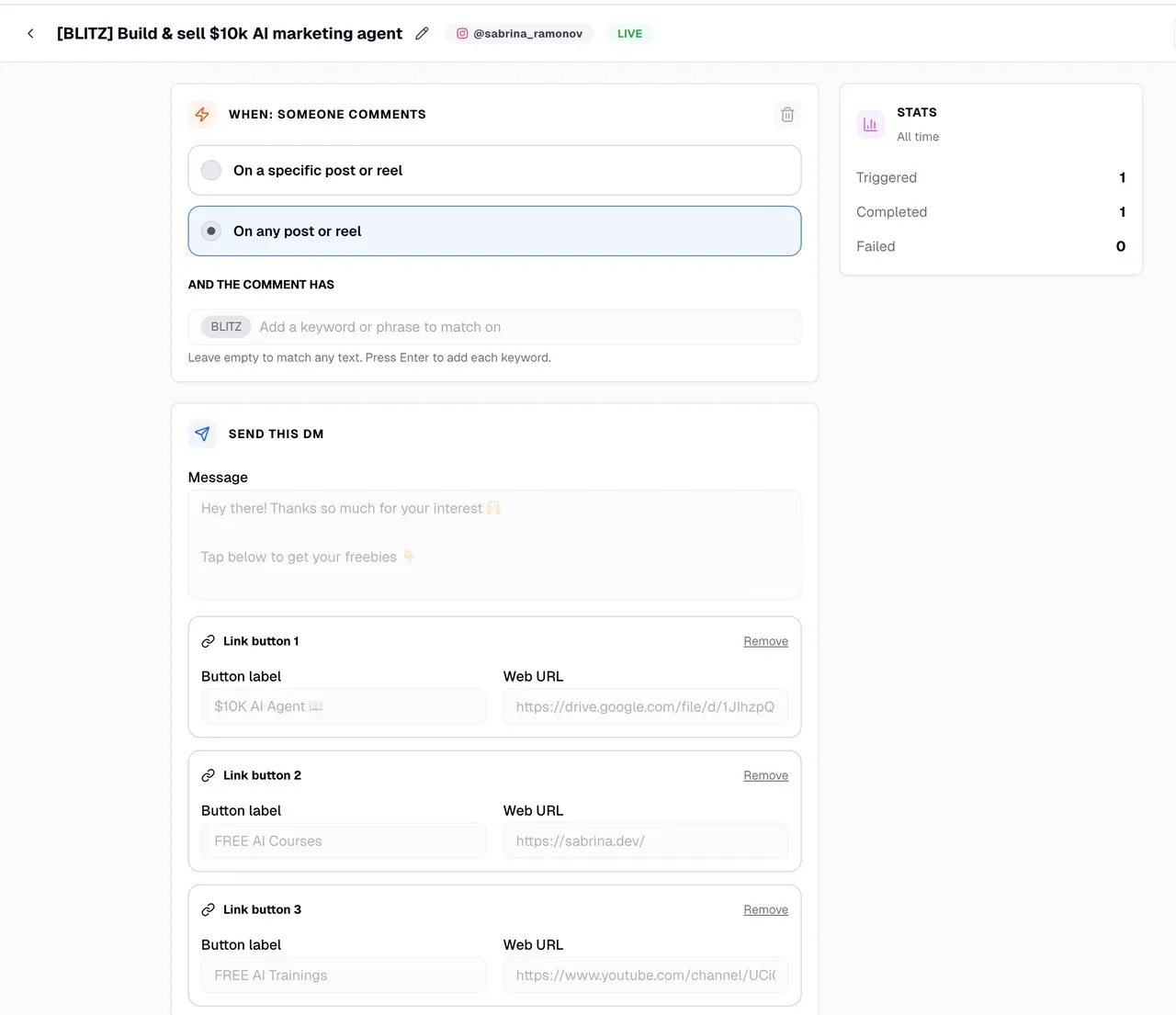
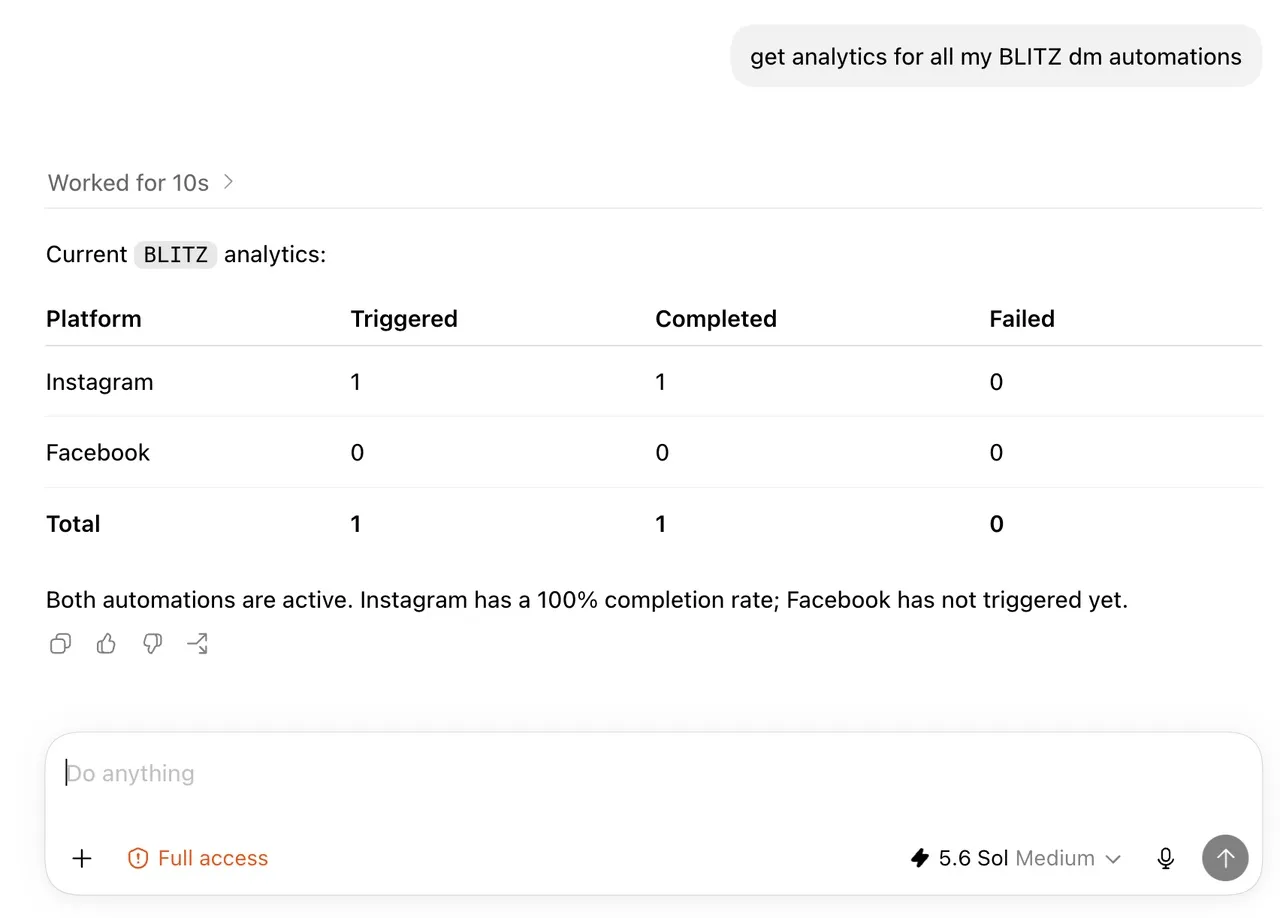
Analytics on 8 networks. Blotato reads post analytics on X, Instagram, Facebook, Threads, Bluesky, TikTok, YouTube and Pinterest. Postqued’s analytics cover TikTok, Facebook, Instagram, Threads and YouTube. Neither covers LinkedIn, and our docs say LinkedIn analytics are not available yet.
Native n8n and Make nodes. Blotato has official nodes in n8n and Make. Postqued’s comparison page marks those nodes as not included for Postqued. Its agent page says it has “no native Zapier or Make integration today.”
Blotato vs Postqued, Line by Line
| Postqued | Blotato | |
|---|---|---|
| Publishing | 10 networks, Mastodon included | 9 networks |
| Billing shape | Flat tiers by connected accounts | Flat tiers by connected accounts |
| Cost at 20 accounts, monthly | $29 (Creator) | $29 (Starter) |
| Public API | REST API v2 on every plan and the trial | REST API on paid plans, not the trial |
| Hosted MCP server | 62 documented actions, OAuth or API key | 35 tools on October 12, OAuth or API key |
| Publish safety | Dry run by default on MCP, idempotency key required | No dry run |
| Approvals | Revision-bound approvals and client reviewers | Not offered |
| Team seats | Unlimited on Pro and Agency | One user per account |
| n8n / Make | Not included, per its comparison page | Official nodes for both |
| Comments | Up to 7 networks, with hide, like and delete where supported | Instagram and Facebook |
| DMs | Not included, per its pricing file | Instagram and Facebook |
| DM automation | Not offered | Instagram and Facebook, reply-only |
| Analytics | 5 networks | 8 networks, LinkedIn not yet |
| Trial | 7 days, API included | 7 days, web app only |
| AI writing | Built-in AI assistant | Included |
| AI images and video | Not offered | Included, on credits |
Postqued’s extra rows are about the people around a post, and Blotato’s are about what an agent does once the post is live.
A Launch Reel in Each Tool
Say you are launching a free guide. You want your agent to post a Reel on Instagram and a matching post on LinkedIn, then hand the guide to anyone who comments “GUIDE.”
In Postqued, the agent uploads the video, creates the post with create_approval_post, and submits it. Your reviewer opens it, comments or approves, and the agent schedules the approved revision. Once it is live, the agent can read the comments on both networks and reply to each one in public. Sending the guide privately is where Postqued stops, because it has no DM tool to send it with.
In Blotato, the agent publishes the Reel and the LinkedIn post with one call per account. It then creates and activates a DM automation on the Reel with GUIDE as the keyword, so new matching Instagram comments get a private reply with the link. A day later it can pull the automation’s run counts and the post’s first analytics snapshot. Nobody approves anything before it goes live, which suits a solo creator and worries a team.
The LinkedIn half shows our gap, because Blotato’s inbox stops at Instagram and Facebook and those LinkedIn comments stay outside the agent’s reach. So test both against your own last launch. If the hard part was getting sign-off and nothing needed a DM follow-up, Postqued’s flow is built for you. If the hard part was turning comments into conversations, Blotato’s is.
Signs You Belong on Each Plan
Postqued is the better fit when:
- Someone other than the writer approves each post
- Clients review posts before they go out
- Mastodon is on your list, or you answer comments on LinkedIn, X or Threads
- You run five or fewer accounts and want the $9 entry point
- You want to test the API before you pay
Blotato is the better fit when:
- Your posts exist to start DM conversations on Instagram or Facebook
- You want your agent to build and edit DM automations itself
- You need analytics on X, Bluesky or Pinterest
- Your workflows already run through n8n or Make
- You run your own brand, and nobody else signs off
Where the Price Ladders Cross
On price, Blotato vs Postqued turns on one number: how many accounts you connect, since both tools bill flat tiers by connected accounts. Every figure here is a monthly price from Postqued’s pricing page and our plan cards.
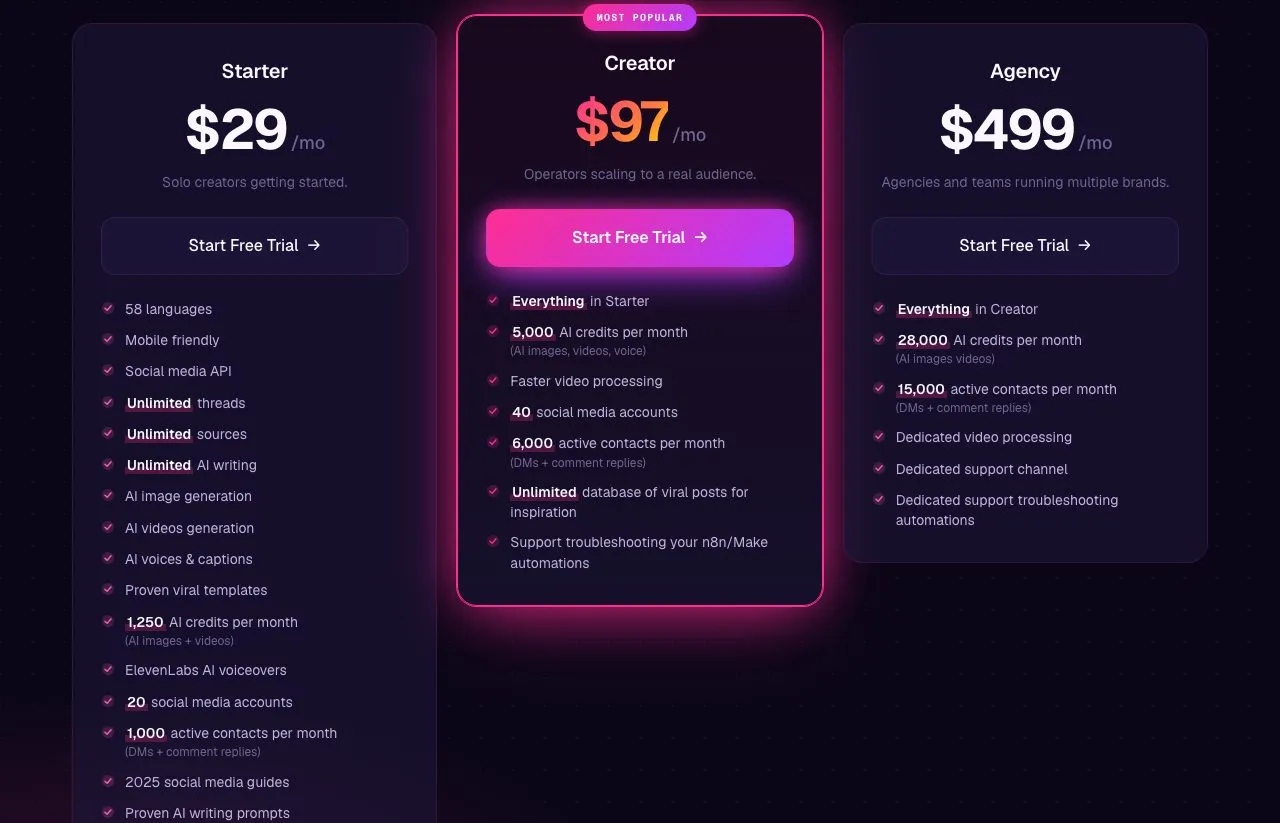
| Plan | Monthly price | Connected accounts |
|---|---|---|
| Postqued Solo | $9 | 5 |
| Postqued Creator | $29 | 20 |
| Postqued Pro | $49 | 30, plus unlimited seats |
| Postqued Agency | $199 | Unlimited |
| Blotato Starter | $29 | 20 |
| Blotato Creator | $97 | 40 |
| Blotato Agency | $499 | 100 |
| Accounts you connect | Postqued | Blotato | Cheaper |
|---|---|---|---|
| 1 to 5 | $9 (Solo) | $29 (Starter) | Postqued |
| 6 to 20 | $29 (Creator) | $29 (Starter) | Tie |
| 21 to 30 | $49 (Pro) | $97 (Creator) | Postqued |
| 31 to 40 | $199 (Agency) | $97 (Creator) | Blotato |
| 41 to 100 | $199 (Agency) | $499 (Agency) | Postqued |
Both sell yearly discounts. Postqued’s Creator drops to $19 a month billed yearly, and our pricing FAQ puts annual savings at about 17%, so the tables above stay on monthly prices for both.
| At $29 a month | Postqued Creator | Blotato Starter |
|---|---|---|
| Connected accounts | 20 | 20 |
| Networks | 10 | 9 |
| REST API and hosted MCP | Included, also on the trial | Included, not on the trial |
| Approvals and client review | Included on every plan | Not offered |
| Comments | Up to 7 networks | Instagram and Facebook |
| DMs and DM automation | Not included | Instagram and Facebook, 1,000 active contacts a month |
| Analytics | 5 networks | 8 networks |
| n8n and Make nodes | Not included | Both |
| AI images and video | Not offered | 1,250 credits a month |
At the same $29, Postqued’s extra rows buy review and reach for comments, and Blotato’s buy DMs, automation and wider analytics.
For a reader with no Instagram or Facebook DM work, the price ladder favors Postqued in three of the five bands. Under six accounts, Postqued’s Solo plan costs $20 a month less than our Starter, as long as you never need those DMs. Between 21 and 30 accounts, Postqued Pro costs $48 a month less than our Creator plan and adds seats we do not sell, provided your agent has no DM work on those two networks. Past 40 accounts, Postqued Agency holds at $199 with no account cap while our Agency plan is $499 for 100, which makes Postqued the cheaper roster for publishing and comments alone.
On cost alone, Blotato comes out cheaper among these plans only between 31 and 40 accounts, where our $97 Creator plan undercuts Postqued’s $199 Agency, and Blotato is the only one of the two that handles Instagram and Facebook DMs on every plan. Our agent pricing study prices both tools at $29 for a nine-account setup, which matches the tie band above.
Three Catches in Our Half of the Tie
Three limits on our side are worth knowing before you count on that tie at 20 accounts.
Pages count one by one. Each connected Facebook Page uses one of your 20 accounts, and a LinkedIn profile with three company Pages uses four, per our social accounts docs. A brand with several Pages fills Starter faster than the number suggests.
Per-post automations reach outside posts on Instagram only. An automation aimed at one post needs a Blotato post record. An Instagram post you published elsewhere gets one after its first new comment, but our automation docs describe no such path for Facebook posts published outside Blotato.
Starter caps YouTube uploads. Starter allows 10 uploads per YouTube channel per rolling 24 hours, and Creator and Agency raise it to 25. A daily Shorts channel fits easily, but a backlog upload does not.
Count Who Touches a Post Before You Pay
Both plans cost the same at 20 accounts, so this choice comes down to people and DMs. If a second person approves your posts and you have no Instagram or Facebook DM work, Postqued earns its $29, and Blotato would leave that person nothing to click.
If your posts exist to start conversations your agent finishes in Instagram or Facebook DMs, Blotato does the job Postqued’s pricing file says it does not do. If Blotato fits, start on the Starter plan rather than the trial, because our trial excludes the API and generating a key starts Starter anyway.
Postqued vs Blotato FAQs
At what account count is Blotato cheaper than Postqued?
The two tie at $29 a month for 6 to 20 accounts, and on monthly billing alone Blotato is cheaper only between 31 and 40 accounts, where its $97 Creator plan undercuts Postqued’s $199 Agency plan. Postqued costs less at 1 to 5, 21 to 30 and 41 to 100 accounts, as long as you have no Instagram or Facebook DM work for Blotato to handle.
Can Postqued answer Instagram DMs?
No. Postqued’s pricing file says its Engagement Inbox covers comments and replies and “does not include direct messages,” and its API spec has no DM endpoint. Blotato’s agent tools read and answer Instagram and Facebook DMs and run reply-only DM automations. Blotato does not reach DMs on any other network.
Is there a Postqued node for n8n or Make?
Not a native one. Postqued’s comparison page lists official n8n and Make nodes as not included, and its agent page says it has no native Zapier or Make integration today. An HTTP step can still call its REST API. Blotato ships official nodes in both n8n and Make.
Why can I try Postqued’s API on a trial but not Blotato’s?
Postqued’s comparison page says its API is included during its 7-day trial. Blotato’s 7-day trial covers the web app only, and generating an API key ends it and starts the paid Starter plan right away. If the API or MCP server is why you are here, plan on starting Starter instead of the trial.
Is Postqued a good Blotato alternative?
Postqued is a good alternative for teams whose posts need a reviewer’s sign-off or who answer comments on LinkedIn, X, Threads or Mastodon, but not for an agent that runs Instagram or Facebook DMs or DM automations, which its inbox leaves out. Switching is simplest for publishing, since Postqued reaches all 9 networks Blotato posts to, and hardest for DM automations, which have nowhere to move.
Does Postqued’s MCP server publish without asking first?
Not until the agent sets dryRun to false, since publish_content defaults to a dry run, and a real publish needs an idempotency key. A human has to approve only when the workspace has a client reviewer or the post has an assigned reviewer, and team admins and organization API keys skip that gate. Blotato has no dry run or approval step, so a publish call with neither a scheduled time nor the next free slot goes live right away.