Blotato vs Hootsuite: Which Social Media Tool is Better?
Blotato vs Hootsuite for social media: per-seat vs flat pricing, which plan unlocks DM automation, and API and MCP access for AI agents.
People searching Blotato vs Hootsuite are almost always comparing two tools built for completely different buyers. Hootsuite is the enterprise-grade incumbent. Blotato is the agent infrastructure for social media marketing, built for people running their own brand. It puts scheduling, DMs and DM automation behind one flat-priced key, so you don’t pay $99 per user per month for an enterprise feature set you won’t fully use.
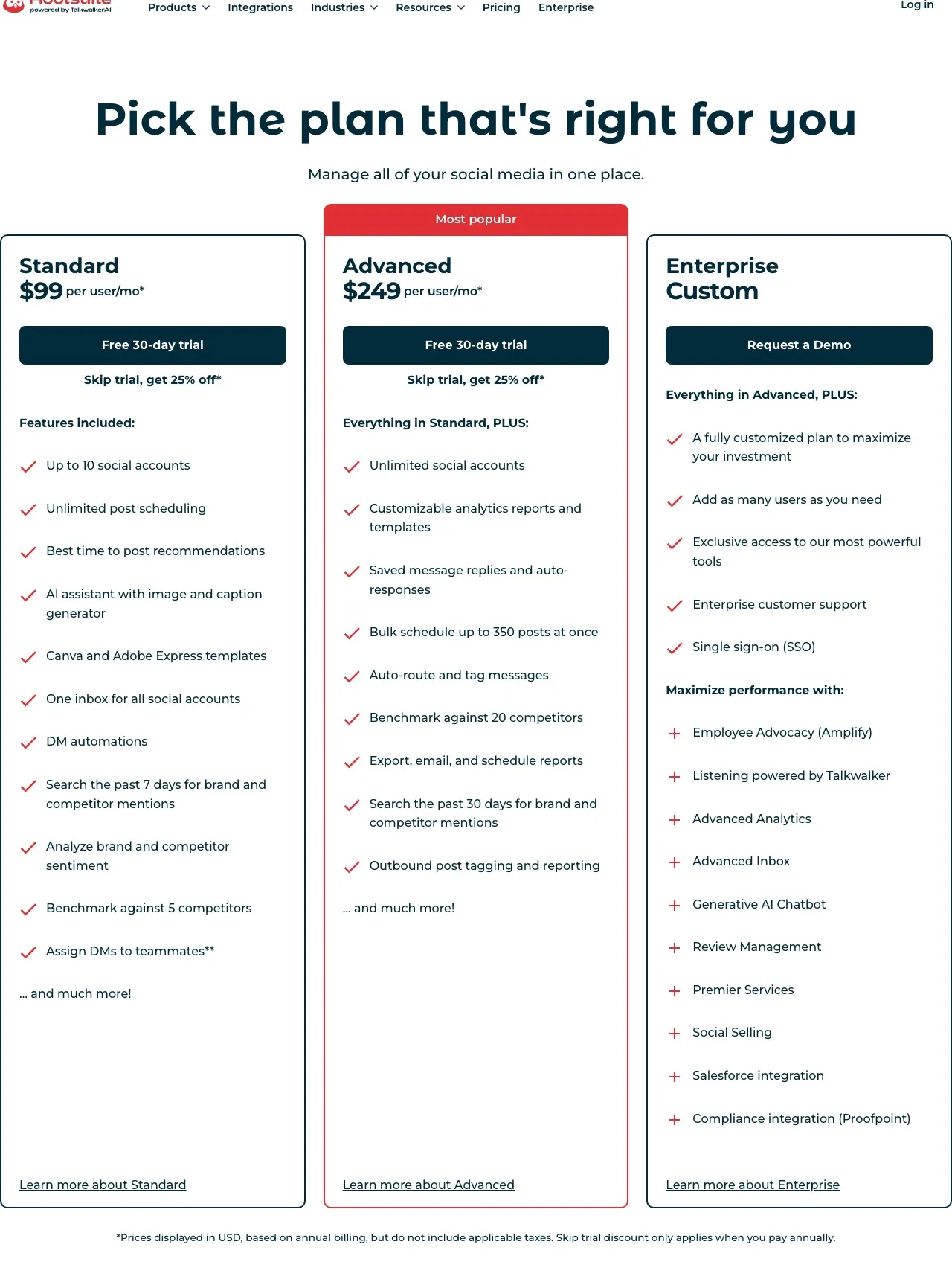
That pricing gap is the entire hook. Hootsuite’s cheapest plan starts at $99 per user per month, and that figure is the annual-billing rate rather than what a month actually costs. Blotato Starter is $29 a month flat for 20 social accounts, and it includes comment-to-DM automation that Hootsuite’s plans page only lists from its $199-per-user Professional plan. Same job, very different price tag.
I’ve tested both. This breakdown covers where Hootsuite still earns its enterprise price tag, where Blotato pulls ahead on pure price-to-value, the per-user pricing math that catches small teams off guard, and the honest answer to who should pick which. If Blotato isn’t the right shape for you either, my roundup of the best Hootsuite alternatives weighs the other contenders on price and features.
Blotato vs Hootsuite: At a Glance
Hootsuite is the better pick if: you run a mid-market or enterprise social team that needs deep social listening, a unified engagement inbox, multi-user approval workflows, and compliance features. Budget is not the deciding factor.
Blotato is the better pick if: one person runs social for your own brand and you’d rather pay a flat $29 to $97 a month than $99-plus per user. It also fits if you want an AI agent to schedule, reply, and run DM automations through an API and MCP server instead of a dashboard.
An Enterprise Suite Next to a Creator Tool
Worth flagging upfront because it changes how every comparison below reads.
Hootsuite is an enterprise social media management platform. It’s been around since roughly 2006, claims over 25 million users, and now describes itself as “one connected social media performance suite.” The core product wraps publishing, a unified inbox, social listening powered by Talkwalker, audience analytics, and team approval flows into one dashboard. The buyer is a brand or agency with multiple people touching social every day.
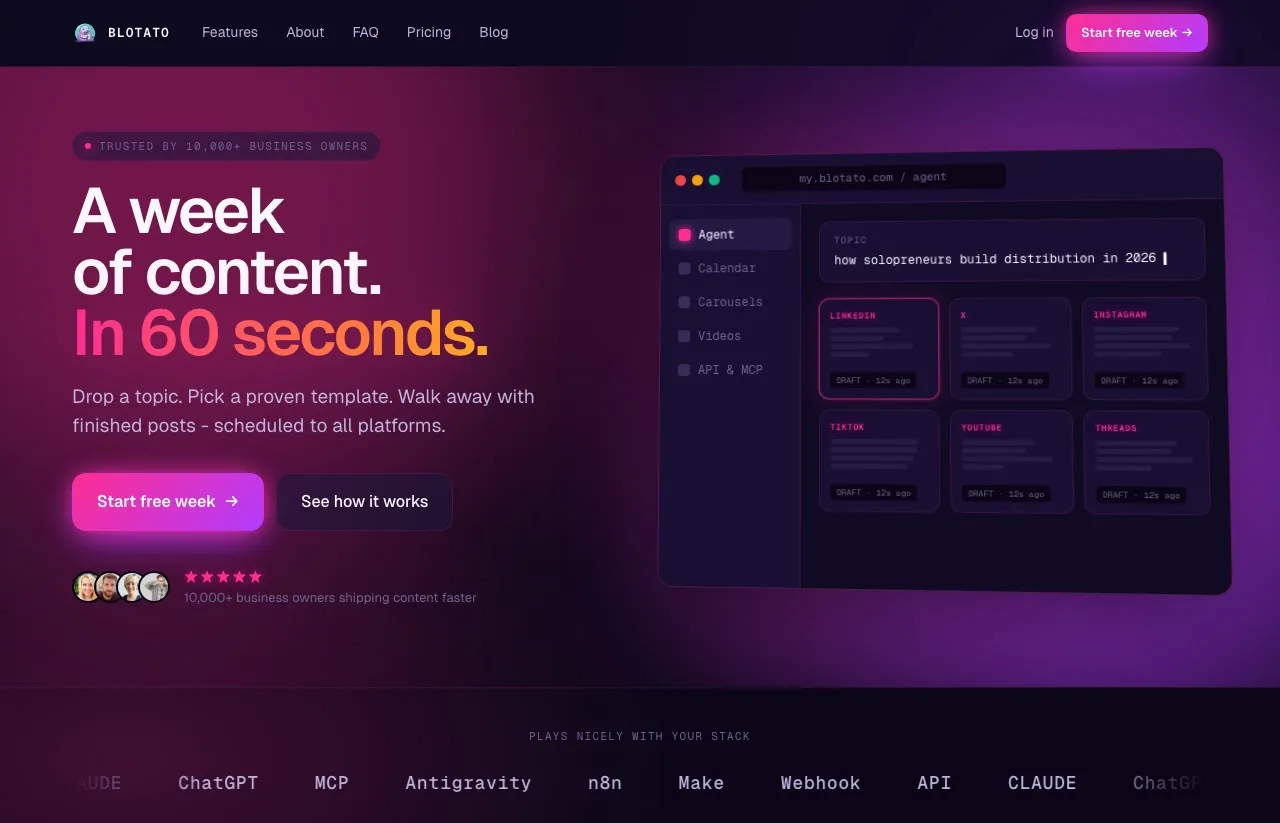
Blotato is built for the posting and the follow-up. Scheduling to nine platforms, a comments and DMs inbox for Instagram and Facebook, comment-to-DM automation on those two, and analytics on eight platforms all sit behind the same REST API, native n8n and Make.com nodes, and a hosted MCP server at mcp.blotato.com/mcp. You can run it from the web app, or point Claude at it and let the agent schedule, reply, and report. AI writing, images, and faceless video are in there too, for when you need them.
So the question isn’t “which is the better scheduler.” Both schedule. The real question is whether you need enterprise-grade collaboration and listening, or a flat-priced tool that schedules, answers, and automates for a team of one.
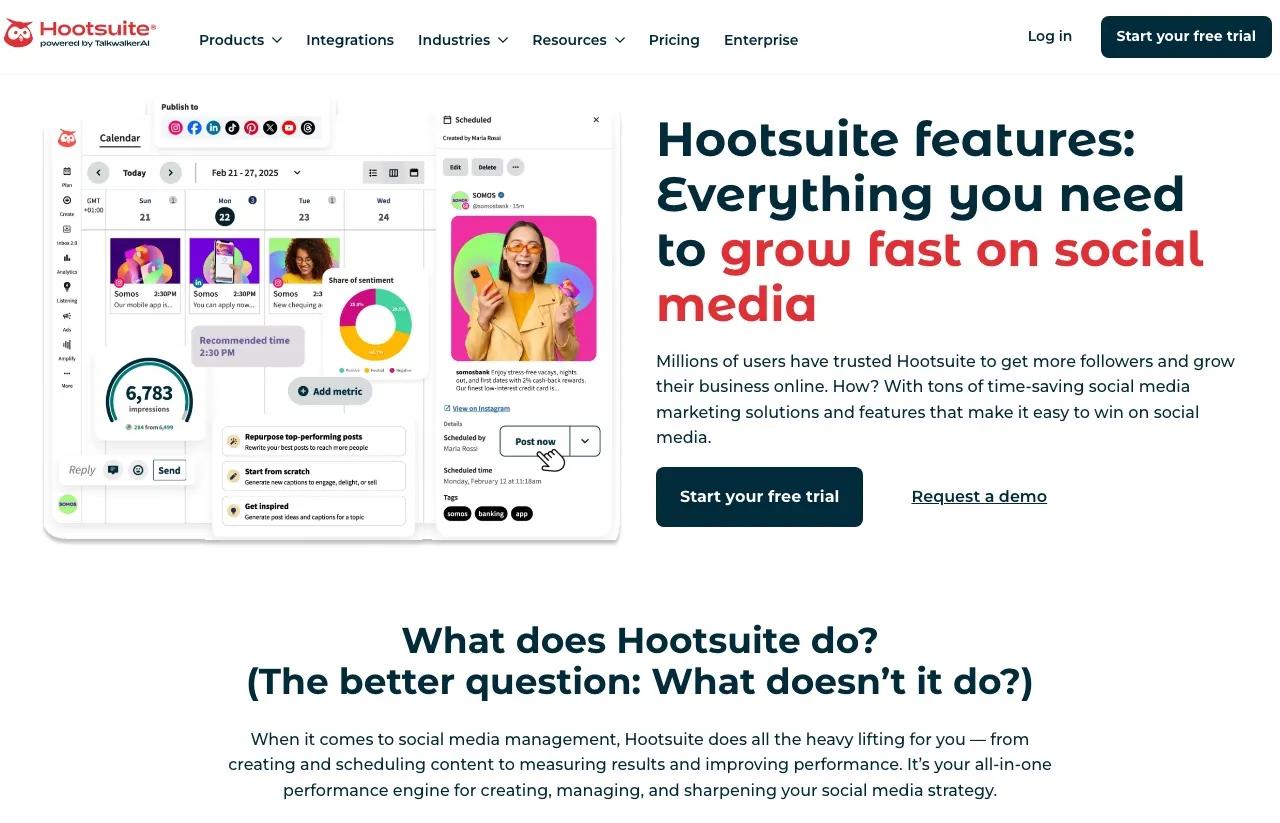
The Enterprise Team Hootsuite Was Designed Around
Hootsuite is the established name in social media management. The reputation around the product itself is reasonable. Reviews on Trustpilot are mixed but lean negative, with most complaints concentrated on billing practices and surprise renewal charges rather than the product feature set. On the product side, recurring praise lands on three patterns:
- Broad platform coverage in one dashboard
- Enterprise-grade analytics, reporting, and Talkwalker-powered social listening
- Bulk scheduling and team collaboration features that scale to 5-plus seats
Three teams it fits well:
- Mid-market and enterprise marketing departments that manage 10-plus accounts and need structured approval workflows, audit trails, and role-based permissions.
- Agencies serving brand clients who need white-glove reporting, social listening dashboards, and a unified inbox that handles DMs across networks.
- Regulated industries like financial services, healthcare, and government where compliance integrations matter.
Hootsuite’s publishing layer covers the same nine networks Blotato does: Facebook, Instagram, LinkedIn, X, TikTok, Pinterest, YouTube, Threads, and Bluesky (Bluesky publishing was added in September 2025), plus Google Business Profile, which Blotato doesn’t. Reddit is the exception: Hootsuite monitors it through social listening but can’t publish there, and neither can Blotato. Platform reach isn’t where these two separate.
The Operator Who Never Needed an Enterprise Suite
Quick disclosure: Blotato is my company. Where we are thinner than Hootsuite is listening, which we do not sell at any tier.
Blotato fits a different reader. You’re running your own brand across more than three platforms, and the hard part is showing up consistently, not coordinating a team. You want the posts scheduled, the comments answered, and the people who comment a keyword sent your link automatically. AI writing, images, and faceless video are built in for when you need them, with images and video drawing on monthly credits.
Nine native publishing platforms: X, Instagram, LinkedIn, TikTok, YouTube, Threads, Facebook, Pinterest, and Bluesky. Hootsuite reaches the same nine, so platform coverage isn’t where these two separate. What separates them is what happens after a post goes out: who answers the comments, and which plan pays for it.
The other angle is automation. Full REST API access on paid plans, native n8n and Make.com nodes, MCP integration so Claude can post directly. That stack matters for anyone running a workflow that schedules a week of posts, answers new comments, and pulls analytics without a human touching it.
Hootsuite vs Blotato: Side by Side
| Category | Hootsuite | Blotato |
|---|---|---|
| Pricing model | Per user/month (Standard, Advanced) | Flat rate per plan (tiers differ by accounts and credits) |
| Cheapest paid tier | Standard at $99/user/mo (annual) | Starter $29/mo flat |
| Free plan | No (14-day trial on paid plans) | No (7-day free trial) |
| Social accounts (entry) | Up to 10 | 20 |
| Users (entry) | 1+ (priced per user) | 1 login per Blotato account (no separate seats) |
| Publishing platforms | 9 (Facebook, Instagram, LinkedIn, X, TikTok, Pinterest, YouTube, Threads, Bluesky) | 9 (X, Instagram, LinkedIn, TikTok, YouTube, Threads, Facebook, Pinterest, Bluesky) |
| AI content tools | Wisdom (posts, captions, images, ideas) | AI writing, images, faceless video (images and video use credits) |
| Social listening | Yes (Standard up) | No |
| Engagement inbox | Yes (unified, public + private), DM automations from Professional | Instagram and Facebook, plus keyword DM automation |
| Link-in-bio | No | No |
| Public REST API | Yes (developer portal, tier not specified) | Yes (full API on paid plans) |
| n8n / Make.com | Make app, no native n8n node | Native nodes for both |
| MCP / Claude integration | Yes, four servers (publishing, inbox, listening, advocacy) | Yes, one server for publishing, comments, DMs, automation, analytics |
| Trial on paid plans | 14 days | 7 days (excludes the API) |
Two columns of this table tell the story. Hootsuite wins on enterprise infrastructure (listening, inbox, approval flows). Blotato wins on flat pricing, DM automation on the entry plan, and a single API for publishing, engagement, and automation. The middle of the table is where the actual decision lives.
Talkwalker Listening and the Things Only Hootsuite Does
Real strengths, anchored in what teams actually buy it for.
1. Social listening powered by Talkwalker is genuinely enterprise-grade. Hootsuite acquired Talkwalker and now ships AI mention detection that surfaces brand mentions in photos, videos, and GIFs (not just text), sentiment analysis at scale, and audience insights pulled from forums, blogs, podcasts, and review sites. For a brand manager who needs to monitor sentiment across 50 sources, this is best-in-class and Blotato doesn’t compete here.
2. Unified engagement inbox. One queue for public mentions, comments, and private DMs across networks, with auto-responders, saved replies, automated tagging, and inbox analytics. Enterprise plans add an advanced inbox for social customer care. If your team’s job is to respond to customers across Instagram, X, Facebook, and LinkedIn in one workflow, Hootsuite handles it. Blotato reads and answers comments and DMs on Instagram and Facebook only, and runs keyword DM automations on those two, so anything outside Meta stays outside Blotato.
3. Mature approval workflows and permissions. Advanced and Enterprise tiers include role-based permissions, approval chains, audit trails, and team collaboration tools that scale to dozens of users with structured handoff between content creators, reviewers, and approvers. For agencies and large in-house teams, this isn’t optional.
4. Compliance and enterprise integrations. Single sign-on (SSO), Salesforce, HubSpot, Marketo, Microsoft Teams, Slack, Proofpoint compliance integration. If you work in financial services, healthcare, or government and need a vendor with the security paperwork already done, Hootsuite is one of the few SMB-to-enterprise platforms with the stack.
5. Mature analytics and benchmarking. Compare your performance against industry averages (for your own accounts, Blotato’s free scorecard does that at no cost), benchmark against up to 20 competitors on Advanced, run white-label reports for client deliverables, and pull historical data going back years. Blotato’s analytics are adequate but not the reporting suite an agency needs to justify retainer fees.
What You Stop Paying For When Listening Isn’t the Job
Where the price-to-value gap actually shows up.
1. The price gap is the entire conversation. Hootsuite Standard is $99 per user per month on annual billing for 10 social accounts, while Blotato Starter is $29 a month flat for 20 and Creator is $97 for 40. One caveat cuts the other way: a Blotato account has one login, so a teammate signs in as you, with no separate roles or audit trail. If three people each need their own seat, that’s a gap on our side.
2. DM automation starts on the cheapest plan. Hootsuite’s plans page lists its keyword DM automations, where someone comments a word on your Instagram post and gets a DM back, from Professional, $199 per user per month. Blotato runs the same comment-to-DM pattern on the $29 Starter for Instagram and Facebook, with 1,000 active contacts a month on that plan. It only replies to people who reach out first, so it turns comments into leads rather than sending cold outreach.
3. One connection for the whole loop. Hootsuite does publish MCP servers, four of them split by product (publishing, inbox, listening, and employee advocacy), and its plans page gates the listening connector to Enterprise. It also has a Make app, but no native n8n node. Blotato puts publishing, comments, DMs, DM automation, and analytics behind one API key and one MCP server, with native n8n nodes and Make nodes on top. If one agent workflow both posts from a Notion database and answers comments overnight, that’s one connection on Blotato, while on Hootsuite it spans the publishing and inbox servers.
Per-Seat Pricing Against a Flat Rate: The Annual Number
The headline numbers don’t even look close. Full Blotato breakdown is on the Blotato pricing page.
| Plan | Hootsuite (annual billing) | Blotato (flat rate, monthly) |
|---|---|---|
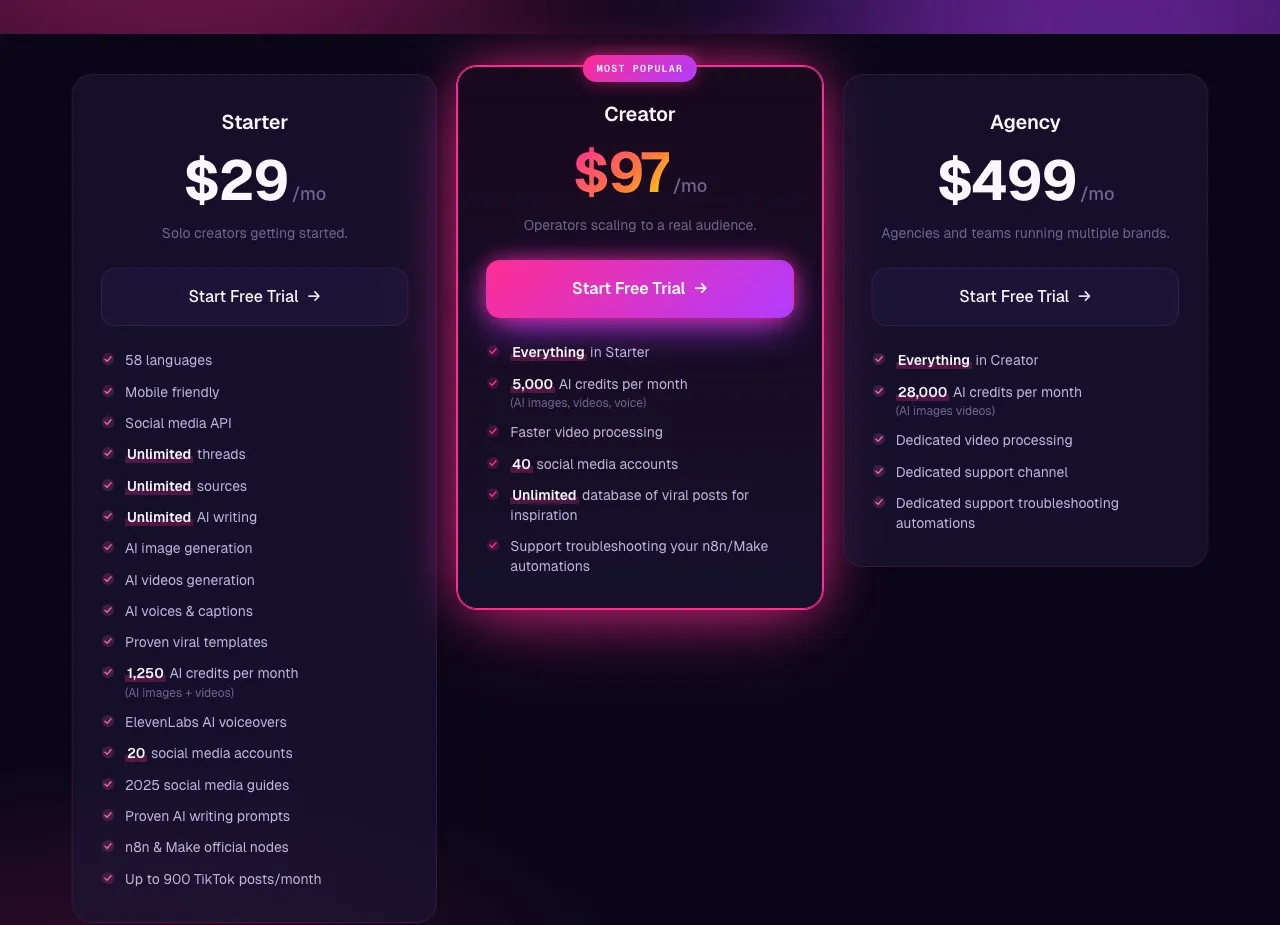
| Entry tier | Standard $99/user/mo (up to 10 social accounts, 1 user, Wisdom AI) | Starter $29/mo (20 accounts, 1,250 AI credits) |
| Mid tier | Professional $199/user/mo (unlimited accounts, inbox automation, custom reports) | Creator $97/mo (40 accounts, 5,000 credits) |
| Upper tier | Advanced $399/user/mo (team approvals, message routing, team performance reporting) | Agency $499/mo (100 accounts, 28,000 credits, dedicated support) |
| Top tier | Enterprise (custom pricing, demo required) | No higher tier (Agency is the top plan) |
| Free trial | 14 days, no card | 7 days |
Now the value comparison at the entry tier, capability by capability:
| Capability at the entry tier | Hootsuite Standard ($99/user/mo) | Blotato Starter ($29/mo) |
|---|---|---|
| Price for a 1-person team | $99/mo | $29/mo |
| Social accounts | Up to 10 | 20 |
| AI content tools | Wisdom (posts, captions, images) | AI writing, images, faceless video (credits) |
| DM automation | No (Professional and up) | Yes, Instagram and Facebook |
| REST API + n8n/Make/MCP | API, Make app, MCP servers (plan not stated), no n8n node | API, n8n and Make nodes, one MCP server |
| Social listening | Yes (Standard up) | No |
| Engagement inbox | Yes | Instagram and Facebook only |
Blotato Starter costs $70 less than Hootsuite Standard for a single user and connects twice the accounts.
Four honest caveats where Hootsuite is the right call:
- If you genuinely need Talkwalker-powered social listening across forums, blogs, podcasts, and reviews, Blotato can’t do it and you’re paying Hootsuite for the listening stack, not the publisher.
- If your team’s daily workflow is responding to customer DMs and comments across networks from one queue, the Hootsuite inbox is real product. Blotato’s reaches Instagram and Facebook and stops there.
- If you work in a regulated industry that requires SSO, audit trails, and compliance integrations like Proofpoint, Hootsuite’s enterprise stack is built for you and Blotato isn’t there yet.
- If you’re a 10-plus-person team running structured approval workflows with role-based permissions, Hootsuite Advanced or Enterprise covers that. Blotato’s flat-rate model doesn’t include a formal multi-stage approval chain.
Stay With Hootsuite When Listening Is the Budget Line
- You manage 10-plus social accounts across a mid-market or enterprise team.
- Social listening across forums, podcasts, and review sites is core to your job.
- A unified engagement inbox for cross-network customer care is a real workflow.
- You need SSO, audit trails, or compliance integrations for regulated industries.
- Budget is not the deciding factor and per-seat pricing fits your finance model.
Switch When You’re Buying a Suite to Use One Corner of It
- You’re a solopreneur or creator and per-seat pricing makes no sense.
- You’d rather pay for accounts than for seats.
- You’re building automations with n8n, Make, or Claude through MCP.
- You want your agent to schedule, reply, and report without wiring up a separate tool for each.
A Good Product Carrying an Enterprise Price Tag
Hootsuite is a great tool for what it is. The Talkwalker listening stack, the unified inbox, and the approval workflows earn their keep for enterprise teams and agencies that need those exact features. None of that is in question. The product itself isn’t the problem.
The problem is the price tag. Hootsuite was built when “social media management” meant a brand manager scheduling 10 posts a week across five networks, and the per-user pricing model assumes you have a team of five doing it. In 2026, most creators and small businesses don’t have that team or that budget, and the AI-native tools have caught up on publishing while staying flat-rate.
If you’re still unsure, my honest advice is to take Hootsuite’s 14-day trial if you genuinely need social listening or a unified inbox and your team has five or more seats. If you run social on your own and mostly need scheduling and DM automation at a flat price, the Blotato 7-day trial shows you the gap on day one. The trial excludes the API, so if your agent is the reason you’re here, plan on a paid plan from day one. You can also read the Blotato vs Buffer and Blotato vs Later breakdowns if Hootsuite’s price tag was always going to be a stretch, or the Buffer vs Hootsuite head-to-head if those two are your real shortlist.
FAQs
Is Blotato cheaper than Hootsuite?
Yes, at the entry tier. Blotato Starter is $29/mo flat for 20 social accounts against Hootsuite Standard at $99 per user per month on annual billing for 10. The math changes for a team: a Blotato account has one login with no separate seats, so if several people need their own logins, that’s something Blotato doesn’t offer.
Does Hootsuite have DM automation?
Yes. Hootsuite’s plans page lists DM automations from Professional, $199 per user per month on annual billing: when someone comments a specific keyword on your Instagram post, they get a DM. Blotato includes comment-to-DM automation on all three paid plans, for Instagram and Facebook.
Can I use Hootsuite with n8n or Make.com?
Make, yes: Make has a Hootsuite app. n8n has no native Hootsuite node, so an n8n workflow reaches Hootsuite through its API with a generic HTTP request. Hootsuite also publishes four MCP servers, split by product. Blotato ships official n8n and Make.com nodes plus one MCP server that covers publishing, comments, DMs, DM automation, and analytics.
Does Blotato have a free plan?
No, Blotato runs a 7-day free trial on every paid plan. Hootsuite offers a 14-day trial on its self-serve plans with no credit card required, and no longer has a permanent free tier (the old free plan was discontinued years ago). Neither tool has an ongoing free plan in 2026.
Which tool supports more social platforms for publishing?
Blotato and Hootsuite publish to the same nine social networks (X, Instagram, LinkedIn, TikTok, YouTube, Threads, Facebook, Pinterest, Bluesky). Hootsuite also posts to Google Business Profile, which Blotato doesn’t, so Blotato has no platform reach advantage here. Reddit is listening-only on Hootsuite and not a publishing destination on either tool. The real differences are flat pricing versus per-seat, which plan unlocks DM automation, and how much one key covers for an agent.
Is Hootsuite or Blotato better for agencies?
Depends on the agency shape. Hootsuite Advanced and Enterprise are built for agencies with 5-plus seats, multi-client reporting, white-label exports, structured approvals, and compliance needs. Blotato Agency at $499/mo flat covers 100 connected accounts and the API for plugging into client n8n setups, but it has no client approval workflow, so it fits a solo operator running clients’ posting through automation. Different shapes, different fits.