How Ryan Doser Runs a One-Person Content Engine With AI
Ryan Doser turned one repurposing engine into 562K impressions and five figures in passive revenue. The solo Claude Code and Blotato system.
Ryan Doser has a six-figure marketing agency, a YouTube channel, a newsletter, and a digital product, and he runs the content behind all of it without a team.
The thing that makes his setup worth copying is how he turns one YouTube video into a ranking blog post and a full week of social posts without doing any of the repetitive parts by hand. The video gets transcribed, written up, optimized, and pushed out across every platform by a system he assembled himself in Claude Code, with Blotato as the layer that scrapes the transcript and carries the finished content out the door. That engine has driven thousands of visitors and five figures in passive revenue on a site that started with zero authority.
Ryan came on my channel to show the whole thing, including a digital product he vibe-coded in about five prompts that has made him over a thousand dollars with almost no marketing. He is exactly the solo operator I had in mind with Blotato, so I want to be upfront: I am involved with Blotato as a creator and tester, not the founder, so take this with whatever grain of salt feels right.
How Ryan Doser Built an Automated Content System With Claude Code
The full conversation is above. The written version pulls out the parts that are actually copyable: how he repurposes a single video into search-optimized content, how Blotato fits into that pipeline, and how he vibe-coded a paid product live on camera.
Who Is Ryan Doser
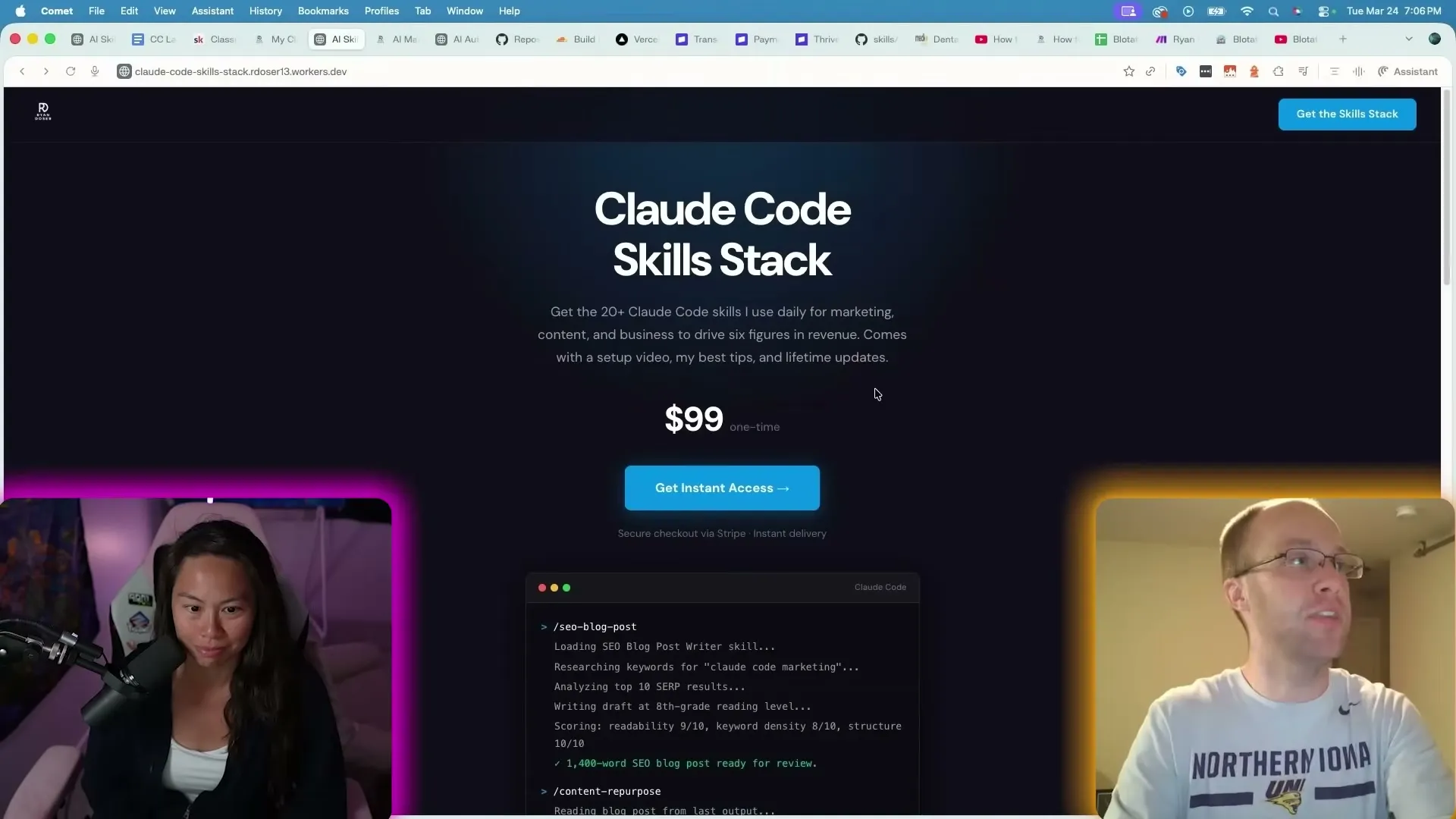
Ryan is an AI-first marketer and YouTuber based in Iowa with over 36,000 YouTube subscribers. He publishes AI tutorials and reviews on YouTube, writes about marketing and SEO at ryandoser.com, and shares his work on LinkedIn, X, and Instagram. He runs a community called AI Marketing Insiders and sells a digital product, the Claude Code Skills Stack, built from the 20-plus skills he uses every day.
His credibility is not theoretical. On camera he mentioned a six-figure agency with clients pulling 50,000 to 100,000 sessions a month. The content engine in this post is what he described as a side project, started to see whether his SEO experience would transfer to a brand-new site.
The Workflow: One Video, a Ranking Post, and a Week of Social
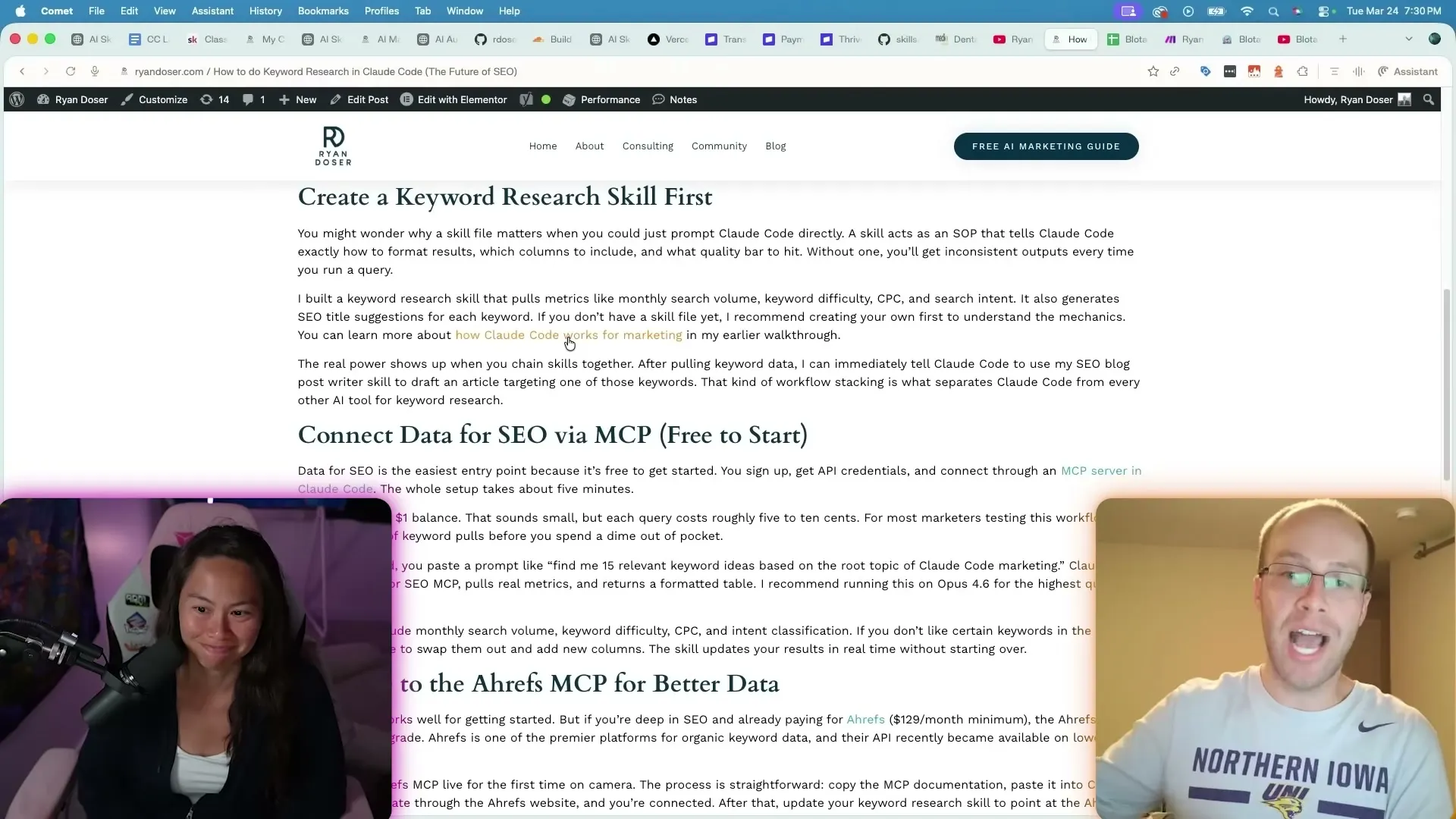
Here is the distinct move. Most people repurpose by pasting a transcript into a generic chatbot and shipping whatever comes out, which is how the internet filled up with AI slop that never ranks. Ryan does the opposite. He built a custom SEO blog post writer skill in Claude Code, trained on years of his own articles, and he feeds it real transcripts instead of guesses. It is a sharper version of what most AI content repurposing tools try to do out of the box.
The transcript is where Blotato comes in. As Ryan put it, “I am using Blotato, one of my favorite tools, as the MCP connection, so that is a big unlock, as you can now transcribe YouTube videos right inside Claude Code.” That one connection is what lets the whole pipeline start from a video URL instead of a manual copy-paste.
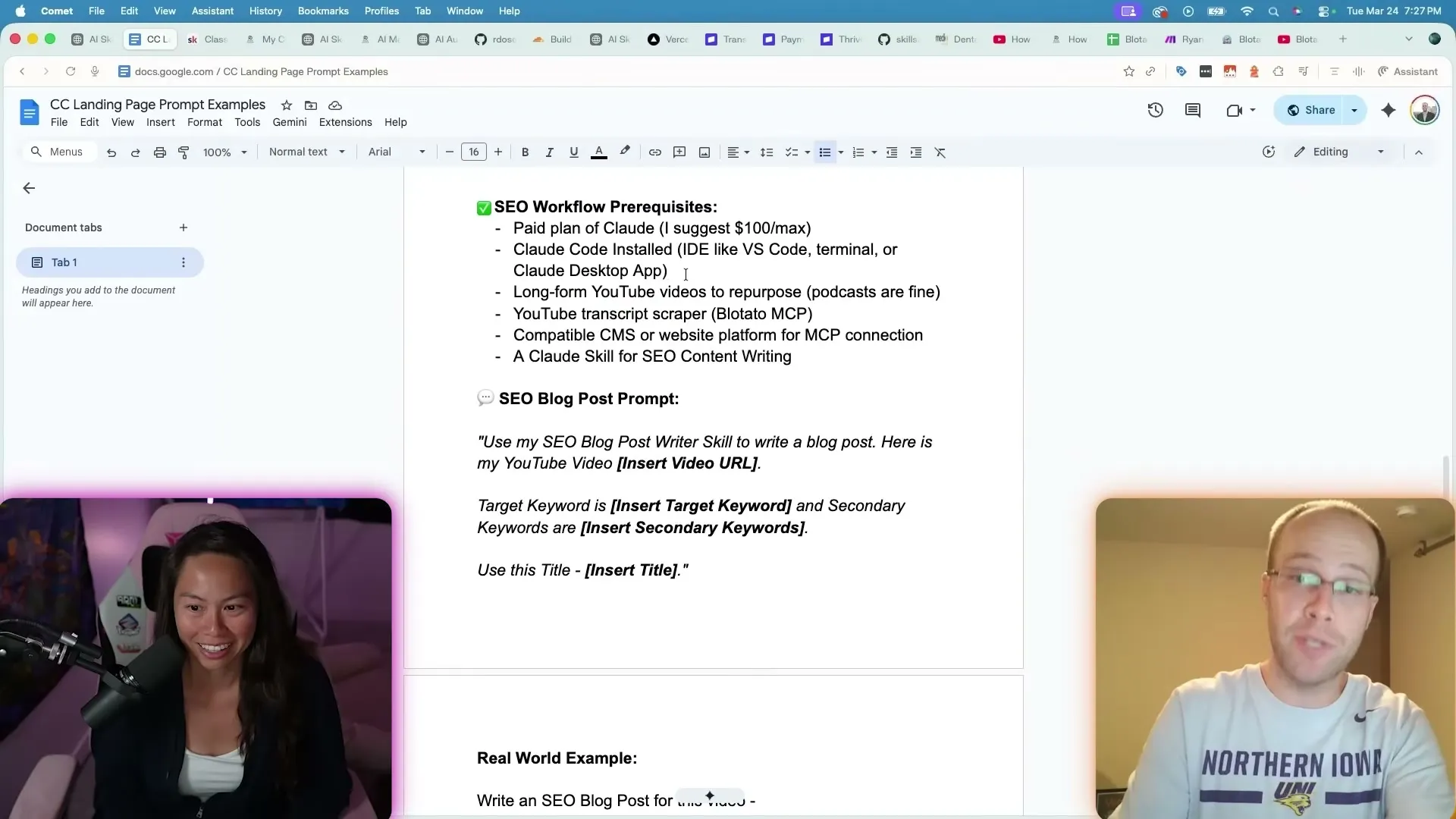
From there the skill does the heavy lifting: keyword in the first sentence and first H2, the source YouTube video embedded automatically, three to five internal links pulled from his live sitemap, external links sourced from the video description, and real screenshots of Ryan pulled straight from the footage instead of AI-generated images. It lands in WordPress as a draft, never auto-published, so he can do a quick quality pass before it goes live.
That same content discipline is what makes the social side work. If you want to run a single video into a week of platform-native posts without burning your evenings on manual reposting, you can start a free week of Blotato and let the publishing layer handle the cross-platform distribution while you stay focused on making the next video.
The Results
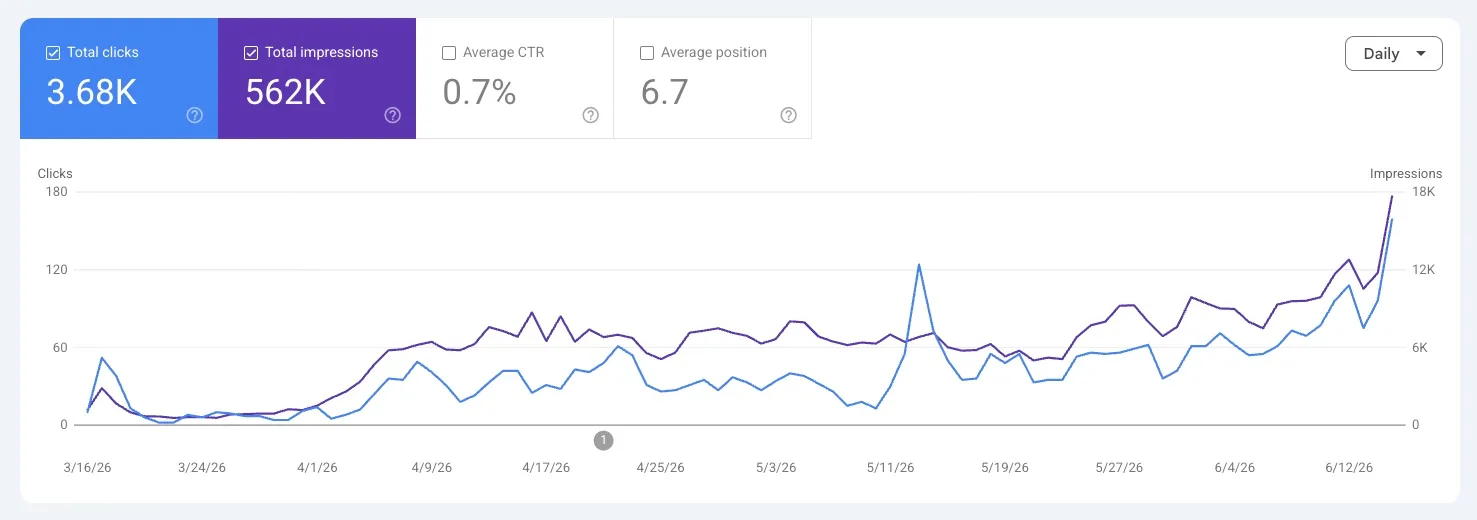
Ryan was careful to keep the numbers honest, so I will too. He spun up the SEO side of this at the end of February. About a month in, the site had already crossed 43,000 impressions on a domain with almost no authority behind it.
What makes that interesting is the starting point. Ryan checked the site’s authority in Ahrefs on camera and it sat at a domain rating of 1.8, effectively a brand-new site with almost no backlink profile. Posts gaining traction that fast on a near-zero-authority domain is the signal that the content itself is doing the work. He was blunt about why: this is not generated filler, it solves the searcher’s actual problem, with the video embedded and the sources linked.
A few months later the curve looks like this: over 562,000 impressions and 3,680 clicks, climbing steadily off the same repurposing engine.
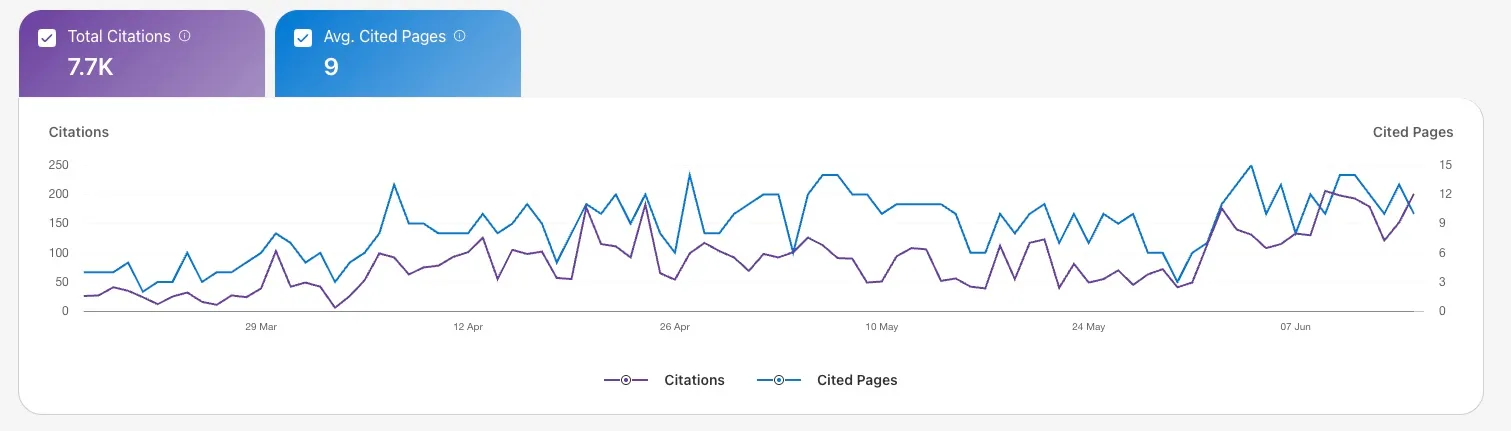
Search rankings are only half of it. The same posts are getting pulled into AI answers: Bing Webmaster Tools shows ryandoser.com with over 7,700 citations and an average of nine pages cited, climbing on the same curve as the search traffic. That is the payoff of writing for the searcher instead of cranking out filler, the content is good enough that both Google and AI assistants want to surface it.
The traffic is the visible part. The part that actually pays is what it feeds: Ryan has turned those thousands of monthly visitors into five figures of what he calls passive revenue, across digital product sales, paid community memberships, and affiliate income.
The digital product side proved out just as fast. The Claude Code Skills Stack was vibe-coded in about five prompts using Opus 4.6, the same kind of Claude Code workflow people use to make AI videos with Claude Code, and Ryan said it has made him “about a thousand dollars, probably a little over” off nothing more than a soft mention in a couple of newsletter emails.
Why This Works for Solo Creators
If you are a one-person operation, your bottleneck is not ideas, it is the hours between making something and getting it everywhere it needs to be. Ryan’s system attacks exactly that gap. He records once, and the transcription, writing, optimization, and distribution all run on top of that single asset.
That is the part you can copy without a team or a coding background. Sandy Lee did it with neither and built a $48K-a-month AI business off a YouTube audience, Brooke Wright scaled to six figures the same way with no technical background at all, and Ekwy Chukwuji saved The Economist $300K by encoding a workflow she already understood into a custom AI skill. Pick the channel you already create on, connect a transcript source so your tools start from real words, and let one of the social media automation tools that fits your stack carry the finished content across platforms. The leverage is not the tool, it is refusing to do the same manual step twice.
Sabrina’s Final Take
What I respect about Ryan’s approach is that he did not chase volume, he chased quality and then automated the parts that do not need a human. He could have spun up a hundred AI posts a day and ranked for nothing. Instead he trained a skill on his own expertise, kept a human draft-review step, and let the boring distribution run itself. That is the difference between an AI content engine that compounds and one that gets penalized. If you want to build the same kind of leverage on top of the content you are already making, every Blotato plan includes the cross-platform publishing that lets one person stay everywhere on a free trial. Create once, and let the system carry it.