Social Media Funnel: The $120K Comment-to-DM System
80% of viewers on my 4M-view reel were not followers. Here is the comment-to-DM system that moves them into a list I own, built live for HubSpot's CMO.
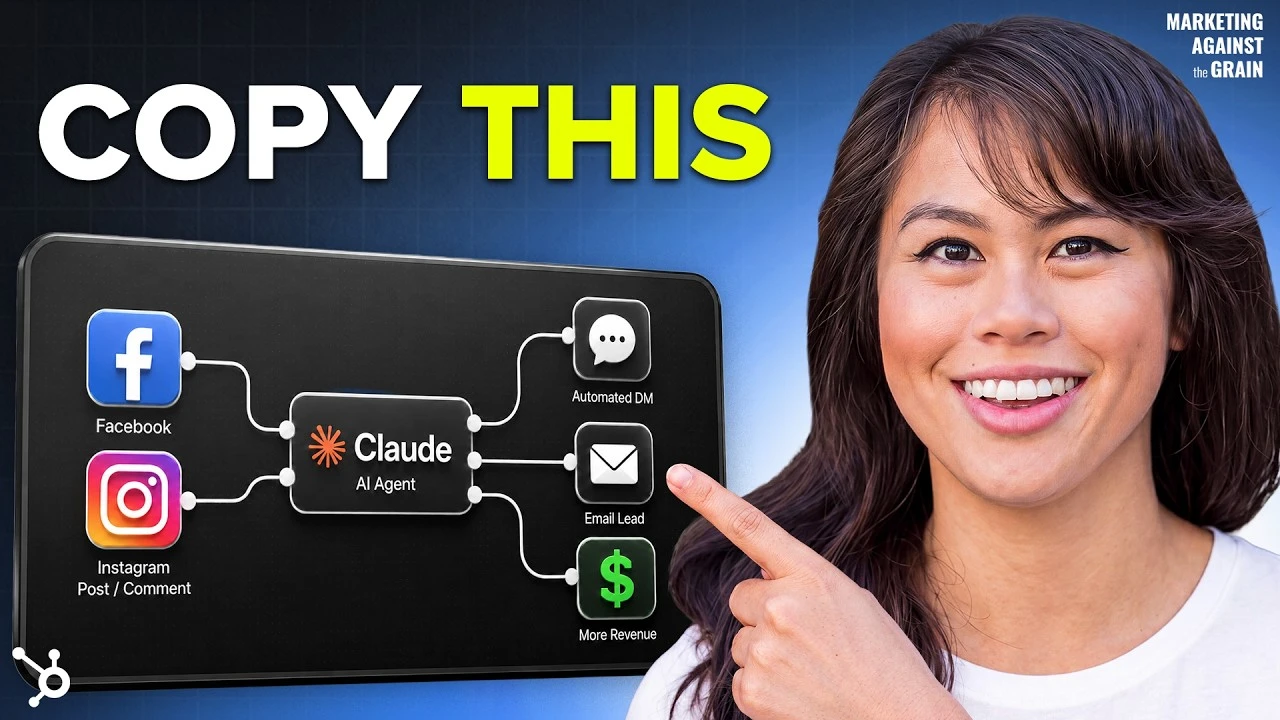
Every social media funnel guide on page one draws you the same four stages. Awareness, consideration, conversion, loyalty. What they rarely show is the wiring between the stages, which is the part that actually takes work to build.
Kipp Bodnar, HubSpot’s CMO, had me on Marketing Against the Grain to walk through mine. He did not want the diagram. He wanted the handoff: what specifically happens between a stranger watching a reel and that same person sitting in a system I own. So I opened the real automations, showed the posts they run on, built a new one live, and then tested it from a second account while he watched.
This is that system written down, for solo creators, small business owners, and small agencies who already post and still cannot tell you where the revenue comes from.
How to Build a Social Media Funnel (Video Guide)
If you would rather watch, the full episode with Kipp is above. The written version below adds the parts that a conversation moves past too quickly: the exact gate order, the mechanics of each gate, and where my own funnel turned out to be quietly broken.
Why the Stage Diagram Fails You
The four-stage model is not wrong. It is just not a build. It tells you a stranger should become a customer without naming a single mechanism that moves them, so everyone draws the funnel and then stalls at the same place.
Here is the number that reframed it for me. On the reel that did over 4 million views, 80% of viewers were not followers. They had never heard of me. Kipp’s read was that of those 4 million people, nearly all of them were meeting me for the first time.
So the top of a social media funnel is not an audience. It is strangers, arriving once, on a platform that owns the relationship and can end it. My Twitter account was banned early on and I never got it back. My YouTube account was suspended, and I only recovered it by pinging people publicly until someone looked. I was posting basic AI tutorials at the time, and I was never given a reason.
That is the whole argument for the handoff. Reach you do not convert is reach you rent.
How to Build a Social Media Marketing Funnel, Step by Step
One post, one keyword, one automated conversation that ends with a person in a system I control. Fixed order, and the order matters.
Here is the whole system on one page, which is the version I hand people who want it as a checklist rather than an article. The four steps below walk through it.
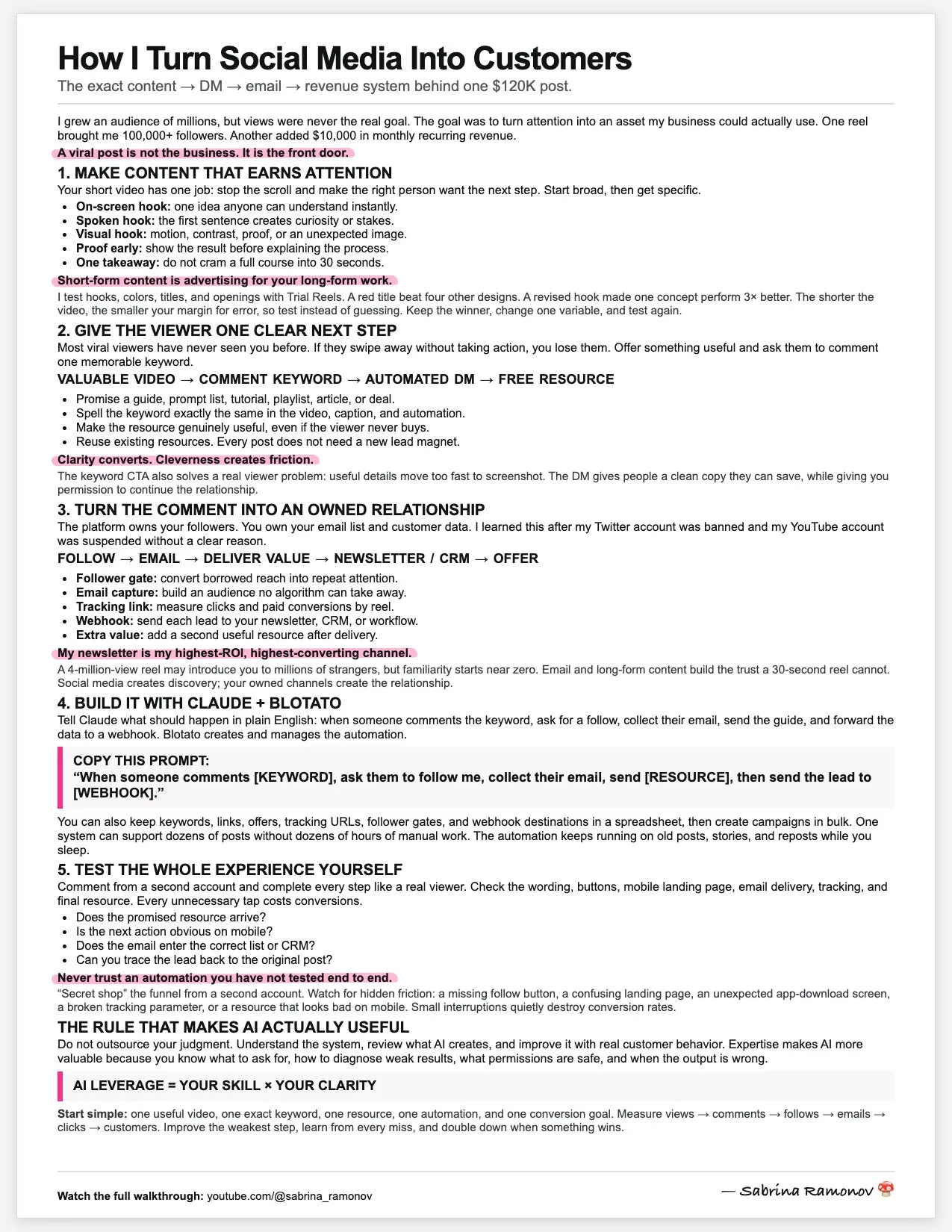
Step 1: Make the hook broad enough to be worth converting
Treat the content itself as the first stage of the funnel. My rule is to keep the opening hook as broadly understandable as possible, then get more granular as the video goes on. Most people invert this. They open specific, which builds authority with people who already understand them, and buys almost no new reach.
That 4-million-view reel opens on “10 ChatGPT Power Words.” No jargon, no niche, nothing to decode.
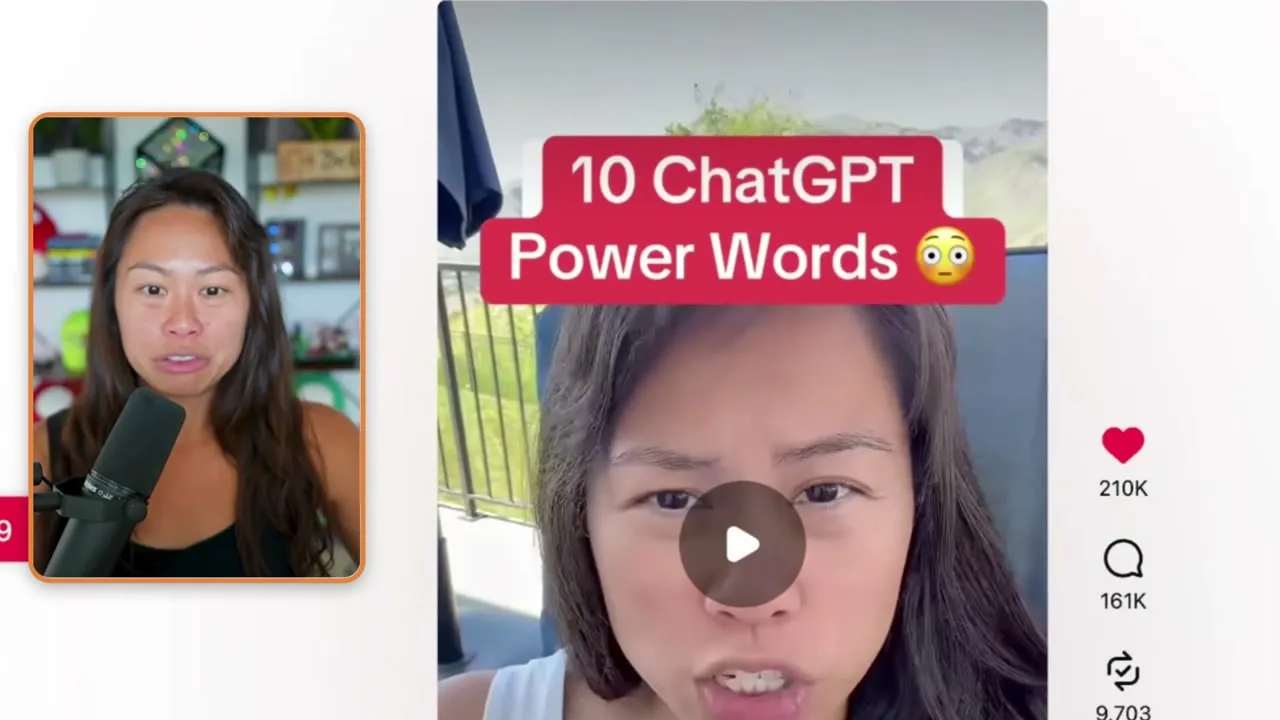
Then test the hook, including how it looks. I ran about five color variations of this title through Instagram trial reels, which publish to non-followers first so you can read the result before it reaches your audience. Red won here, though yours will differ, and the trial is what decided it rather than any theory about color. I test different hooks on the same idea too. An earlier version of this one was titled “secret codes for ChatGPT” and went viral on its own, and the version above reached about three times that.
If you would rather not invent openers from scratch, my method for sourcing social media hooks is to copy structures that already work rather than write new ones.
Step 2: Ask for a comment, not a click
That same reel asks people to comment a keyword, in this case CODES, to get a guide or a playbook. Over 100,000 people did it. That single post grew my Instagram by 100,000 followers and my Facebook by another 100,000 where it went viral separately.
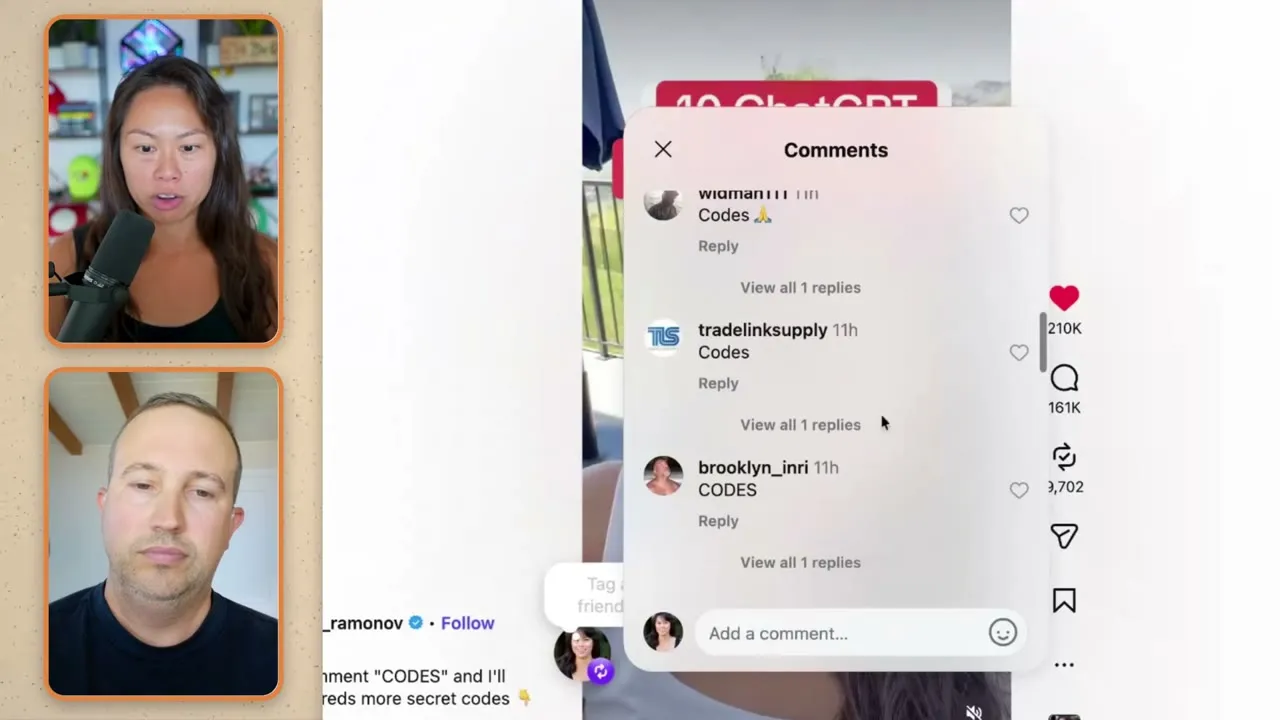
I resisted this for a long time because I thought “comment this” posts were cringe. What changed my mind was my own audience asking for it. People kept telling me the video moved too fast to screenshot and to just send them the thing. My rough read is that a fifth of people find it a bit much and the rest are relieved you were finally explicit.
From here the funnel stops being a diagram, and this is also where it quietly leaks if the gates are wrong. Which gates your audience will tolerate is a question only your own audience can answer, so it is worth running rather than reasoning about. Every Blotato plan includes the DM automations alongside the publishing side, so the post and the handoff run from one place. Blotato is an app I built. I founded the company, so take my read on it with whatever grain of salt feels right.
Step 3: Gate in the right order
When the keyword lands, the automation runs a fixed sequence: ask for the follow, ask for the email, send the DM with the link, then fire a webhook. Each step is optional and each one costs you completion, so match the ask to what you are handing over.
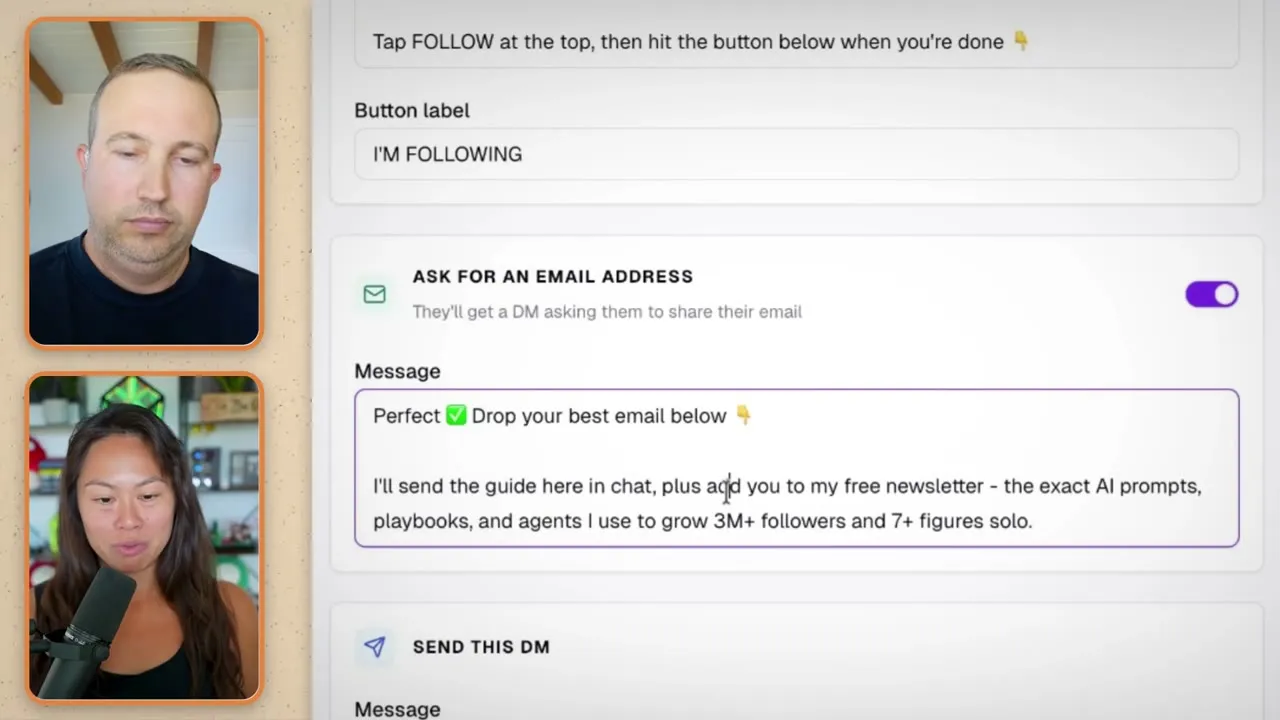
Kipp put the principle better than I had: how much you ask for should match the value you are handing over. Spend weeks on something that saves someone thousands of dollars and you can ask for several things. Hand over a quick freebie and you have earned a follow, nothing more. Some people skip the follow entirely and send people straight to a long video sales letter instead. There is no single right shape, which is why it is worth testing.
Two mechanics are worth knowing before you build. The follow gate is Instagram only, and it waits up to 30 days for a reply before it checks. The email gate reads the first email address out of whatever they send back, and it validates the shape of the address, not whether it can actually receive mail.
Step 4: Hand the lead to something you own
The last step is the one the stage diagrams never draw. After the DM sends, a webhook pushes the captured email into whatever system you run. Mine goes into an n8n flow that re-checks the address before it touches my newsletter, because I care a lot about deliverability. If you have a CRM, that is where it should land instead.
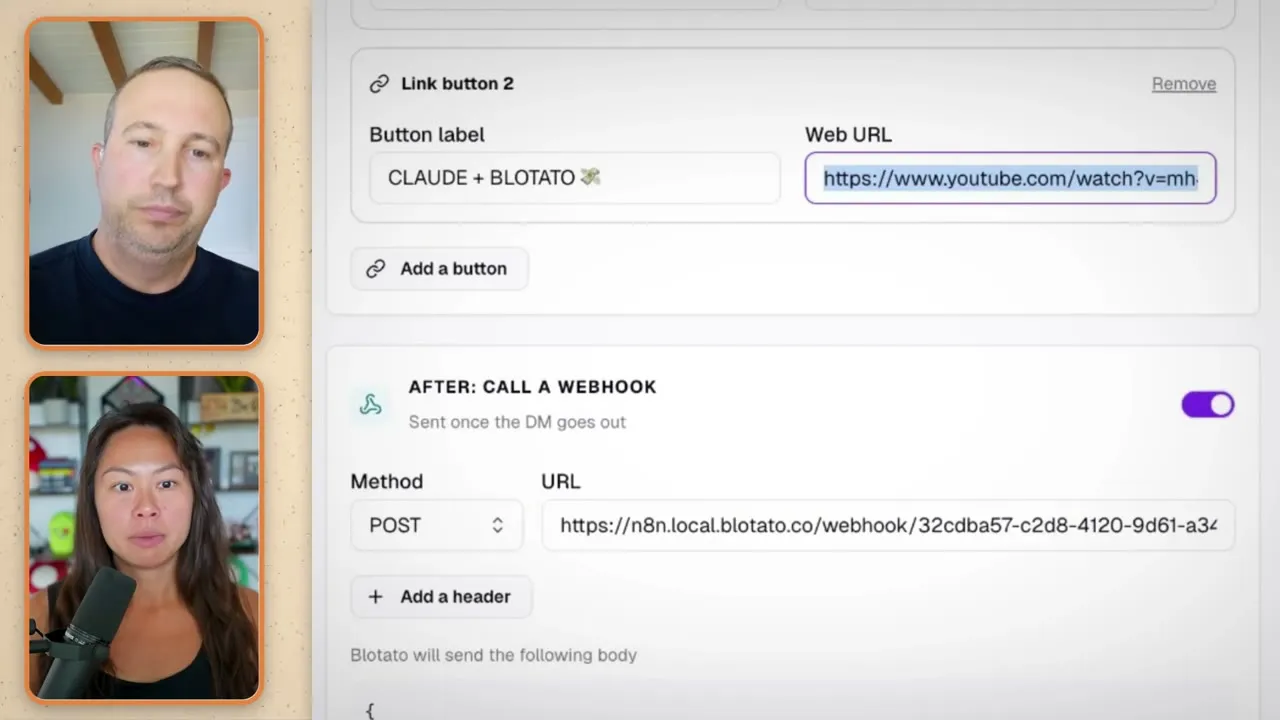
I learned deliverability the hard way, by adding everyone to my list early on and watching my rates fall. That is money. My newsletter is my highest-converting channel and my highest ROI by a wide margin, and it is not close compared to social media. Short form is the advertising. The newsletter is the bottom of the funnel.
Build the Automation From Claude
I built a brand new one on the episode inside claude.ai web chat, deliberately, because most people do not have Claude Code or Cowork and the web chat needs nothing installed.
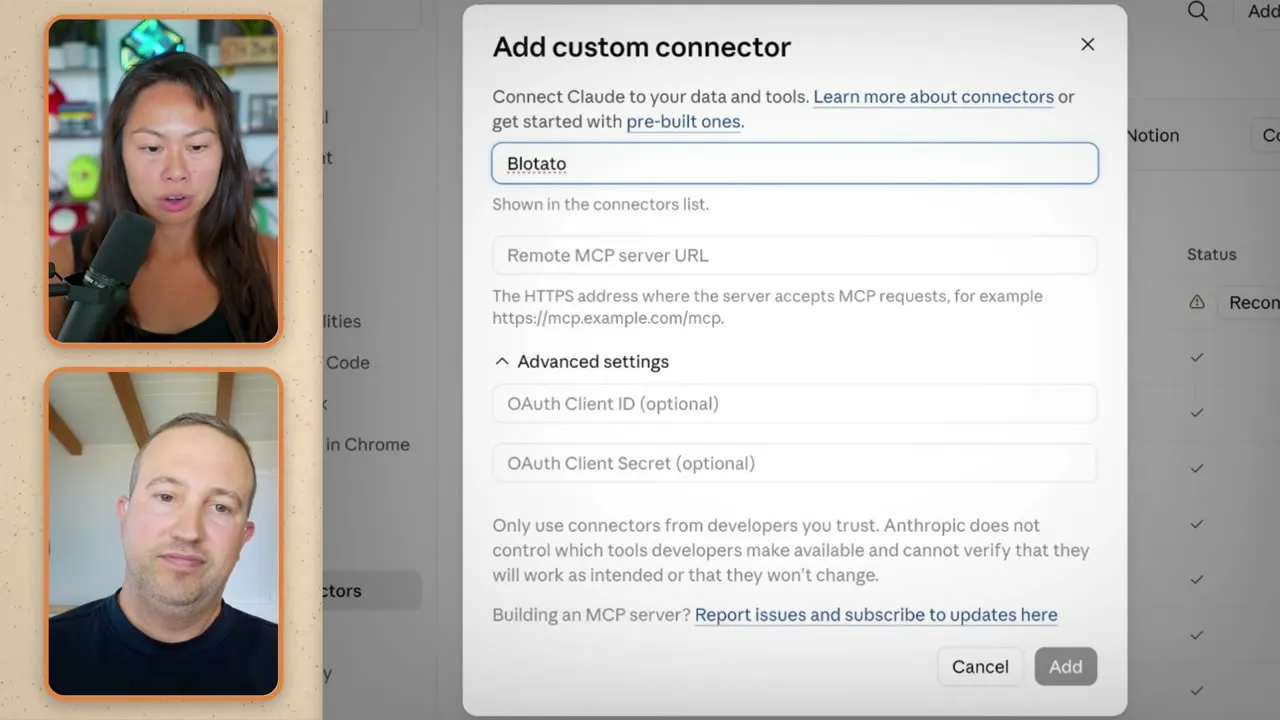
Add a custom connector in Claude, name it Blotato, and point it at mcp.blotato.com/mcp. If you use something else, the API section in Blotato settings has the exact setup for each supported client.
Then describe the flow in plain language. Mine was close to: create a Facebook and Instagram DM automation, when someone comments BASKETBALL on any post, ask for the follow, then send my free guide. Calvin Hia goes further and keeps a folder of DM templates the agent reads first, so every flow stays in his voice.
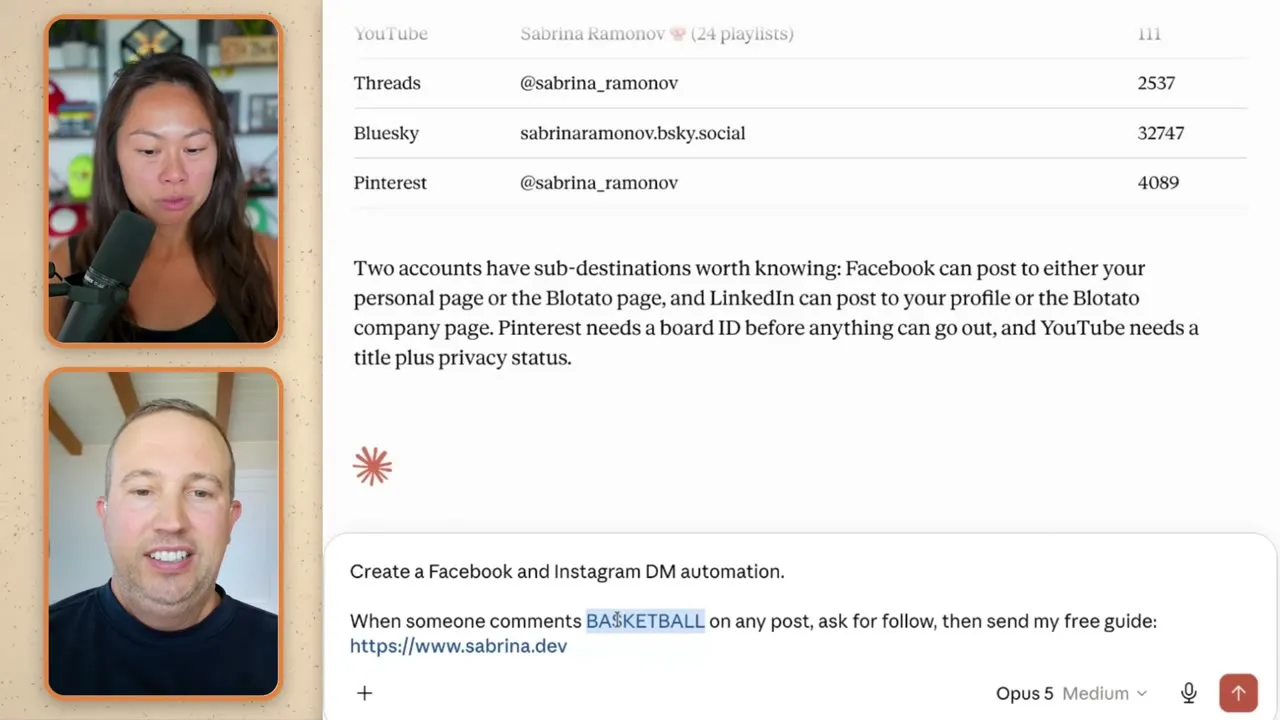
Claude came back asking which Facebook page to run it on, and whether to publish it live or save it as a draft for someone on your team to approve. It took a couple of minutes. Everything stays in sync in both directions, so you can edit the flow in the app or tell Claude to change it and both reflect the same thing. If you want the build itself in more depth, including how to create them in bulk, I covered Instagram DM automation separately.
Open the tool calls and read what it actually did before you set the automation live. This one is about to message real people from your account, so it is worth knowing which permissions you handed over and what the flow will send.
Secret Shop Your Own Funnel
I ran the new automation from another Instagram account I keep, live on the episode. Kipp calls this being a secret shopper: going through the exact experience someone would have with you instead of assuming it works. It takes minutes, and in my experience most people skip it.
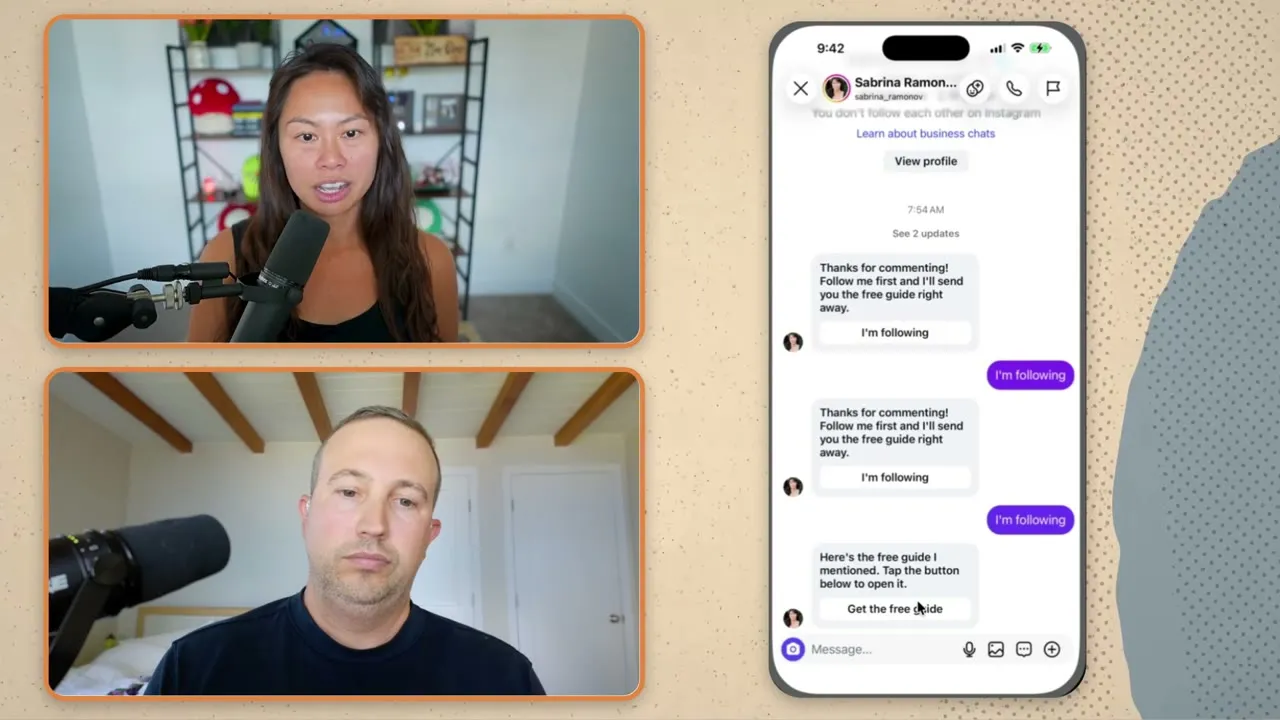
It found a real problem immediately. The gate asked for a follow, and there is no follow button inside that DM view, so the tester has to leave, find the profile, and come back. That is exactly where a distracted person is lost.
Testing earlier had already caught something worse. After someone submits their email on my newsletter page, Substack prompts them to download the Substack app, so people were messaging me saying they had downloaded my app. I do not have an app. I only found out because readers told me.
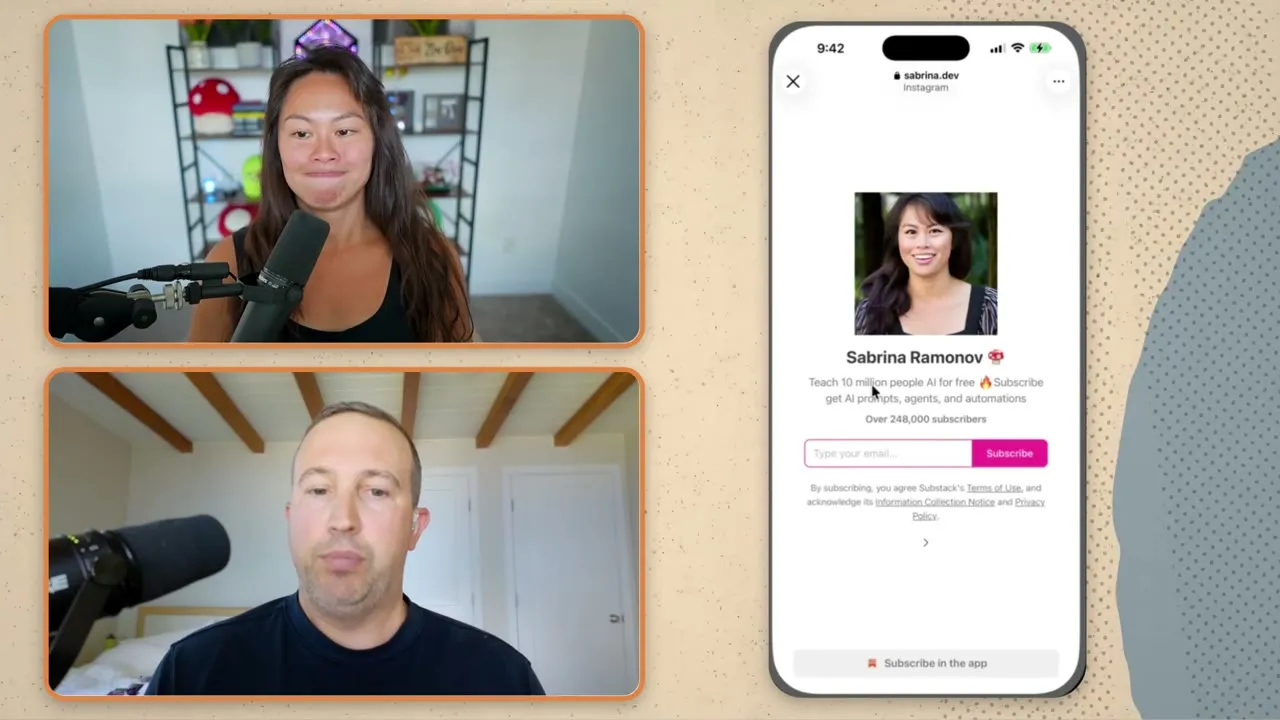
Kipp’s takeaway is the one to keep: people know nothing about you except what you explicitly tell them. They do not know what Substack is or whether you have an app.
Pro Tips for a Social Media Funnel
Your lead magnet does not have to be yours. People setting this up for the first time think every keyword needs a custom asset. It does not. Sometimes I send people to a tool, or to a news article about something like Anthropic hiring people to teach AI. It is genuinely useful, and I still get the follow.
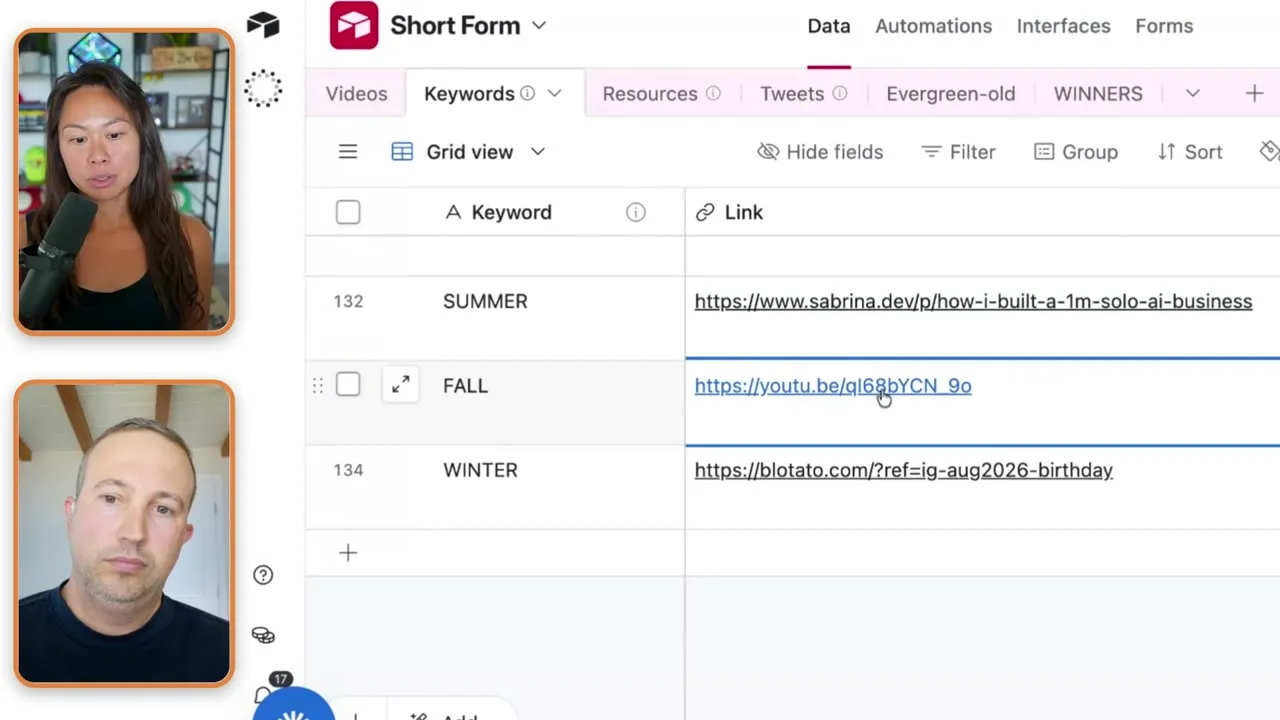
Run your automations in bulk from a spreadsheet. One row per campaign, holding the keyword, the destination, and the tracking link. Mine point at three different things on purpose: a newsletter that introduces my product inside the content, a YouTube playlist when I want subscribers, and a tracked promo link when I want to measure conversions all the way to paid. Other accounts aim the same mechanic at a checkout, an Amazon Storefront or a booking calendar, as these Manychat funnel teardowns show.
Run the same keyword in Stories. A story viewer had to tap in rather than be served in a feed, so it is a warmer audience, and in my own results it clicks through more often than the feed does.
What This Funnel Cannot Do
It cannot start a conversation. An automation answers people who contacted you first, so this is not an outreach channel and treating it as one is how accounts get restricted.
It only runs on Instagram and Facebook. If your audience lives on LinkedIn or TikTok, the handoff in this post is not available to you, and the honest answer is to send people to a link rather than a DM. A couple of tools in this category do read and send messages on more platforms than Meta’s two, so that is worth checking before you rule the whole funnel out.
The follow gate is Instagram only, and it is softer than it looks. If someone never granted profile access, their follower status comes back unknown and the flow lets them through rather than blocking them. Instagram also renders those buttons in the mobile app only, so a desktop-heavy audience needs the gate written to accept a typed reply.
And it cannot rescue a post nobody watches. Every number in this article came from content that earned attention first. The automation converts reach. It does not create it.
Results You Can Expect
A different reel, one that only did around 200,000 views and went up in July, added $10,000 in monthly recurring revenue. At that rate it is a $120,000 annual run rate, and it is still earning because people keep finding it and commenting. The 4-million-view reel did something else entirely: it added 100,000 followers on Instagram and 100,000 more on Facebook rather than direct revenue. Not every post in a funnel does the same job, and the bigger one was not the one that paid. That matches how Instagram itself pays, since outside invite-only bonuses none of its native payouts runs on view count.
Once it is built and tested, it mostly runs without you. I do not check most of my automations day to day. They keep working at three in the morning while I sleep. The one number worth watching as this scales is contacts rather than posts, since every DM an automation sends counts toward the monthly active contacts on your plan.
Sabrina’s Final Take
Build the handoff before you tune anything else, because a funnel without one is just content. Start with a single keyword on your best-performing post, ask only for what your freebie has earned, and make sure the last step drops that person into a list or a CRM you actually own. Then secret shop it yourself, because the problems in mine only showed up when I walked through it as a stranger would. If you already run comment-to-DM flows and want the platform rules and rate limits in detail, my breakdown of the DM automation API covers the parts that break most builds.
Social Media Funnel FAQs
Do I need a lead magnet for every keyword?
No. You can point a keyword at something that already exists: an existing newsletter issue, a YouTube playlist, a tool, even a relevant news article that is not yours. The ask still works because the value is real, and a lightweight destination is fine when you are only asking for a follow.
Should I ask for the email in the DM or on a landing page?
Both work. I have been testing asking inside the DM and I am seeing slightly better completion rates that way. A landing page makes more sense when the asset is better on desktop, because then capturing the email lets you send something they can open later.
Which platforms support comment-to-DM automation?
Instagram and Facebook. The follow gate is Instagram only. On both platforms a comment trigger sends a private reply to the comment, and that private reply is allowed once, within seven days of the comment. Your own comments never start a run, which is why you need a second account to test with.
Why did my automation fire without sending a DM?
The usual cause is a gate waiting on a reply that never came, since the follow gate waits up to 30 days and the email gate up to 72 hours before giving up. On Instagram the other common cause is the buttons: they render in the mobile app only, so a desktop viewer may see a message they cannot act on.
What is a social media funnel?
A social media funnel is the specific mechanism that moves a viewer off a platform you rent and into a list, CRM, or spreadsheet you own. The four-stage diagram, awareness through loyalty, describes what you hope happens rather than what does it, and the stage labels are the part you can safely skip. What matters is the handoff: the trigger, the gates, and the destination. Without one, you have reach rather than a funnel.