Social Media Hooks: Copy What Works, Don't Write Them
Every guide tells you to write original social media hooks. After 3M followers, here is why I copy proven openers instead, and the exact system.
Every guide about social media hooks hands you a list of fill-in-the-blank templates and tells you to write your own. I think that advice is backwards, and it is why most people stall out in their first month.
I grew from zero to three million followers solo. I did it by copying other people’s openers, word for word, until I had enough intuition to write my own. Most content creation courses will not tell you that, because if they did, they would have nothing left to upsell you.
Here is the system, the reasoning behind it, and the part nobody mentions: what to do when a copied hook still flops.
How to Use Social Media Hooks (Video Guide)
If you would rather watch, this is the full 30-day walkthrough the hook system sits inside. The written guide below goes deeper on the sourcing method, the adaptation rules, and the failure diagnosis.
Why Writing Original Hooks Is the Wrong First Move
I stopped saying “hook” because nobody outside marketing knows what it means. The opener is the first ten seconds or so of a short-form video, and it is a combination of three things at once: what the viewer sees, what they hear, and the text on screen.
A video that consistently pulls hundreds of thousands or millions of views has a proven opener. Millions of people already voted on it. That is what an algorithm is, a very large voting machine.
So when you sit down to invent a hook from scratch on day one, you are guessing against a line that already has verified demand behind it. I believe it was Alex Hormozi who said he spends 95% of his effort on the opener alone. If you cannot get someone to stop scrolling, the rest of your content is invisible. They never watched it. It is the same reasoning behind why my content pipeline grades the hook heaviest before anything else gets scored.
Copying is a far more accepted part of this game than anyone admits publicly. Plenty of AI influencers have copied my content without credit, and plenty of creators bigger than me have copied it too. I gave them permission, because I want them to win. What actually works is copying openers exactly and then remixing the content inside.
Be precise about what “exactly” means, because this is where people either get it wrong or talk themselves out of it. You are copying the structure of the opener: the sentence pattern, the promise, the camera move, the title format. You are not copying their footage, their script past the opener, or the thing they actually taught. The first ten seconds are the borrowed part. Everything after it is yours.
The 3-Step System for Sourcing Social Media Hooks
People charge thousands of dollars for the next three steps.
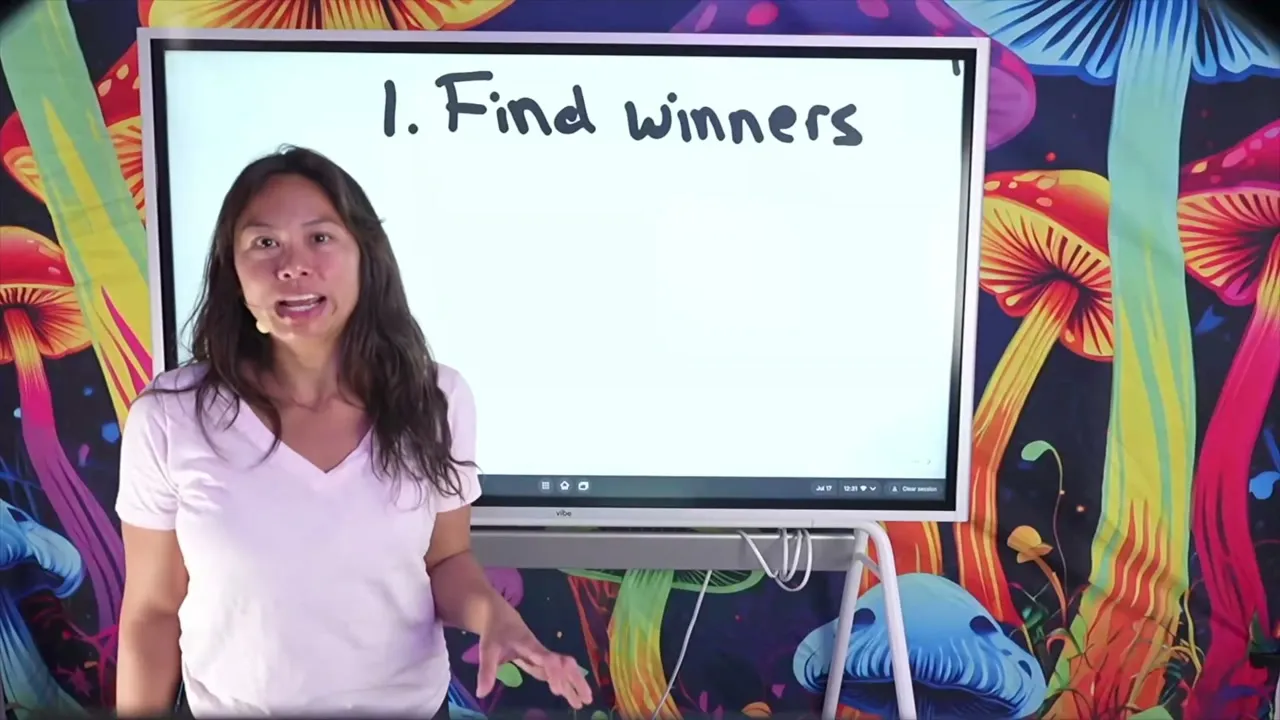
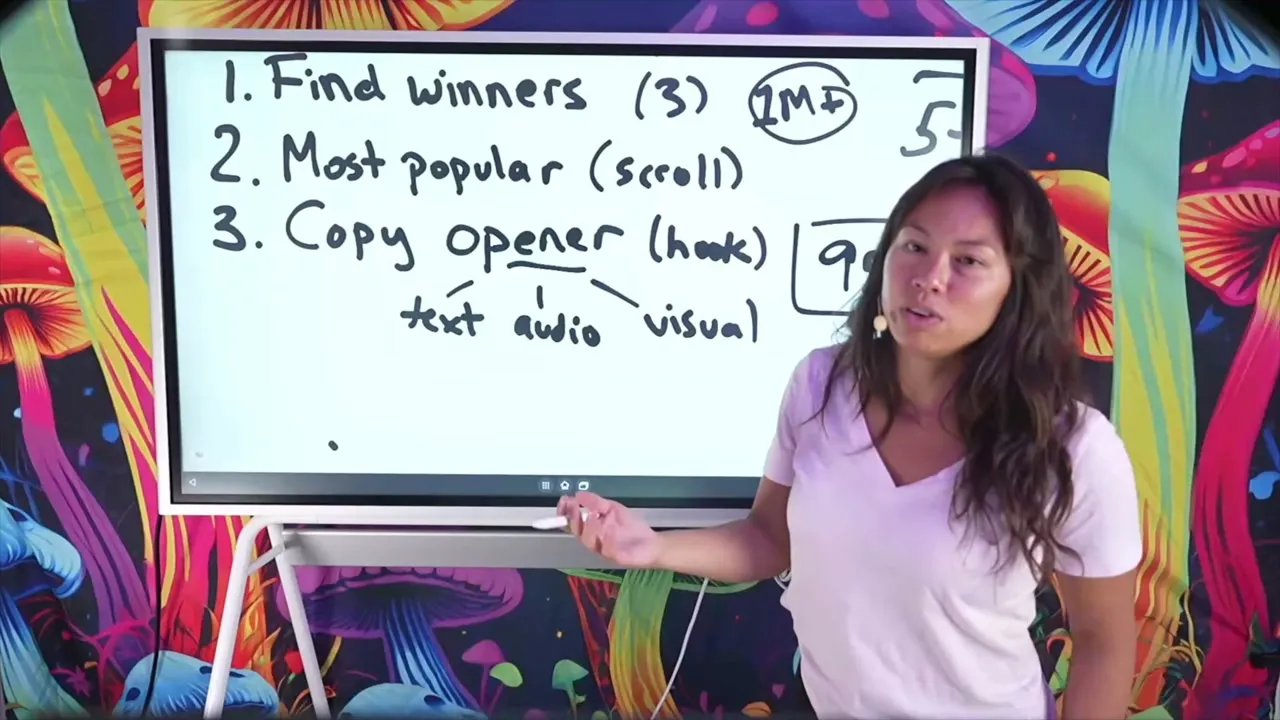
- Find the winners. Pick the top three creators in your topic. If you do not know who they are, ask ChatGPT or Claude to name three big creators per topic, then verify each one actually exists, because AI hallucinates names.
- Sort by most popular. On TikTok and Instagram this is a button. On LinkedIn and Substack there is no such button, so scroll. You are looking for posts that pulled roughly ten times the engagement of that creator’s usual post. If you want the multiple as a number rather than an eyeball guess, run it through a free engagement rate calculator.
- Copy the opener exactly. Text, audio, and visual, all three, if it is a video platform.
That sourcing step is cheap. The expensive part shows up later, once the posting starts. Blotato is an app I built. I founded the company, so take my read on it with whatever grain of salt feels right. Where it fits: once you have banked a set of proven openers and you are posting daily across more than one platform, the copy-paste step is what actually eats your day. You can start a 7-day Blotato trial and cancel anytime, connect your accounts, and push one post out to all nine platforms from one place instead of opening nine apps. The trial covers the publishing side of everything described in this post.
What Counts as the Opener: Text, Audio, and Visual
The opener is not just your first line. There are three channels available to you, and most guides only ever talk about one of them. You do not have to use all three.
Visual. Motion in the first two seconds is the most common one. People jump into frame, pretend to just sit down, or cut a watermelon while talking. The point is drawing the eye and creating curiosity about what you are doing.
Audio. This can be what you literally say, or it can be sound and music. Anything that makes someone stop.
Text. This is the on-screen title, usually the promise of the video.
I will be honest about my own format. I am the laziest creator ever. I do not really do a visual hook, my audio hook is just me talking, and I put a text hook at the top of the video. Good creators run strong hooks in all three areas, and it is not uncommon for one of them to film ten versions of the same hook with slightly different angles, wording, and intonation, then pick the best.
How to Actually Post It (Days 8 Through 25)
Days 1 through 7 go to picking your topic and your platform, then banking a set of proven openers from the winners you found. Days 8 through 25 are where you post, using the copy-the-opener technique for your first 17. The goal of those 17 is not views, it is building intuition for what makes an opener strong. It is the same way you learn guitar, by playing other people’s songs first.
Step 1: Write the script
I do not personally script my videos, I talk off the cuff. But when you are starting out there are too many variables at once, so write it down. Paste the borrowed opener in first, word for word, then write your own content underneath it. Read it out loud and change any word you would never actually say. Spend five minutes on this, not an hour.
Step 2: Open the TikTok native mobile app
This is the best short-form video creation tool in the world right now, and it is all you need. Filming natively and publishing through a tool later are separate questions, and I dug into whether API posting actually costs you reach since TikTok is genuinely the strictest platform on this. Your iPhone front camera is enough gear. For almost two years I had no AV equipment beyond a basic webcam for my YouTube videos, and the lighting and audio were both terrible.
Step 3: Load the teleprompter effect and paste your script
The hard part is finding the button. There are YouTube tutorials for it, or ask Claude to walk you through where it lives.
Step 4: Record in one take
If the opener you copied had a visual element, this is where you match it, whether that is jumping into frame or starting mid-motion. Hit the big red button and read the script. A clean one-take read means no cutting, which is the part that eats your time. You still add a title and captions after.
Step 5: Add the on-screen title and captions
The title is your text hook, and it is the piece you copy most literally, since it is the easiest of the three channels to reproduce exactly. TikTok has a button that adds captions automatically.
Step 6: Post with three broad hashtags
Broad, not niche. Something like #ai, #chatgpt, #chatgptprompts, and that is it.
Post once per day. I used to recommend three times per day and people got overwhelmed. If you are serious and have the time, three per day is better.
Pro Tips for Social Media Hooks
Reply to comments for the first two hours, then read the room. If the video is still climbing after two hours, keep replying. If it has plateaued, stop. You are not going to revive it. Commenting on other people’s videos does almost nothing for you on TikTok, Instagram, or Facebook, and helps only a little early on for LinkedIn, Substack, Twitter, and other text platforms.
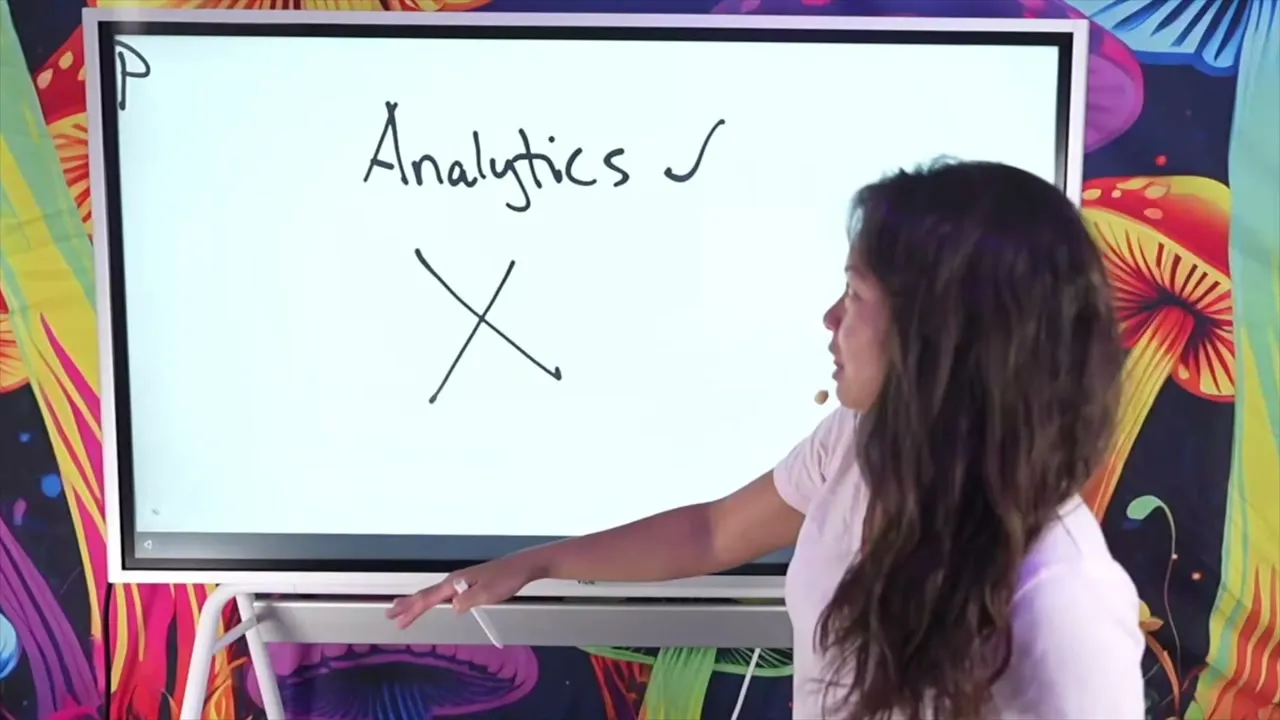
Do not open the advanced analytics tab for six months. Skipping analytics does not mean ignoring results, it means the only signal worth reacting to between posts is a 10x outlier. If your videos sit at 100 views and one hits 1,000, make more like that one. If your baseline is 1,000, your next threshold is 10,000. A video that did 20% better than another tells you nothing.
Reuse your own winners too. When I am being lazy I repeat the same hook and vary the content underneath it. Same hook, three prompts. Same hook again, three different prompts.
When Your Hooks Still Are Not Working
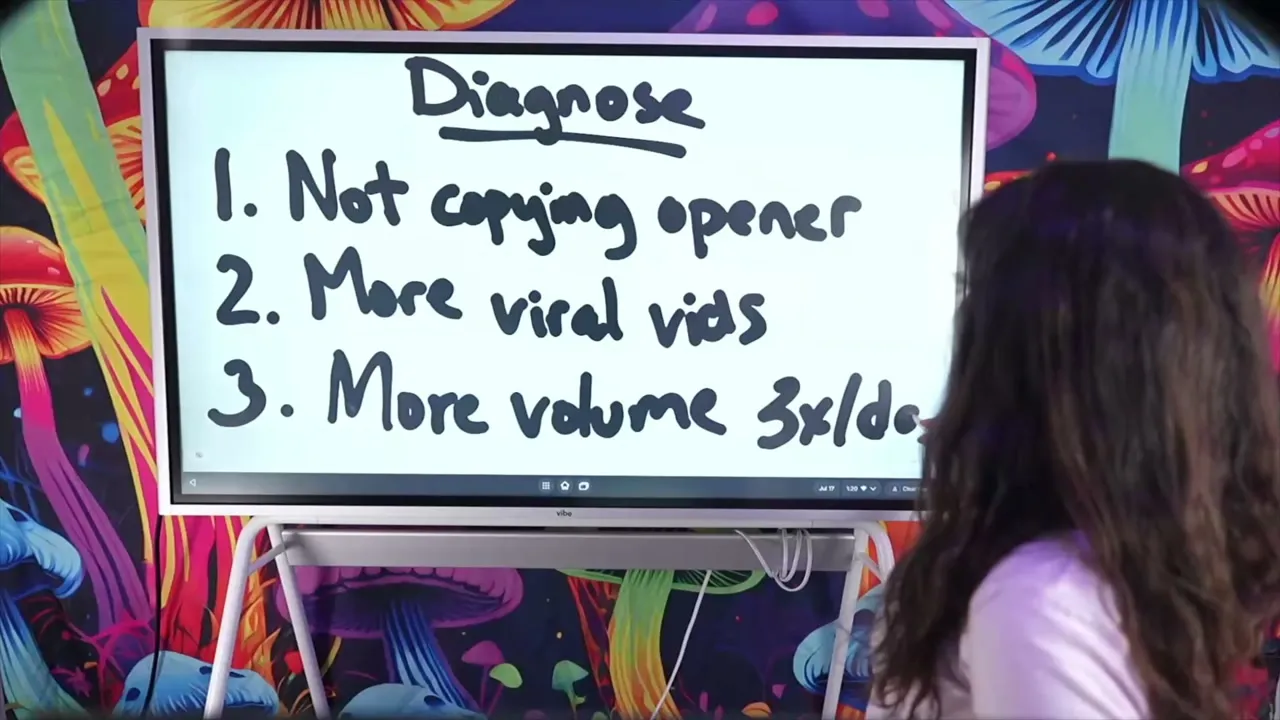
If you have run 30 days of this and nothing has landed, work through these in order.
- You are not actually copying the opener. This is the most common one, and it is usually an ego problem. Open your video and theirs side by side on two phones and play them. Are the first ten seconds the same, yes or no? Most people tricked themselves into thinking they copied when they changed the color, the wording, the angle, because they thought they could do it better. You just started. Reduce the ego.
- Your source videos are not viral enough. Get a different sample set where each video has over a million views. Do not copy videos sitting at 50,000 views. If your niche genuinely has no creators at that level, calibrate against the best performer’s own baseline instead, or pull openers from a larger adjacent niche and swap the subject matter.
- You do not have enough volume. Go to three times per day so you get data faster.
What Copying Hooks Cannot Do for You
Copying an opener buys you attention, not a business.
It will not make thin content worth watching. The opener gets someone to stop, and then the thing you actually said has to hold them. Copying also does not survive as a permanent strategy, the whole point of the first 17 posts is to build enough intuition to stop needing it. Around day 25 you switch to finding your own voice, which is the point where scoring your own openers against a rubric starts being more useful than copying another one.
It also will not compress the timeline. I did not have my first real hit on TikTok until somewhere around day 45 to 60, and I treat the first 100 videos, roughly three months, as the warm-up.
And it does not work in reverse on every platform. I would only start on LinkedIn if you already have more than 5,000 to 10,000 connections, because below that you will almost never get traction. TikTok is the most generous platform for new creators, but it takes several weeks to warm up an account and decide you are a human and not a bot.
What 17 Copied Openers Actually Gets You
If you post 17 videos in 25 days using copied openers, the realistic outcome is that you learn what a strong opener feels like and you find one or two 10x outliers to build on. That is the win condition for month one, not follower count.
Two years of this took me to three million followers and a profitable startup, working solo. Anyone with a phone and an internet connection can build a personal brand from here.
Why I Still Recommend Starting This Way
Copy the openers. It feels wrong at first and then it stops feeling like anything, because you will realize every creator you admire did the same thing to get their first wins. The only real mistake is spending your first month writing original hooks nobody has voted on, running out of patience, and quitting before day 45. Bank the proven openers, ship one post a day, and let the intuition build. Once that daily habit is running across more than one platform, publishing is the part worth taking off your plate, and it is covered on every Blotato plan. If you want to see what the hooks feed into once they start landing, that is the content engine I run behind my personal brand.
Social Media Hooks FAQs
Will copying a hook get me flagged for plagiarism or a copyright strike?
No. An opener is a structure, not a protected work: a sentence pattern, a camera move, a title format. What you cannot do is re-upload someone’s footage or reproduce their video wholesale. If you have copied the first ten seconds and written your own content underneath, you have done the same thing every creator you follow did to get started.
Does this work for text platforms, or only short-form video?
It works on both. On a text post the entire weight sits on your first line, because there is no audio channel and no opening frame doing work for you, which makes the copying step matter more rather than less. Sourcing is also slower, since neither LinkedIn nor Substack gives you a per-creator sort by highest engagement. Opener structures travel between platforms better than whole posts do, which is a repurposing mistake worth avoiding.
Should I tell my audience I copied the hook?
There is no need to, and it is not standard practice. The honest boundary is the one above: borrowing an opener structure is fair game, lifting someone’s actual material is not. If you have stayed on the right side of that, the discomfort you are feeling is usually ego rather than ethics, and it is what keeps most beginners writing openers nobody has voted on.
What if my niche has no creators pulling a million views?
Then your ceiling is lower and your 10x threshold moves with it. Take the best-performing posts available in your space and calibrate against that creator’s own baseline instead of an absolute number. You can also pull openers from an adjacent larger niche and swap the subject matter.
Can I schedule the 17 posts in advance to save time?
I batch content once a week, but I only do that because I know what I am doing. Do not do it for your first 17. The entire point is that each post carries what you learned from the one before it, and a queue built on day one cannot absorb any of that feedback. Once you are past the ramp, building a week of content in one sitting is the cadence I actually run.